


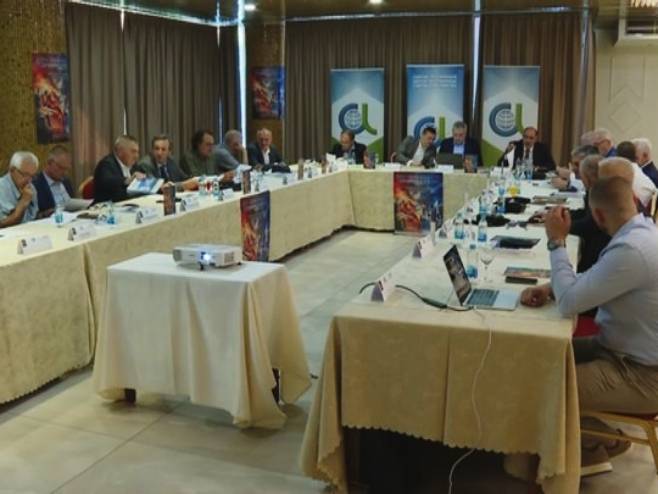
New military alliances in the Balkans, changes within NATO, and Washington’s evolving approach to the region compared to leading European powers were the focus of the scientific and expert conference “New Military Alliances in the Western Balkans – Between Sovereigntism and Globalism.” Experts warned that military groupings could further increase tensions, with particular attention drawn to the recently established military alliance between Croatia, Albania and self-proclaimed Kosovo.
The Balkans are once again becoming a region where the interests of major powers intersect, while the formation of new military alliances raises additional questions about the region’s long-term stability. This was one of the key messages delivered at the conference held in Banja Luka.
While Serbia and Republika Srpska advocate a policy of military neutrality, participants argued that military cooperation between Croatia, Albania and self-proclaimed Kosovo does not contribute to building mutual trust.
“Where military alliances are formed, and we see that this alliance between Croatia, Albania and the false NATO state of Kosovo exists under the patronage of leading European countries, misfortune follows. Military alliances have never brought peace; they are the eve of conflicts and wars,” said Mitar Kovač, a member of the National Assembly of Serbia.
Dušan Proroković of the Institute of International Politics and Economics in Belgrade stressed that the creation of new military alliances would not enhance security.
“On the other hand, it reflects developments taking place on both the global and continental levels,” Proroković added.
According to conference participants, it is becoming increasingly evident that the differing interests of the United States, the European Union and the United Kingdom will continue to intersect in the Western Balkans.
“It is a fact that the United States will strengthen its presence in the Balkans, particularly in countries that have not yet become members of NATO or the European Union, and its visibility in the region will become more pronounced,” said Miloš Šolaja of the Association Center for Lobbying.
The conference also addressed changes in Washington’s approach toward Bosnia and Herzegovina. Participants noted that President Donald Trump’s administration has adopted a different approach from that of other Western powers.
“We are asking only that they do not work against us. In this case, they have made such a gesture toward the policy of Republika Srpska in its efforts to preserve the Dayton Peace Agreement and have emphasized the need to be realistic and interpret the agreement as it was originally written,” said Mirko Okolić, former Deputy Minister of Defence of Bosnia and Herzegovina.
Future relations among major powers, as well as political developments within Europe and the region, are expected to significantly influence security and political processes in the Western Balkans. For that reason, conference participants concluded that monitoring global developments has become more important than ever for the countries of the region.
Source: RTRS