
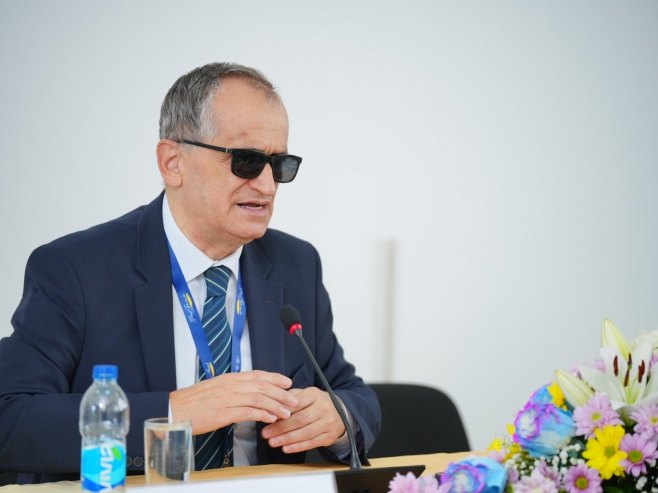
Dževad Galijašević, a security and counterterrorism analyst, said that U.S. President Donald Trump has recognised what he described as political support for Iran in Sarajevo.
Speaking on RTRS’s morning programme, Galijašević claimed that Washington has also taken note of what he alleged were links between certain Bosniak military figures and Hamas, as well as the reported prevention of European rabbis from entering Bosnia and Herzegovina.
“The Constitution defines Bosnia and Herzegovina as a state of three constituent peoples – Serbs, Croats, and Bosniaks – and they should all enjoy equal rights,” Galijašević said.
He also criticised Foreign Minister Elmedin Konaković, arguing that, instead of addressing what he described as Iranian influence in Bosnia and Herzegovina, the minister has focused on rhetoric directed against Republika Srpska and the Serb people.
Galijašević further argued that Republika Srpska has promoted constructive relations with the new U.S. administration, while claiming that political policies in Sarajevo are based on anti-Serb and anti-Croat positions.
He described the Ministry of the Interior of Republika Srpska as a key guarantor of security, pointing to cities such as Banja Luka, Trebinje, Doboj, and Prijedor as examples of stability. He also highlighted infrastructure projects and the development of new hospital facilities in Republika Srpska.
Commenting on international affairs, Galijašević described the Trump administration as a positive development for U.S. relations with other countries, while arguing that some geopolitical developments predated Trump’s return to office.
Regarding ongoing conflicts in the Middle East and Ukraine, Galijašević said that many countries are providing logistical support to the wars but argued that the situation does not amount to a third world war because there is no direct military confrontation between the major global powers.
He identified the United States, Russia, and China as the world’s principal powers and argued that the European Union has adopted an increasingly assertive approach toward the conflict in Ukraine, while questioning its capacity to sustain a broader military confrontation.
Source: RTRS