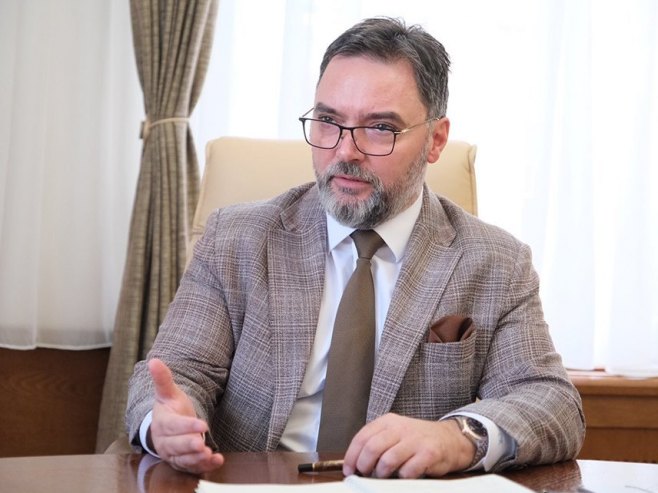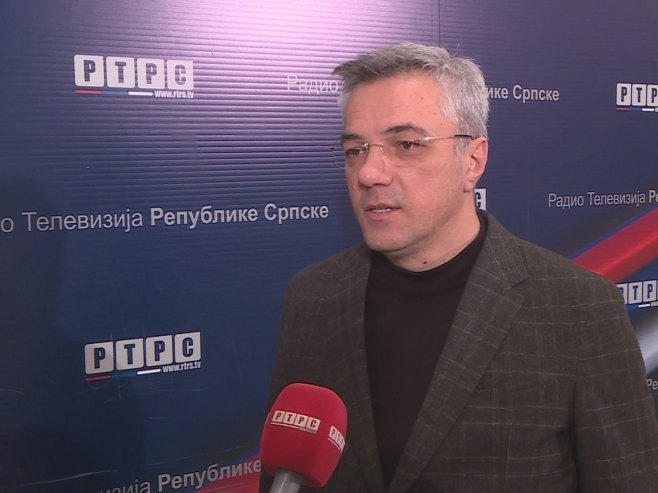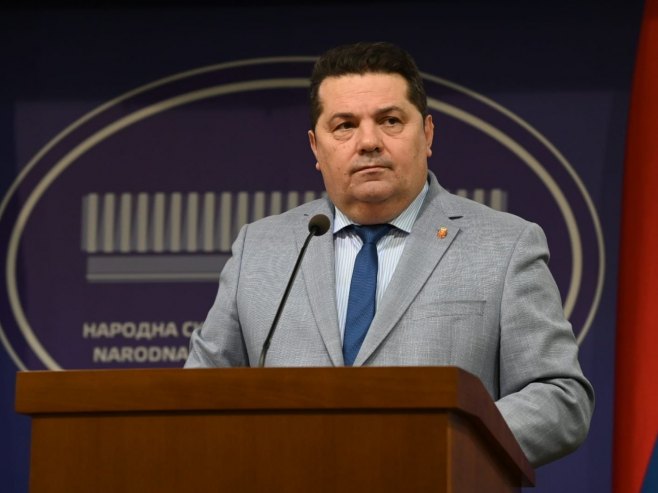


Constitutional law professor Siniša Karan stated that while Sarajevo celebrates November 25 as Statehood Day, it must be emphasized that present-day BiH was established neither in Mrkonjić Grad nor in Jajce, but in Dayton.
Speaking to SRNA, Karan argued that the dissolution of the Socialist Federal Republic of Yugoslavia (SFRY) marked the disappearance of the constitutional order upon which AVNOJ and ZAVNOBiH were founded.
“What no longer exists cannot serve as the foundation for anything. The Badinter Commission established that Yugoslavia had dissolved, while the right to self-determination belonged to its peoples. Exercising that same right to self-determination, the Serb people established Republika Srpska on January 9, 1992,” Karan said.
His remarks came on the occasion of November 25, which is observed as Statehood Day in predominantly Bosniak areas of the Federation of BiH, commemorating the first session of the State Anti-Fascist Council for the National Liberation of BiH (ZAVNOBiH), held in Mrkonjić Grad in 1943.
Republika Srpska as a constituent party to the Dayton Agreement
Karan explained that Republika Srpska entered the Dayton negotiations not as an observer, but with its own institutions, territory and negotiating capacity, having participated as a party in the Geneva and New York processes.
“Dayton BiH emerged through an agreement between two state-legal entities, Republika Srpska and the Federation of BiH. Without them, there would be no agreement, no Constitution and no present-day constitutional order,” Karan emphasized.
He argued that November 21, 1995, marked not only the end of the war but also the establishment of a new constitutional framework, under which BiH received a new name, a new structure and, in his interpretation, statehood for the first time.
Karan further maintained that Republika Srpska granted BiH full statehood by transferring part of its internal sovereignty in favour of external sovereignty.
Defending BiH requires respecting the Dayton framework
According to Karan, those who invoke AVNOJ and ZAVNOBiH today are not engaging in a historical debate but challenging the Dayton Peace Agreement.
He argued that their objective is to diminish and undermine its fundamental principles: two entities, three constituent peoples, parity, consensus and the constitutional division of competencies.
“They must understand that BiH cannot be defended while undermining the agreement upon which it rests. BiH is either based on Dayton or it does not exist,” Karan stated.
November 25 remains a disputed holiday
November 25, formerly commemorated as ZAVNOBiH Day, is observed as Statehood Day in predominantly Bosniak areas of the Federation of BiH, while Croats generally do not recognize it as a holiday.
There is no unified law on public holidays at the BiH level, with the respective holiday legislation of Republika Srpska and the Federation of BiH remaining in force.
For Serb employees working in the joint institutions of BiH, November 25 is a regular working day.
Source: RTRS