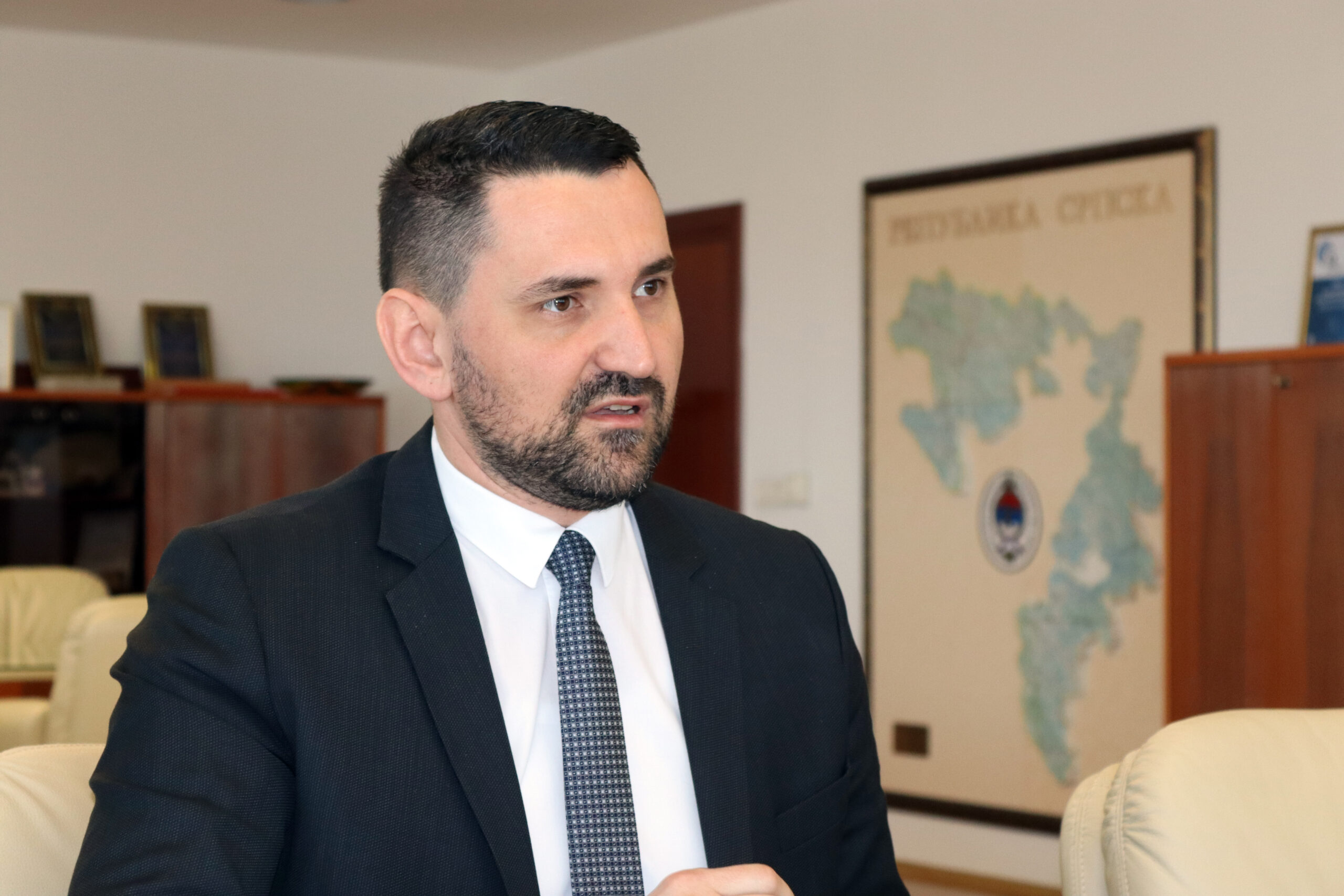


Borac Banja Luka will face Swedish side Mjällby away on Thursday in the third round of the UEFA Conference League. Ahead of the encounter, RTRS spoke with Sreten Kenić, a Serb football coach working at Swedish top-flight club Örgryte, about the challenges awaiting Borac and the weaknesses they could exploit.
One of the most remarkable football stories of last season came from Sweden. Mjällby, a club based in the small fishing village of Hällevik, home to just 1,500 residents, won the Swedish championship for the first time in its history.
With a modest fan base and a limited budget compared with Sweden’s traditional football powerhouses, the achievement was historic.
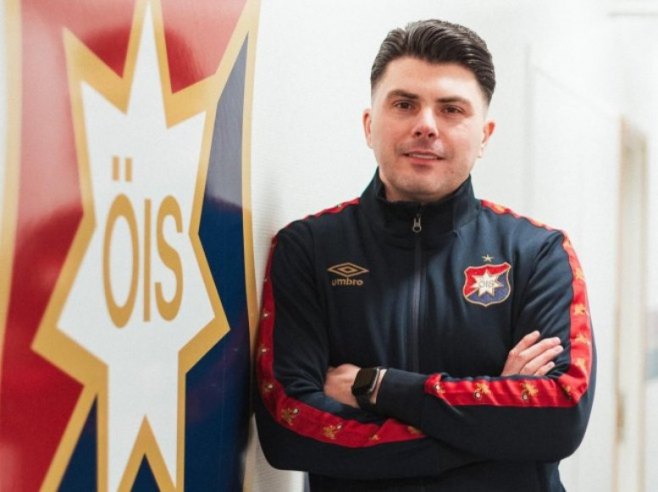
RTRS discussed the Mjällby phenomenon with Sreten Kenić, a Serb coach who has worked in Sweden for eight years and is currently part of the coaching staff at Örgryte, the country’s oldest football club.
From the third division to the Swedish championship
“It is a small club from a small town, but the people running it love football and live for Mjällby. Seven years ago, they were playing in the third division, with Miloš Milojević as their coach. Under his leadership, the club began its rise toward the top division.
“Within two years, they reached the Allsvenskan, Sweden’s top league. After that, I believe Milojević went to Red Star Belgrade.
“Last season, they caused a sensation by winning the title. Now, for the first time, they are competing in Europe. In that respect, they cannot be compared with Borac, which has a longer history and a stronger tradition of European competition.
“However, their objective was to reach the Conference League, where they have collected four points. They defeated a team from Andorra and earned a point in Georgia.
“They have developed several young players whom they are trying to sell because they do not have a large budget. Their scouting is good, and they recruit quality players,” Kenić explained.
A change in tactics under Andreas Brännström
Unlike last season, when they won the championship, Mjällby have struggled this year and are fighting to remain in the top division.
Their poor results cost coach Karl Axum his position, with Andreas Brännström taking charge.
“Brännström is a different type of coach. For example, under Axum last season, they pressed across the entire pitch, playing man-to-man.
“Now they play more positionally, defending in a compact block in a 5-4-1 formation. I would say they are more stable defensively. They are difficult to break down when they sit deep.
“However, I think they are significantly weaker going forward compared with last season, when they scored many more goals.
“During the summer, they sold two or three players who provided much of their creativity.
“At the moment, I would single out their number 10, Kjær, as their most creative player.
“The others are typical Scandinavian players: physically strong, tough in challenges and capable of covering a lot of ground.
“I should immediately point out that the intensity and tempo of their matches are much higher than those of most teams from the Balkans,” Kenić added.
Kenić warns Borac about Mjällby’s set-piece threat
Kenić’s Örgryte lost 2–1 at home to Mjällby last week, giving him firsthand experience of the Swedish side’s strengths.
“Yes, and we conceded both goals from set pieces. One came from a corner, and the other from what we call a short corner.
“They are dangerous in that aspect of the game, and Borac must pay particular attention to it,” Kenić warned.
A demanding schedule could work in Borac’s favor
Mjällby drew 0–0 with Kalmar last night and remain in the lower half of the Swedish league standings.
Asked whether Borac could take advantage of Mjällby’s focus on securing their top-flight status, Kenić pointed to the Swedish club’s demanding schedule.
“They are under considerable pressure at the moment, and Borac could exploit that because they are literally playing every three days.
“For example, they played Kalmar last night, have a lighter training session today, then travel to Helsingborg on Wednesday before Thursday’s match.
“So they are essentially playing a match, having one training session and then playing another match.
“That could be their biggest problem, especially because they do not have a particularly large squad capable of maintaining such a demanding schedule.
“Mjällby have 27 points and are close to securing survival. Had they beaten Kalmar last night, they would have mathematically guaranteed their place in the league,” Kenić explained.
Swedish football stands out for its passionate supporters
Although Sweden cannot boast the same overall footballing quality as Europe’s strongest leagues, largely because its best players regularly move abroad, Kenić emphasized the country’s impressive stadium infrastructure and passionate football culture.
“The league is not at the level of Germany or France in terms of financial resources and player recruitment.
“But when it comes to attendance and people’s love for their local clubs, it is incredible.
“Mjällby are deeply connected to their local community. It is a small fishing village where everyone supports the club, and their stadium is packed for every match.
“Last season, it was Mjällby. This season, Sirius, another small club, are fighting for the title.
“We will see whether they can maintain their challenge because they have sold some players.
“Imagine a club in our region coming up from the third division and winning the championship. We should be realistic: that would never happen here.
“The culture of supporting clubs and attending matches is something entirely different.
“Last season, I coached Örebro in the second division, and we regularly had between 10,000 and 15,000 spectators at matches,” Kenić said.
Building a coaching career in Sweden
Sreten Kenić may still be relatively unknown to the wider football public in the region, having not yet independently managed a team in domestic football.
Instead, he has built his coaching career abroad, primarily in Sweden.
Since the beginning of this season, he has worked at Örgryte as assistant to head coach Andreas Holmberg.
Founded in 1887, Örgryte is Sweden’s oldest football club and has won the national championship 12 times.
“It is a historic club, the oldest in Sweden, and they are extremely proud of that.
“They have a large fan base. Our stadium, which has a capacity of 18,000, is always full, even though we are fighting to avoid relegation.
“An army of supporters also follows us to away matches.
“We returned to the top division after 16 years. This is our most difficult season, but also our most important.
“We are fighting, and we will see what happens. We are currently second from bottom, one point behind Degerfors, who occupy the relegation playoff position,” Kenić explained.
Miloš Milojević: A role model for Kenić
Kenić also spoke about the influence of fellow Serb coach Miloš Milojević, whose work helped lay the foundations for Mjällby’s rise.
“Miloš is my role model.
“He started at Mjällby as academy director and assistant coach. Then he was given an opportunity and led them into Sweden’s top division.
“He went on to work at major clubs such as Hammarby and Malmö, and people in Sweden have enormous respect for him,” Kenić concluded.
Source: RTRS