

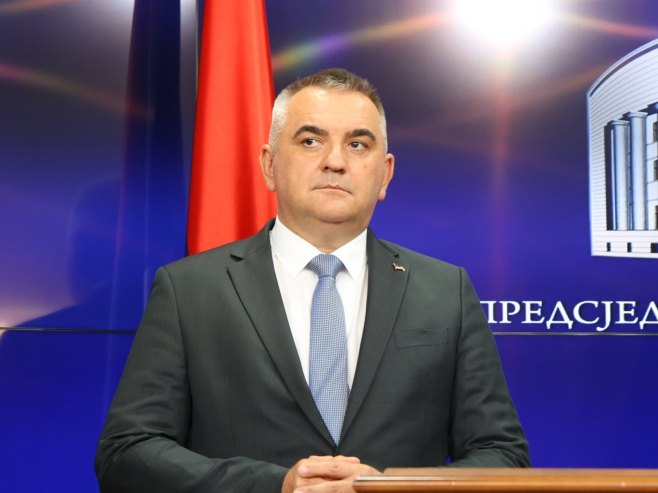
Republika Srpska Prime Minister Savo Minić said that the entity’s partnerships with the United States, Russia, and several European countries contribute to its political and economic stability while helping to prevent future conflicts in the region.
Minić credited Republika Srpska President Milorad Dodik and the Serb member of the Presidency of Bosnia and Herzegovina, Željka Cvijanović, with strengthening these international partnerships.
He argued that the entity’s political stability is reflected in its economic performance and ongoing investment projects, highlighting an investment cycle valued at more than 7 billion KM.
According to Minić, the programme includes the rehabilitation of 300 kilometres of regional and main roads, the construction of new motorways, the planned reconstruction of the Prijedor General Hospital, and 611 million KM allocated for investment projects in local communities, including the City of East Sarajevo and its municipalities.
“We are working and building. There is no local community in Republika Srpska where development projects are not underway,” Minić said, adding that these investments are reflected in higher employment, record tax revenue collection, slowing inflation, and increases in salaries and pensions.
He stressed the importance of maintaining strong relations with international partners, specifically highlighting Serbia, the United States, Russia, and Israel.
Speaking about relations between Republika Srpska and Serbia, Minić described the ties as being based on a shared language, culture, traditions, and family connections.
Discussing political developments in Bosnia and Herzegovina, Minić emphasized the importance of preserving the institutions of Republika Srpska and protecting the identity of the Serb people. He argued that Bosnia and Herzegovina requires greater mutual respect among its constituent peoples and a new political agreement on the country’s future functioning.
Minić also criticized efforts to transfer competences from the entities to the state level, saying too much political energy is spent on internal disputes.
He concluded that, despite political disagreements, he does not believe the peoples of Bosnia and Herzegovina are enemies, arguing that preserving national identities should remain a fundamental principle of relations within the country and calling for a different political model that would reduce unnecessary political confrontation.
Source: RTRS