


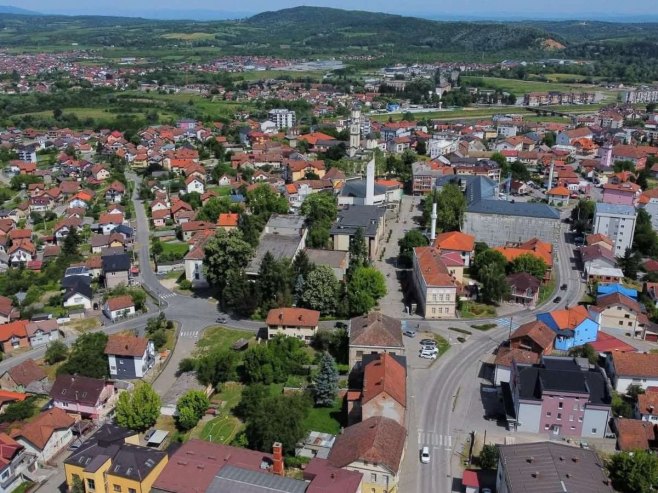
A group of American prosecutors is expected to visit Derventa to investigate crimes committed against Serbs in the Rabić and Army Hall detention camps, established in 1992 by Croat-Muslim forces.
The prosecutors are expected to work together with officers of the State Investigation and Protection Agency (SIPA) to take statements from former detainees who survived the abuses in the camps.
Seven former detainees have been invited to testify. While they welcome the arrival of the American investigators, they also express doubts that those responsible would receive appropriate sentences if extradited to the judiciary of Bosnia and Herzegovina.
According to the Association of Camp Detainees, the American investigators are examining cases involving individuals accused of crimes against Serbs who later settled in the United States. After the war, they reportedly fled there believing they would avoid prosecution.
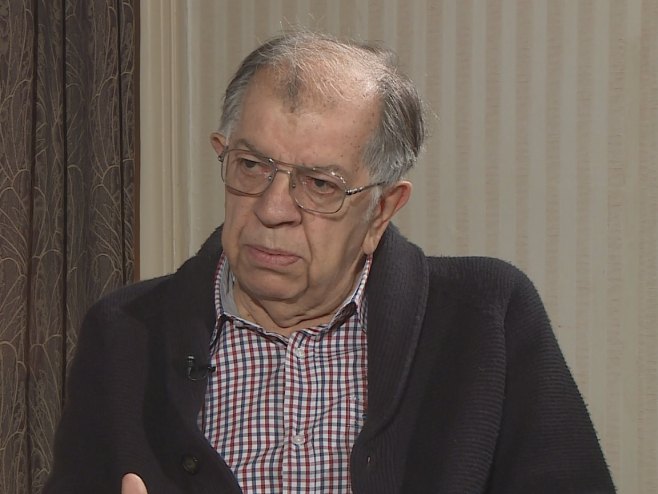
“There are more of them over there, although I do not know the exact number or how many are hiding. Some even changed their names. I would like to thank the prosecutors in the United States. Four or five of them are coming, and I appreciate that they have taken an interest in what happened in Derventa and the crimes that were committed,” said Drago Knežević of the Association of Camp Detainees.
Former detainees say the investigators will hear extensive testimony about crimes committed against Serb civilians. One of them is Ostoja Šarčević, who described daily beatings, abuse, and psychological torture in the Rabić camp hangars and the basements of the Army Hall.
“I went from 80 kilograms to 48 kilograms during 55 days in the camp. Every one of my ribs was broken while I was there, and my spine was damaged. A man named Jozo Jerković struck me behind the neck, and to this day I still feel pain in that vertebra. I suffer from insomnia, excessive sweating, and many other consequences. What we endured is beyond imagination,” Šarčević said.
Knežević also recalled his experience.
“They ordered me to kneel and handed me a pistol, telling me to kill myself because my life was over anyway. I still wonder how I could even think about doing it. I took the pistol, put it to my temple, thought about my wife and children, pulled the trigger, and it fired on an empty chamber,” he said.
The former detainees say what hurts the most is that many of the perpetrators had once been their neighbors and people they trusted. Some have been convicted. They point out that Azra Bašić and Almaz Nezirović were also found in the United States before being extradited to Bosnia and Herzegovina, where they received what the former detainees describe as lenient sentences.
“One or two years in prison is nothing. You can get six months in prison for illegally cutting three cubic meters of firewood. Those are no real punishments. At least let it be officially acknowledged that they were criminals who tortured people,” Šarčević said.
The former detainees also referred to one of the Skelić brothers, who received what they described as a symbolic one-year sentence for war crimes, while his twin brother remains at large. They believe he may also be hiding in the United States.
They further argue that the greatest failure of the competent institutions is that no one has been held accountable for the extermination of entire Serb families, including the Ćudić, Živković, and Zorić families, whose descendants were wiped out and whose killers, they say, have never been brought to justice.
Source: RTRS