
Recent developments in relations between Serbia and the United States have prompted discussion over whether Washington is entering a new phase of engagement with Belgrade and the Serbian-American community, following the launch of a strategic dialogue, new energy cooperation initiatives, and a congressional proposal to designate February as Serbian-American Heritage Month.
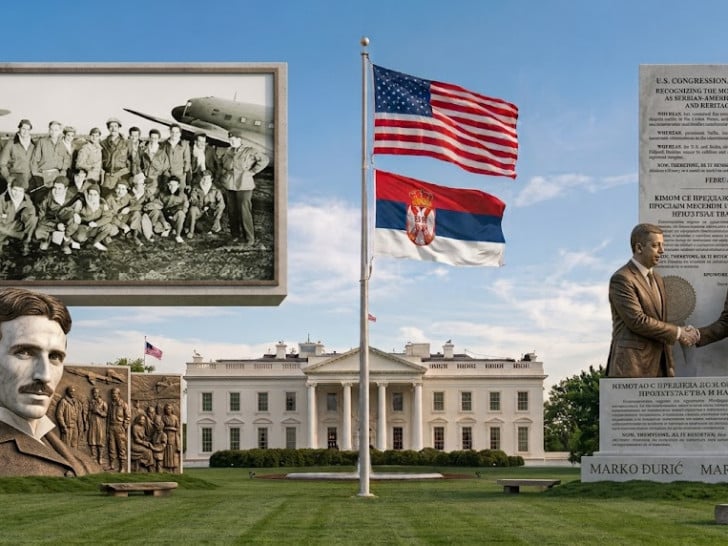
Five members of the U.S. House of Representatives have introduced a resolution calling for February to be recognised as Serbian-American Heritage Month, highlighting the historical, cultural, and civic contributions of Serbian Americans and the longstanding ties between Serbia and the United States.
At the same time, Serbia and the United States have launched a strategic dialogue in Washington and signed a memorandum of understanding on cooperation in energy infrastructure and regional energy security. The talks also covered trade, investment, transport, defence cooperation, education, science, and emerging technologies.
The bipartisan resolution was introduced by Republican Claudia Tenney of New York, co-chair of the Congressional Serbian Caucus, Democrat Emanuel Cleaver of Missouri, and Republicans Scott Fitzgerald, Anna Paulina Luna, and Victoria Spartz.
Supporters of the initiative argue that bipartisan backing demonstrates broad congressional recognition of Serbian-American relations rather than support limited to a single political party.
The resolution recognises the contributions of Serbian Americans in science, medicine, technology, business, public service, culture, sports, and the military. It also highlights the achievements of Nikola Tesla, the wartime alliance between Serbia and the United States during both World Wars, and Operation Halyard, during which Serbian civilians assisted in rescuing hundreds of Allied airmen in 1944.
The choice of February is linked to Serbia’s Statehood Day, celebrated on 15 February, with the proposal encouraging educational and cultural events across the United States dedicated to Serbian history and heritage.
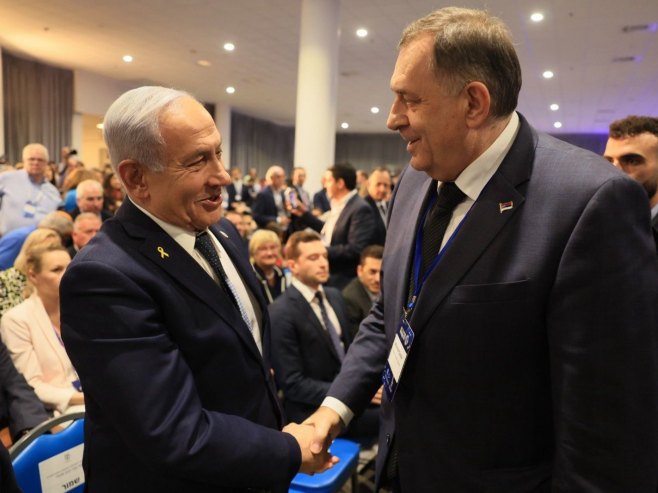
The initiative has also received support from Republika Srpska President Milorad Dodik, who described it as reaffirming the historic partnership between the Serbian and American peoples.
Former Serbian diplomat Zoran Milivojević said the proposal represents an important political signal that could reflect a broader shift in Washington’s approach toward Serbia, Republika Srpska, and the Serbian community in the United States.
“This is part of a broader mosaic that could shape Serbian-American relations in the future,” Milivojević said, arguing that the initiative builds upon diplomatic relations dating back to 1881.
The strategic dialogue between Belgrade and Washington formally began on 17 July, when Serbian Foreign Minister Marko Đurić met with U.S. Secretary of State Marco Rubio. During the meeting, the two sides signed an agreement on cooperation in energy infrastructure and regional energy security, identifying energy as a key pillar of future bilateral cooperation.
According to Ilan Berman, Vice President of the American Foreign Policy Council in Washington, the dialogue represents more than a symbolic diplomatic gesture. In his assessment, Serbia’s importance has grown because of its role in regional energy security, strategic mineral resources, defence cooperation, and its broader geopolitical position.
Berman pointed to Serbia’s role in the proposed Vertical Gas Corridor, which could facilitate the transport of U.S. liquefied natural gas and Azerbaijani gas into Central and Southeast Europe, reducing regional dependence on Russian energy supplies. He also highlighted Serbia’s significant lithium reserves and its decision to pursue their development with European partners.
He further argued that expanded U.S.-Serbia defence cooperation could help align Serbia’s armed forces more closely with Western standards, while Serbia’s relations with Israel and the United Arab Emirates further increase its strategic importance for the United States.
Analysts quoted in the report conclude that while the proposed Serbian-American Heritage Month would not, on its own, transform bilateral relations, when viewed alongside the expanding strategic dialogue, growing congressional engagement, and cooperation in energy and security, it may signal the beginning of a broader and more substantive phase in relations between Washington and Belgrade.
Source: Glas Srpske