
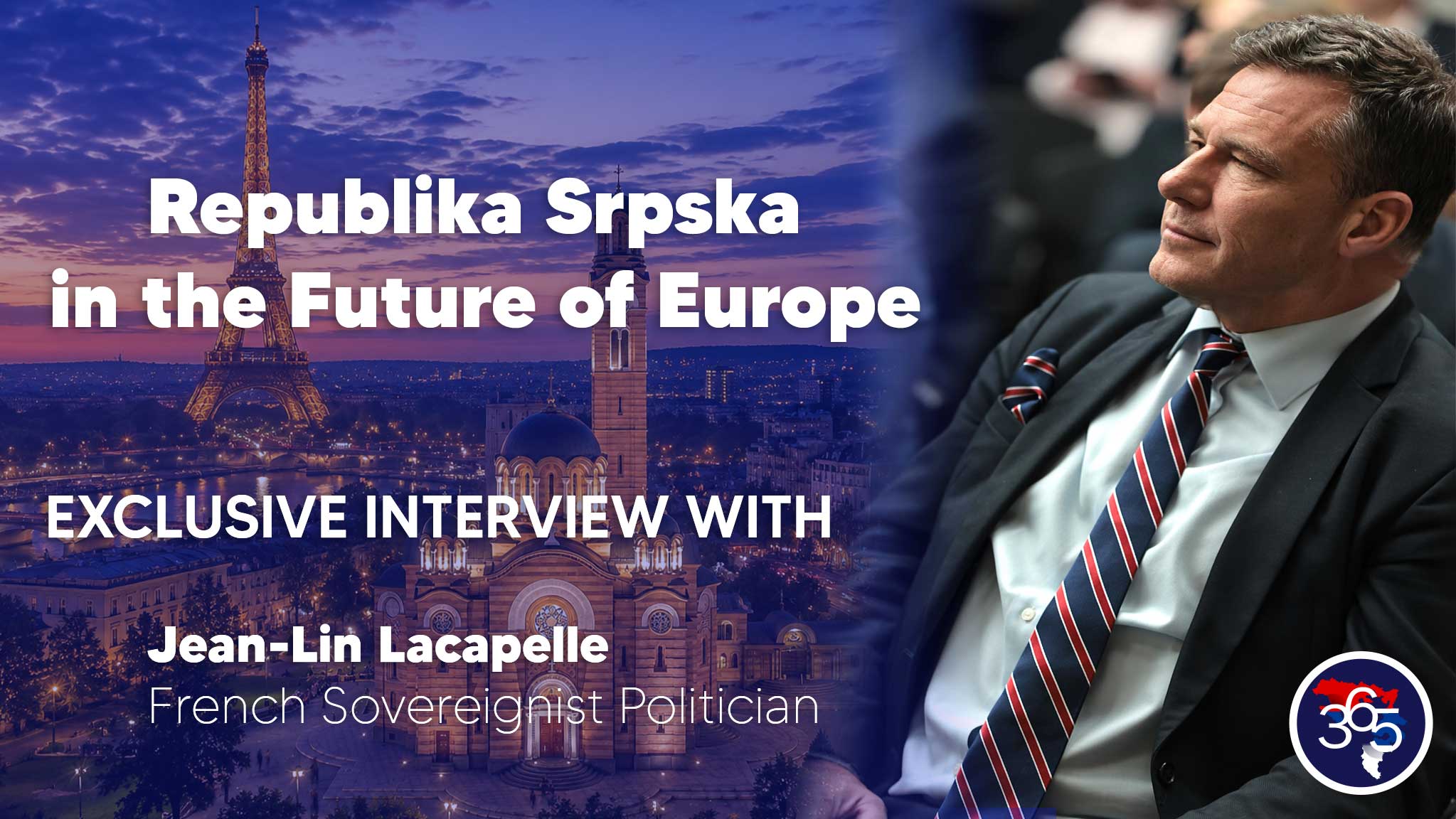
At a time when Europe is facing an identity crisis, mounting migration challenges, and an increasingly visible clash between national sovereignty and the further centralization of the European Union, Srpska365 spoke with Jean-Lin Lacapelle, a prominent French sovereignist, former Member of the European Parliament, and member of the national leadership of Marine Le Pen’s party.
In an interview with Srpska365, Lacapelle discusses the historic French-Serb alliance, the position of Republika Srpska in contemporary Europe, the legacy of the Dayton Agreement, the migration crisis, the future of the European Union, and the upcoming presidential elections in France.
He warns of what he describes as the gradual erosion of the identity of Republika Srpska, criticizes the growing centralization of power in Brussels, and argues that Europe’s future lies in cooperation among sovereign nations and states rather than in the construction of a single supranational structure.

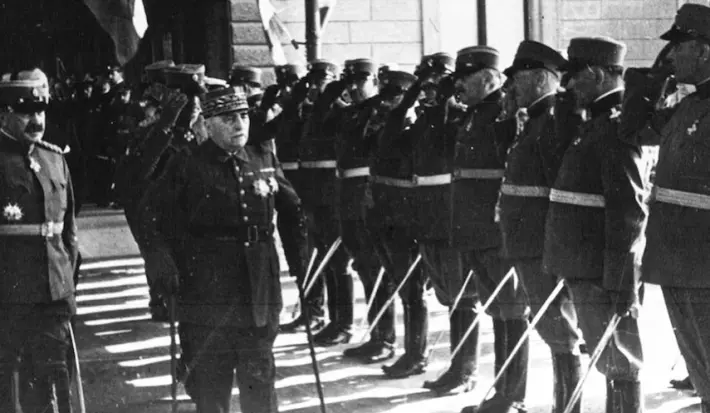
Srpska365: For years, a story has circulated among the Serb people that the famous Orient Express was once delayed in Belgrade because of Milunka Savić and Serb soldiers, as a symbol of the respect France had for the Serbs after the First World War.
Marshal Louis Franchet d’Espèrey was also granted the title of vojvoda of the Serbian Army, an exceptional honour for a foreigner.
How far, in your opinion, has today’s Brussels moved away from the values that once united the Serb and French peoples, and is Serbian-French friendship still something the French are proud of today?
Jean-Lin Lacapelle: At the very beginning, the European Union was supposed to be a bulwark and a shield for the peoples and nations of Europe. It was meant to protect us from unemployment, wars, economic crises, and the major challenges we face. Today, however, the European Union no longer fulfills that role and has completely drifted away from its original mission.
Unfortunately, the values on which the European Union was supposed to be built have also been forgotten, including the great friendship between France and Serbia. The friendship between the French and Serb peoples is very old and deeply rooted in our shared history.
The Serbs have historically been friends of the French, yet the European Union has forgotten those values. France has forgotten them as well, and so has Emmanuel Macron.
I remember the Bastille Day celebrations in Paris when representatives of Kosovo were placed among the honoured guests at the military parade, while representatives of Serbia were pushed into the background. For me, that was a humiliation of Serbian-French friendship and a sign of disrespect toward the Serb people.
The Serbs have long been our friends and allies. They proved that during the First World War, during the Second World War, and throughout history. Sadly, those values have been trampled upon today, because the European Union no longer demonstrates the loyalty and faithfulness that should form the foundation of relations among European peoples.
In a way, I have already answered that question. I am proud of Serbian-French friendship.
I have not forgotten the bombing of Belgrade in 1999. I have not forgotten the monument to Serbian-French friendship in the heart of Belgrade. Nor have I forgotten that during the NATO bombing campaign, two-thirds of the bombs that fell on Belgrade were French. I have not forgotten that a black veil was placed over that monument because the Serbs felt betrayed by the French.
Beyond the human suffering they endured, the Serbs also went through years of sanctions and isolation after the bombing. That is precisely why it is important to remember history and the ties that once united our two peoples.
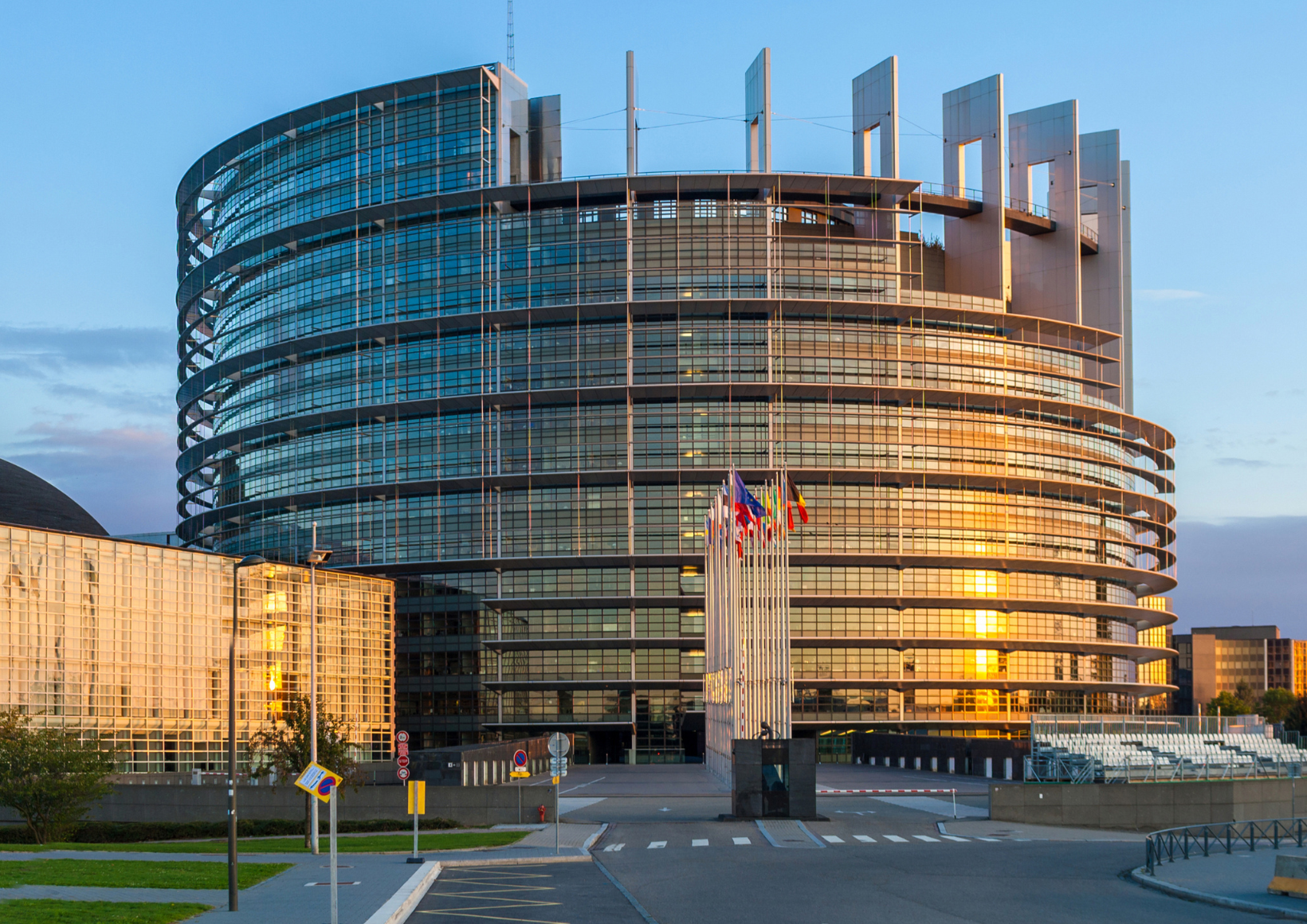
Unfortunately, there are not many of us left today who continue to nurture that friendship. Just yesterday I was at the European Parliament in Strasbourg, attending a meeting of the EU–Serbia delegation, because I have always defended the Serb people and the Serb cause. I consider the constant pressure and blackmail directed at Serbia by the European Union, particularly regarding accession, to be a disgrace.
Nevertheless, Serbian-French friendship is still alive. Tens of thousands of Serbs live in France, I have many Serb friends, and I believe we can be proud of this shared history. Unfortunately, many people have forgotten our common past and everything that once connected us.
For my part, I will continue to be among those who keep the flame of Serbian-French friendship alive, because the French and the Serbs are two proud peoples, and we must not allow that friendship to be forgotten.
Srpska365: Sovereignist movements across Europe increasingly speak about the right of nations to preserve their identity, traditions, and political autonomy.
Do you believe that Republika Srpska is sufficiently successful today in presenting its position and distinctiveness within Europe?
Jean-Lin Lacapelle: In France, we believe that Republika Srpska is not represented in the way it deserves to be. I also believe that the Dayton Accords have, in many respects, failed.
When they were signed in 1995, their positive achievement was that they brought an end to the war. However, there was another important aspect, namely the recognition of three constituent peoples, two entities, and the right of each people to preserve its identity and its place within that system.
Today, in my view, the Dayton Accords have become a failure, and Republika Srpska is gradually being reduced to a minority position, which represents a serious problem.
The European Union supports Bosnia and Herzegovina, supports the institutions in Sarajevo, and supports Bosniak political structures. Mr. Schmidt, who was never elected by anyone and was appointed by the European Union and Germany, is waging a war against the Serb identity.
I believe that Republika Srpska is gradually losing its identity.
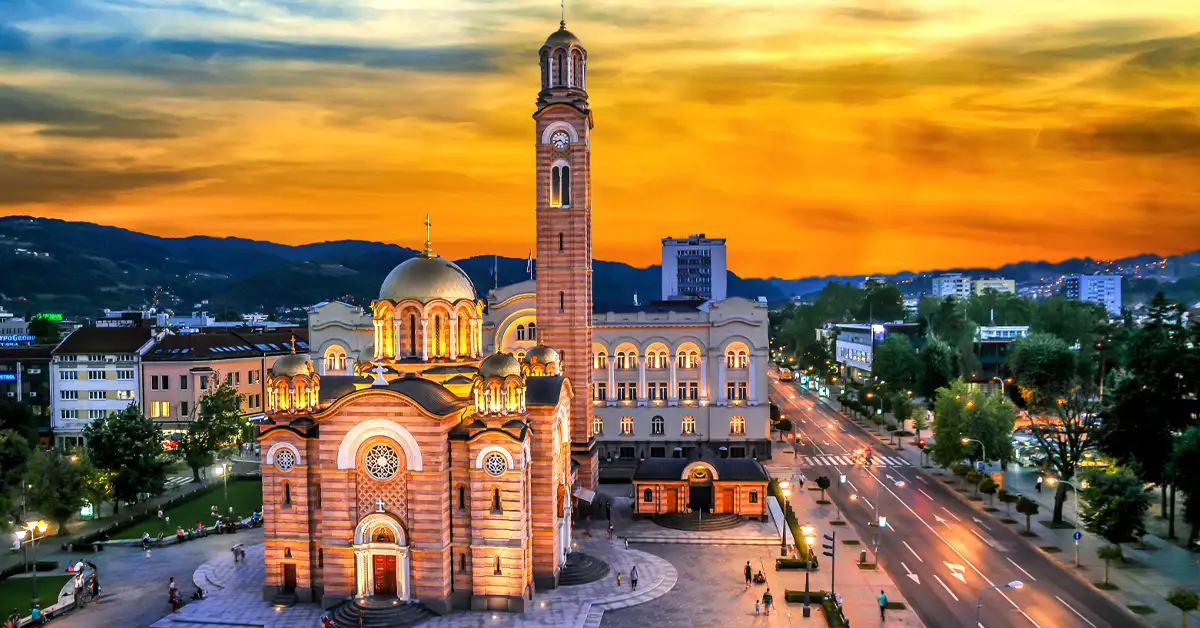
I had the opportunity to visit Banja Luka last year during the January 9 celebrations. I saw a proud people. I saw a proud President Dodik. I saw a beautiful country.
At the same time, however, I see the Serb identity being gradually diluted. Fortunately, the Serb people are a proud people, but the European Union has failed in its role and has not done enough to help Republika Srpska preserve its identity and its stature within the framework established by the Dayton Agreement.
Srpska365: In Republika Srpska, there is often a perception that part of Brussels’ policy seeks to centralize Bosnia and Herzegovina, even though the Dayton Agreement established a different constitutional structure.
Do you believe that Europe today sufficiently understands the Dayton principle of balance between peoples and entities, and is it possible to build a stable Bosnia and Herzegovina without respecting the Dayton competencies of Republika Srpska?
Jean-Lin Lacapelle: No, I do not believe it does.
Today, the European Union supports Bosnia and Herzegovina, its institutions, and the authorities in Sarajevo, but it does not show the same understanding for the position of Republika Srpska.
When Dayton was signed, the idea was that all three peoples would be able to live together, exist, and preserve their identities. Today, we are moving away from that principle. Instead of balance, we are witnessing increasing centralization and growing pressure on Republika Srpska.
For that reason, I believe Europe has failed in its role as a guarantor of the Dayton order. Rather than preserving balance, it increasingly supports policies that weaken the position of Republika Srpska and undermine its identity.
No, I do not believe it is possible to build a stable Bosnia and Herzegovina without respecting the Dayton competencies of Republika Srpska. If we want stability, then we must respect the foundations upon which peace was established.
Republika Srpska is an integral part of the Dayton structure, and every attempt to strip it of its competencies or weaken its identity represents an attack on the Dayton Agreement itself.
We can already see that the tripartite system is no longer functioning as originally intended. That is precisely why I believe a stable Bosnia and Herzegovina cannot be built through centralization, but only through respect for the rights of all peoples and entities envisaged by the Dayton Agreement.

Srpska365: In recent years, Europe has faced a migration crisis, growing security challenges, and an identity crisis.
Do you believe that Europe has lost part of its civilizational self-confidence?
Jean-Lin Lacapelle: The European Union was supposed to protect us from mass immigration. Instead, it has accelerated the migration crisis and, in doing so, contributed to the erosion of our identity.
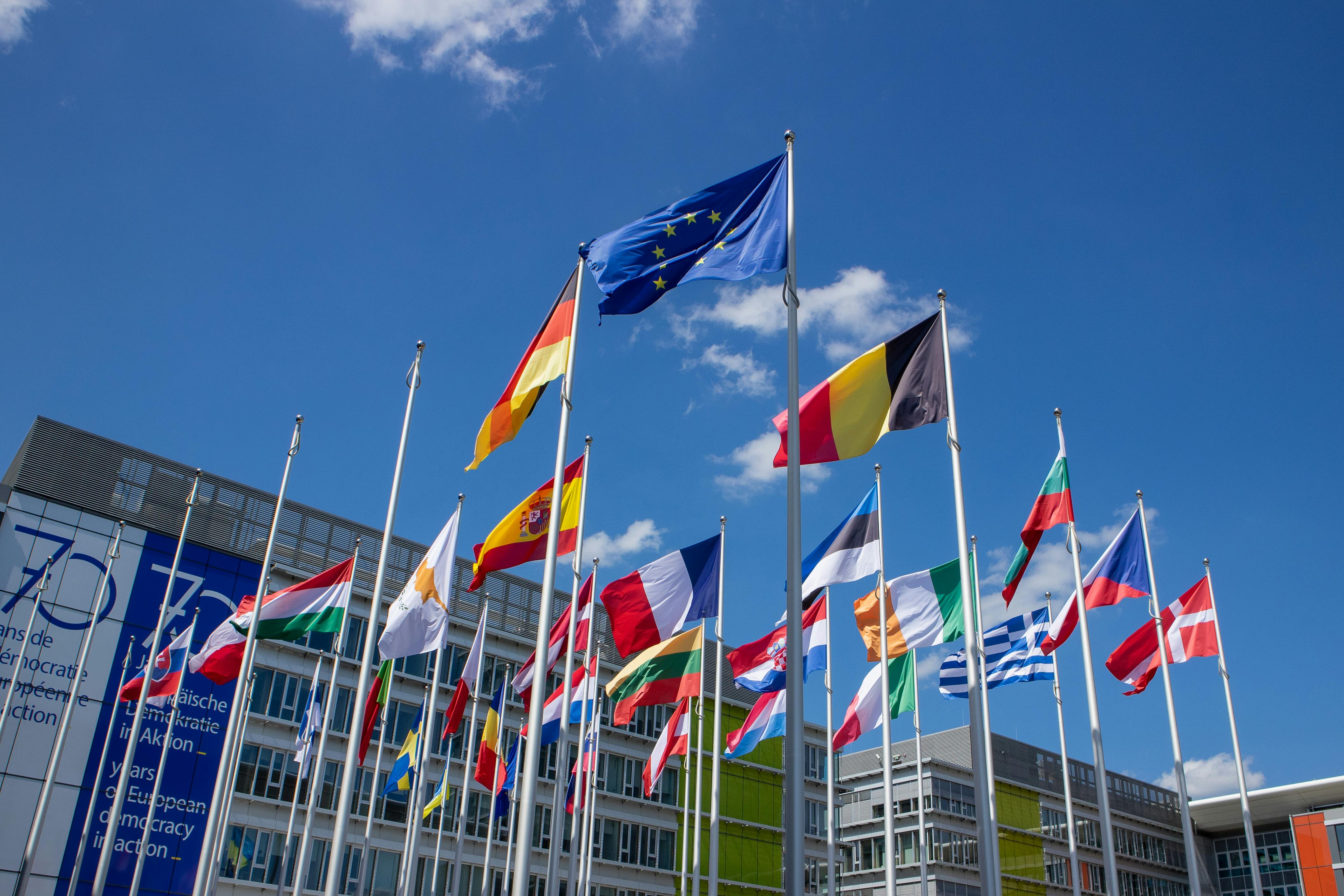
Every year, around 500,000 migrants legally enter France alone, and that figure does not even include illegal immigration. The Pact on Migration and Asylum adopted by the European Parliament is now being implemented across Europe. Brussels wants to distribute migrants among all 27 member states, while countries that refuse to accept these quotas face financial penalties.
That is unacceptable, because the European Union is interfering with the sovereign rights of nation-states. Every country must be free to determine its own migration policy.
The European Union is no longer a shield or a bulwark. Today, Europe’s borders are effectively open, and that encourages mass immigration. As you mentioned in your question, such immigration contributes to the loss of identity.
Europe has Christian roots, but those roots are gradually disappearing. They are not even recognized in the institutional foundations of the European Union, and we are increasingly witnessing a decline in Europe’s civilizational self-confidence.
Srpska365: Do you believe that Europe is gradually losing its historic nations and identities in favour of a uniform political model?
Sovereignist movements are gaining strength across many European countries. In your view, is this merely a temporary political reaction, or the beginning of a deeper transformation of the European political order?
Jean-Lin Lacapelle: Absolutely.
Today, the European Union is trying to force all nations into the same mould. It seeks to create a political model in which everyone is the same, while national identities, cultures, and histories gradually disappear.
This is the very essence of the federalist project promoted by Brussels.
The European Union constantly speaks about its values and demands that everyone embrace them. But if you do not accept those values, or if you pursue an independent policy, you are subjected to pressure and sanctions.
For that reason, I believe that the European Union is gradually dismantling the identity of every European nation and attempting to create a supranational structure in which the distinct characteristics of peoples are pushed aside.
I believe we are witnessing a profound political transformation.
Across Europe, we are seeing the awakening of patriotic and sovereignist movements. We see it in Italy, Hungary, Belgium, Portugal, Spain, and many other countries.
More and more people understand that the European Union is heading in the wrong direction and that what Europe needs is a Europe of sovereign nations rather than a Europe of centralization.
We are not opposed to European cooperation. On the contrary, we support a great Europe of free nations and states that cooperate on common projects while preserving their identity, culture, and history.
That is why I believe this is not a temporary reaction, but the beginning of a deeper political transformation that will shape Europe’s future in the years ahead.
Srpska365: France was once a symbol of a strong nation-state and an independent foreign policy.
Does France still have the capacity to pursue an independent European policy, and how do you see Europe’s role in the emerging multipolar world?
Jean-Lin Lacapelle: Several decades ago, France enjoyed great prestige around the world. It was a country that knew how to mediate in crises and help resolve conflicts.
Today, unfortunately, France no longer plays that role. Instead of acting as a mediator in the conflict between Russia and Ukraine and attempting to bring all sides to the negotiating table, it has chosen a side and is further escalating tensions.
France now has poor relations with Russia, China largely ignores us, relations with the United States are no longer what they once were, and within the European Union, Germany increasingly sets the agenda.
In Africa, where France once exercised considerable influence, it is now losing ground. Russia and China have taken over much of that space. For that reason, I believe France no longer plays the role it once held on the international stage, and that is deeply regrettable.
The global order has indeed changed. The balance of power today is very different from what it was twenty or thirty years ago.
Europe’s problem is that it has become too dependent on the United States while at the same time maintaining poor relations with other major powers. If Europe wants to play a significant role in the new world order, it must regain its independence.
In my view, one of the greatest challenges Europe will face is radical Islamism. I am not referring to Muslims who respect the laws and values of the countries in which they live, but to radical Islamist movements that seek to impose their political vision on society.
That is why I believe Europe must preserve its civilizational and Christian roots and be capable of protecting its peoples, its culture, and its future.
Srpska365: Throughout history, the Balkans have often been a region where great powers and competing interests have collided.
Do you believe the region could become more geopolitically important in the coming years than it is today?
Jean-Lin Lacapelle: I hope the Balkans have a future, because the Balkans have a history and an important place within European civilization.
However, the future of the Balkans will depend on whether the peoples of the region can preserve their independence and avoid excessive external influence.
The United States played a significant role in the conflicts of the former Yugoslavia, while today the European Union is seeking to draw the countries of the Balkans into its political system.
My advice, particularly to Serbia, is not to join the European Union if it wishes to preserve its identity, its freedom, and its sovereignty. The European Union today seeks to shape all states according to the same model, and this inevitably leads to the weakening of national distinctiveness.
The Balkans have their own history, culture, and identity. It is up to the peoples of the Balkans themselves to decide their future and to ensure that their traditions and historical heritage are neither marginalized nor forgotten.
Srpska365: Finally, what kind of Europe do you expect to see over the next ten to twenty years — a Europe of nations and sovereign states, or an even more centralized European Union?
And what are your expectations regarding the French presidential election in 2027? Could it change the future direction of the European Union?
Jean-Lin Lacapelle: I hope that we will win the presidential election in 2027. If we do, we will change Europe, because France, after Germany, is the second-largest financial power in the European Union and one of its most important pillars.
As Jordan Bardella and Marine Le Pen often say, we will go to Brussels and renegotiate a number of European treaties. Today, European law takes precedence over national legislation and the decisions of national parliaments. We want the French people to decide, through a referendum, that laws adopted in France should take precedence over European and international regulations.
For us, the key issue is the restoration of sovereignty. That is why I hope for the victory of Marine Le Pen or Jordan Bardella, because it would represent a new source of hope not only for France, but for Europe as a whole.
Italy, France, and a growing number of European countries are now calling for change. If patriotic forces continue to gain strength, we will be able to transform the European Union from within.
Today, Brussels is trying to assume ever more powers and interfere in the internal affairs of sovereign states. That is not the role of the European Union. We stand for a Europe of cooperation, a Europe of identity, and a Europe of free nations.
We do not want to destroy Europe, nor do we want to leave it. We want a Europe that respects the history, freedom, and sovereignty of every nation.
The future of France should be decided by the French people, just as the future of Serbia should be decided by the Serb people, not by Brussels.
I am convinced that a victory for patriotic forces in France would mark a historic turning point for Europe. I also believe that it would contribute to the revival of Serbian-French friendship, because throughout history the Serbs have always stood on the right side of history.
The Serb people made enormous sacrifices in both World Wars, and Europe should never forget that. That is precisely why I believe that Serbian-French friendship has a future and deserves to be strengthened once again.