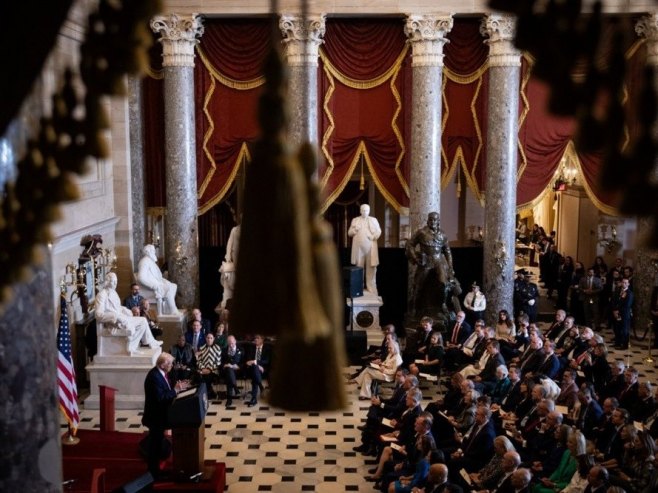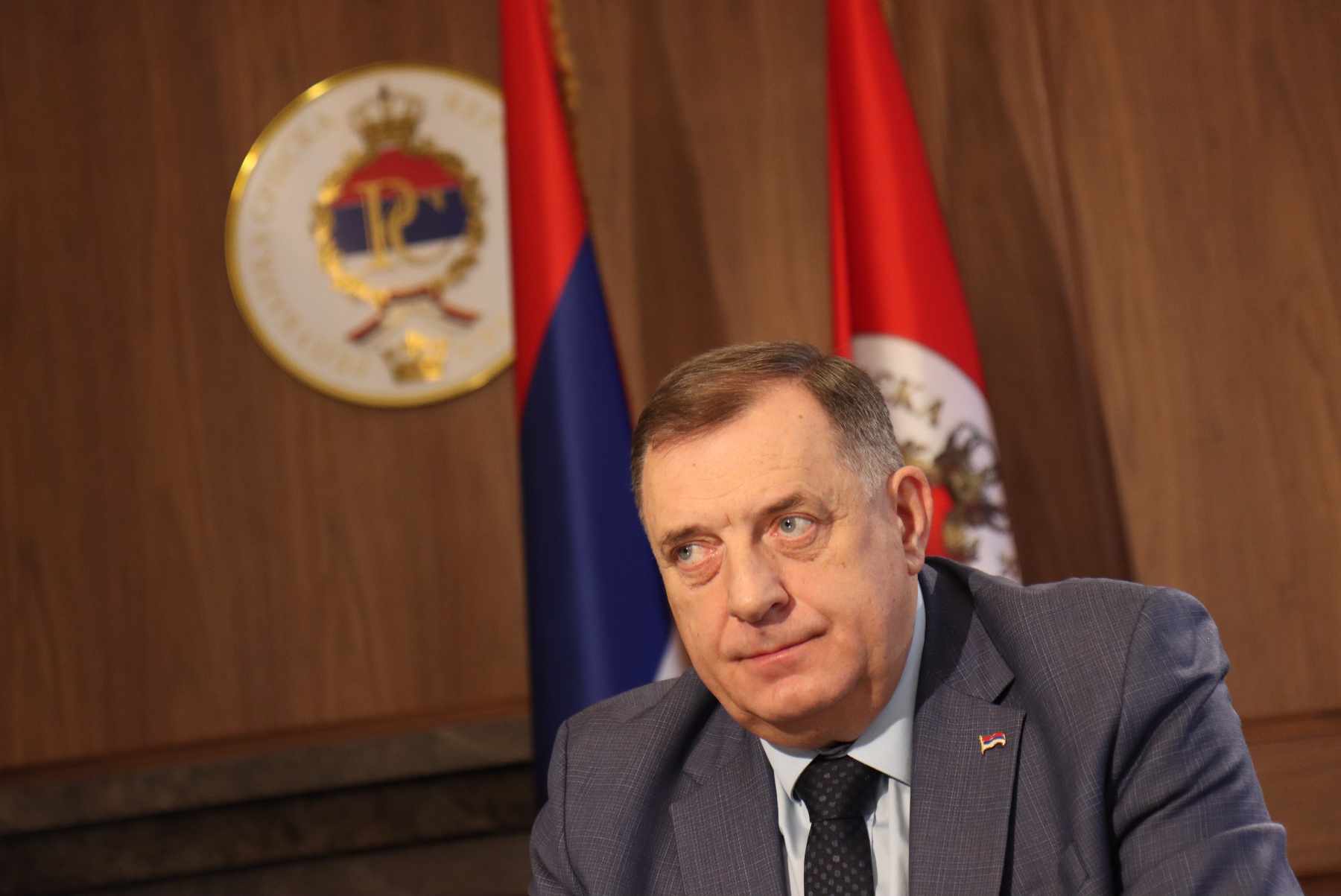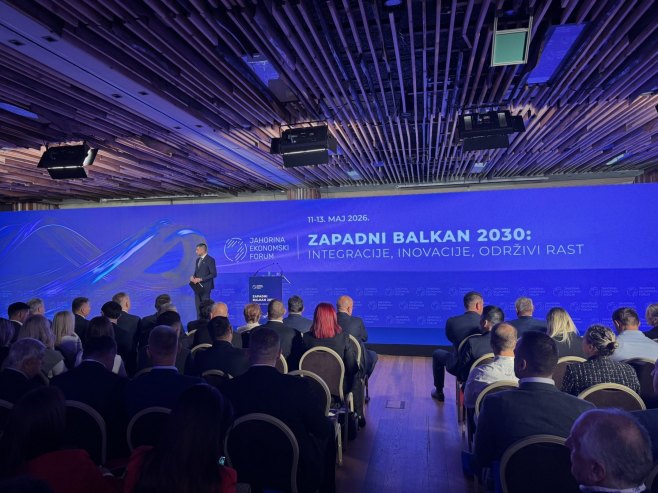




This writer recently had the opportunity to present Milorad Dodik – the influential voice of Bosnia’s Serb- majority Republika Srpska – with the inaugural “Leadership and Standing Up for Democracy” award at Judson University’s World Leaders Forum.
Milorad Dodik’s recent visit to Judson University sparked protests and predictable outrage.
But beneath the noise lies a more important question: why should Americans care about the Serbian people of Republika Srpska?
In an age of endless global crises, it is easy to tune out places like the Balkans.
But ignoring the Serbian struggle for sovereignty would be a mistake – one that runs counter to American interests, American values, and our own history.
First, there is a real and lasting debt of gratitude.
During World War II, when Nazi Germany and its Croatian fascist allies overran Yugoslavia, ethnic Serbs paid a horrific price.
Hundreds of thousands were slaughtered in one of the war’s most brutal campaigns of ethnic violence.
Yet even in the face of that terror, Serbian resistance fighters and civilians stepped up when it mattered most to the United States.
In Operation Halyard – the largest rescue of downed American airmen in history – Serbs risked everything to shelter, feed, and evacuate more than 500 U.S. pilots shot down over occupied territory.
They built makeshift airstrips under enemy fire and smuggled American servicemen to safety. Americans do not forget those who stood with us in our darkest hours, and the Serbian people of Republika Srpska deserve to be heard – not dismissed or demonized.
Second, their fight is rooted in the same principle that gave birth to our nation: sovereignty.
Republika Srpska exists because of the U.S.-brokered Dayton Accords, which ended the Bosnian war and created a delicate balance between competing groups.
That agreemente stablished two entities with defined autonomy and protections designed to prevent domination by any one faction.
Yet for years, global bureaucrats and so-called “high representatives” have worked to chip away at that autonomy, pushing for greater centralization in Sarajevo.
The Serbian people – and leaders like Dodik – have resisted, seeking to preserve their language, Orthodox Christian faith, traditions, and right to self-government.
That is not extremism – it’s self-determination. It’s the same instinct that drove America’s founding and continues to define our national identity.
Third, stability in the Balkans matters to American security. Bosnia remains fragile.
Demographic tensions, outside influence from powers like Russia, Turkey, and China, and the risk of renewed unrest all pose real challenges.
A destabilized region could once again send shockwaves through Europe and beyond, including migration pressures and security concerns that ultimately reach American shores.
For too long, Western media narratives have painted Serbs as one-dimensional villains.
The truth is far more complex. Atrocities occurred on all sides during the 1990s conflicts, but the broader story – one that includes Serbian suffering and legitimate grievances – has too often been ignored.
President Donald Trump understood the importance of realism in foreign policy, and it’s why Dodik has praised Trump’s leadership, arguing that strength and clarity – not endless intervention – offer the best path to resolving conflicts.
That approach rejects failed globalist strategies and instead respects sovereignty and local realities. Americans do not need to micromanage Bosnia, but we should reject the idea that Republika Srpska is the problem.
In many ways, it is a stabilizing force seeking to uphold the very framework the United States helped create.
In a fractured world, lasting peace does not come from forcing uniformity from above – it comes from respecting distinct peoples, their histories, and their right to chart their own future.
It’s time America remembers who stood with us – and why that still matters today.
Source:Newsmax