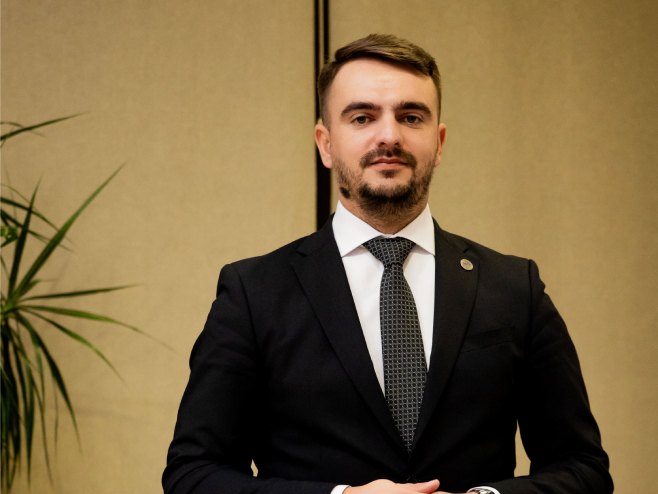

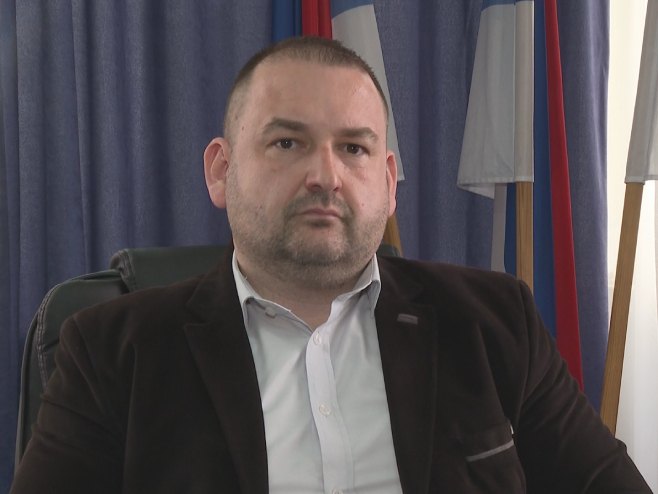
Acting Director of the Republika Srpska Center for Research of War, War Crimes and Missing Persons, Viktor Nuždić, stated that the families of the victims from Ledići are still waiting for justice, 34 years after what he described as one of the most brutal crimes committed against Serb civilians during the Homeland Defence War. He stressed that a judiciary which fails to punish perpetrators becomes an accomplice to oblivion.
- That is why today, more than ever, we must ask the question: is there justice for Serb victims in Bosnia and Herzegovina, or are their sufferings condemned to oblivion, silence, and institutional indifference? – Nuždić said.
He recalled that 22 Serb civilians were killed in Ledići, near Trnovo.
- Among them were elderly people, mothers, women, and children. The youngest victim, Milun Tešanović, was only 18 months old, while Ikonija Vasić was 92 years old. These people were not carrying weapons. They posed no threat to anyone. They were simply Serbs who were killed in their own homes and on their own property – Nuždić emphasized.
According to him, it is particularly devastating that more than three decades later no final conviction has been handed down for the crime. He added that even the presiding judge in the case acknowledged that a terrible crime had been committed and should have been punished, but responsibility for the acquittal was shifted to the Prosecutor’s Office.
- That single statement reflects the entire tragedy of the relationship of Bosnia and Herzegovina’s judiciary toward Serb victims — someone else is always blamed, but those who committed the crimes are rarely held accountable – he said.
Nuždić asked how anyone could speak of the rule of law when no one has been held responsible for the killing of an 18-month-old child.
- How can we speak of reconciliation when the families of the victims have spent 34 years hearing excuses instead of verdicts? How can anyone believe in justice if it remains out of reach precisely when crimes are at their most horrific and obvious? – he asked.
He stated that the scale of the brutality committed in Ledići is reflected in forensic findings showing that many victims were found decapitated.
- Particularly disturbing is the autopsy report for little Milun Tešanović, which states that death occurred as a result of severe destruction of the head caused by a heavy blunt object – Nuždić said.
He added that this is not merely a medical finding, but a document that testifies to the hatred, brutality, and inhumanity inflicted upon innocent people.
- If there is no punishment for such brutality, then we must ask not only where justice is, but whether it exists at all. Justice that fails to recognize the suffering of Serb victims is not justice. Justice that remains silent for more than three decades over the graves of murdered children is not justice – Nuždić stressed.
He said that justice which does not punish perpetrators becomes complicit in forgetting.
Nuždić emphasized that the Republika Srpska Center for Research of War, War Crimes and Missing Persons will not allow the events in Ledići to be forgotten.
- The truth about this crime has been documented and permanently recorded in the “Atlas of Crimes Against Serbs,” as testimony for future generations and as a reminder that Serb victims must not become second-class victims either in memory or in justice – he said.
He added that this is a duty owed to the innocent children who were killed, their families, and the truth itself.
- We owe it to every Serb victim whose name must not disappear into institutional silence and the passage of time – Nuždić concluded.
A memorial service for the 22 Serb civilians killed 34 years ago by members of the Army of Bosnia and Herzegovina is scheduled to be held today in the village of Ledići near Trnovo.
Source: RTRS