


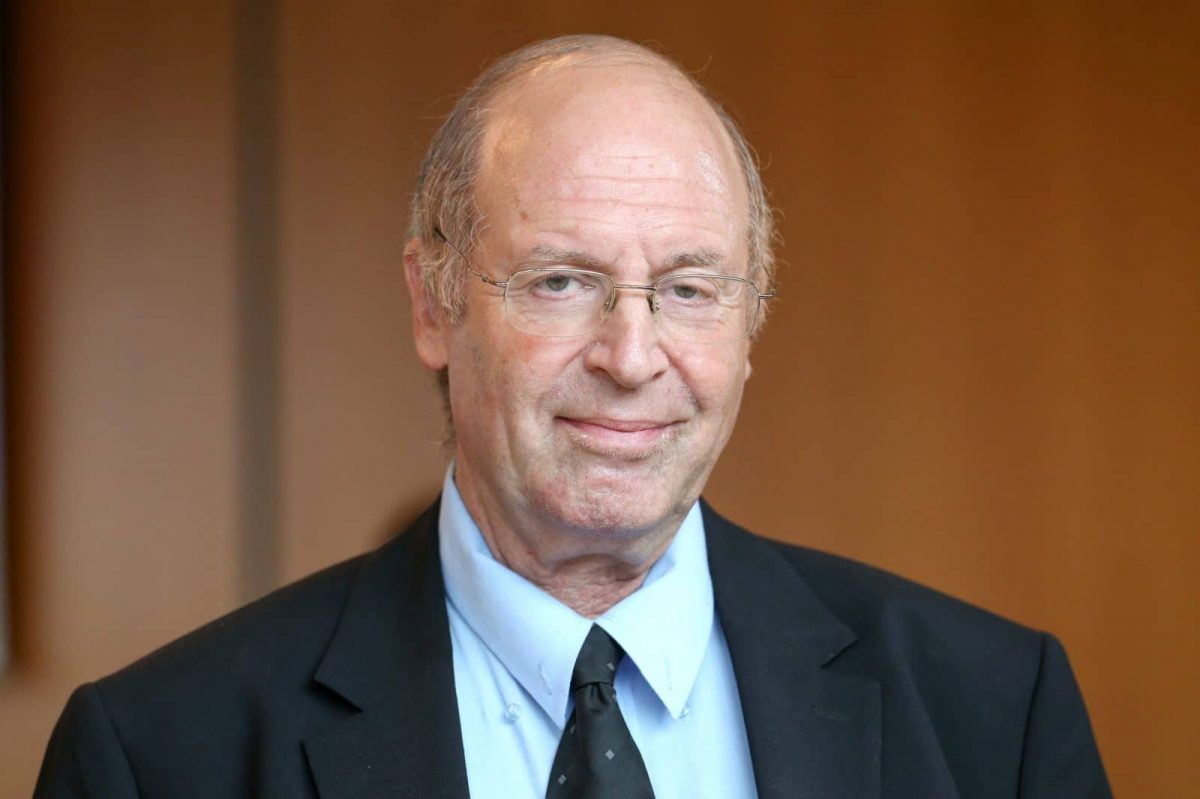
World-renowned Israeli historian and Holocaust scholar Gideon Greif delivered a lecture entitled “The Holocaust and the Culture of Remembrance” in Pale. The event was organized by the Faculty of Philosophy of the University of East Sarajevo and the Centre for Socio-Political Research of Republika Srpska.
Professor Greif, one of the world’s leading experts on Auschwitz and the author of Jasenovac – Auschwitz of the Balkans, has spent the past 14 years researching crimes committed in the Independent State of Croatia (NDH). He emphasized that Jasenovac has never received the level of attention it deserves, either in public discourse or among historians, drawing parallels with the treatment of victims in other concentration camps.
“The killings committed by the Ustaše were more brutal than those carried out by the Germans. There were 57 different methods of killing, and I decided to create a documentary record of these crimes. For a victim, it does not matter how they were killed; one method is not worse than another. Even wild beasts were more merciful than the Ustaše,” Greif said.
Reflecting on more than a decade of research into the suffering of Serbs, Jews and Roma in Jasenovac, Greif warned that much of the history remains insufficiently documented.
“Much of it is still not adequately documented, but at least I have managed to record a significant part of the crimes committed by the Ustaše in Jasenovac during the Second World War. Today, in 2026, we know far more about what happened there, yet for a long time very few people knew anything about it. If the victims could rise from their graves, they would ask us to speak on their behalf – not for a day or two, but every single day. They would say: ‘Do not allow us to be forgotten,’” Greif stated.
As part of the programme in Pale, the film Son of Saul, based on Greif’s acclaimed book We Wept Without Tears, was also scheduled to be screened, followed by a discussion between the Israeli historian and participants.
Source: RTRS