

The development of business zones in Republika Srpska, led by the successful example of Derventa, which accounts for around one tenth of the total exports of Republika Srpska, has proven to be a key instrument for attracting foreign investment. The announcement of the formation of another zone is set to further strengthen this local community’s leading position.
Key information
- Derventa accounts for around 10% of the total exports of Republika Srpska
- Third business zone “Babino Brdo” announced
- 40–50 new business entities planned
- 53 business zones in 32 municipalities across Republika Srpska
- Fast permits and infrastructure are crucial for investors
- Business zones are the main tool for attracting foreign investment
Business zones as an engine of the economy
Across Republika Srpska, 53 business zones have been identified in 32 local self-government units. Data from the Ministry of Economy and Entrepreneurship show that Derventa and Prnjavor, along with Gradiška and Banja Luka, generate the highest turnover and employ the largest number of workers within these zones.
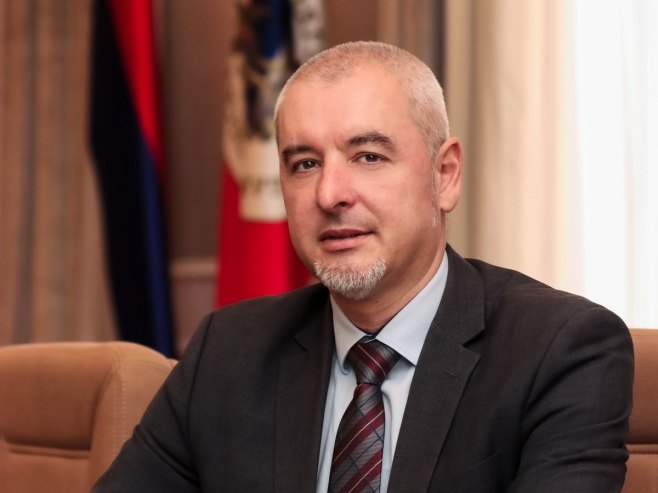
The Mayor of Derventa, Igor Žunić, told Glas that this local community continues its steady economic growth and expansion of business capacities, announcing the establishment of a third business zone. According to him, nothing is left to chance; active planning is used to respond to market demand.
“We currently have two defined business zones and both are almost fully occupied. Due to continued investor interest this year, we have initiated amendments to the regulatory plan and the establishment of a new zone, ‘Babino Brdo’. It will cover a significant area and allow for planning between 40 and 50 new business entities,” said Žunić.
Fast permits and exports exceeding 400 million KM
According to him, Derventa achieves exports exceeding 400 million KM, representing about ten percent of the total exports of Republika Srpska and nearly half of the exports of the Doboj region.
For foreign investors, transparency, openness and operational efficiency of services are the most important factors.
“When the documentation is complete, a construction permit is issued within two days. There are no delays or additional charges,” Žunić stressed, adding that retaining investors depends on constant communication and resolving infrastructure issues, from access roads to the electricity network.
He expects the procedure for amending the regulatory plan for the new zone to be completed within six months, after which project documentation will be prepared and a public call issued to interested businesses.
What is necessary for zones to succeed?
On the other hand, economist Zoran Pavlović points out that business zones make sense only if all prerequisites are met.
“There are two options: a classic business zone, where investors obtain favourable land, and a free customs zone, where imported raw materials could be used without VAT and customs duties. However, legislative solutions in that segment have never been fully implemented,” Pavlović stated.
He emphasized that a zone must have adequate transport connectivity, including access to a motorway, as well as a flexible administration that enables quick issuance of permits, noting that according to World Bank reports, construction permits in some areas are awaited for more than 18 months.
As positive examples, he cited Gradiška, due to its proximity to the border, where a large German company opened a factory, and Prnjavor, which has direct access to the motorway.
“The essence lies in active and professional marketing. If you do not promote your advantages to foreign chambers of commerce and potential investors, no one will come. We cannot leave everything to chance and word-of-mouth recommendations,” Pavlović said.
Area and economic impact
Industrial zones across Republika Srpska, covering more than 2,000 hectares, have become a key driver of the domestic economy, generating revenue of 2.64 billion KM and employing more than 11,000 workers in the past year.
Alongside Derventa, zones in Istočna Ilidža also contribute significantly to strengthening the business environment. Positive experiences from Serbia serve as a direct guideline for further development, and its management and investment attraction models are planned to be applied to local business locations along motorways and border crossings.
Source: Glas Srpske