


Within diplomatic and security circles, a growing and uncomfortable question is being raised—whether the international community applies a selective approach when it comes to sanctions and accountability for the prolonged political deadlock in Bosnia and Herzegovina.
According to several well-informed sources, surprising changes could occur in the coming months on sanctions lists—not among politicians, but within the judiciary, reports Glas Srpske.
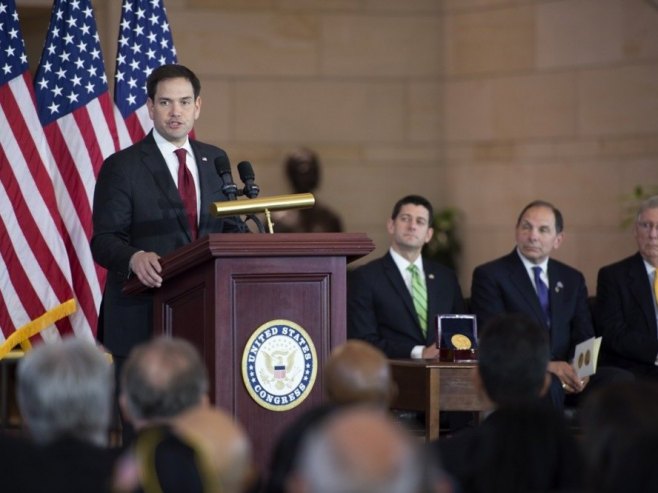
At the heart of this speculation is a precedent recently set in the United States: Secretary of State Marco Rubio initiated sanctions against four judges of the International Criminal Court due to the political consequences of their rulings related to Gaza.
The sanctions target Solomy Balungi Bossa (Uganda), Luz del Carmen Ibáñez Carranza (Peru), Reine Alapini-Gansou (Benin), and Bettina Hoyler (Slovenia). Two of them initiated proceedings for war crimes against Israeli Prime Minister Benjamin Netanyahu and Defense Minister Yoav Gallant, while the other two supported an investigation into crimes allegedly committed by U.S. personnel in Afghanistan. Judge Karim Khan was already sanctioned for his role in the probe against Israeli officials.
This precedent shattered the long-standing myth that judges are beyond the reach of political consequences. The message is now clear: the judiciary is no longer untouchable. And this logic, sources say, could soon become relevant for Bosnia and Herzegovina.
“In the spotlight are prosecutor Nedim Ćosić and judge Sena Uzunović, whose names are increasingly linked with allegations of covert arrangements with political figures, selective prosecution, and the systemic maintenance of the status quo. While there are no official confirmations yet, the question is being raised more openly: will the U.S. for the first time impose sanctions on those who do not act as independent judicial officials, but as shields for political interests?” said one diplomatic source familiar with the developments.
At the same time, more eyes are turning toward High Representative Christian Schmidt, whose legitimacy has never been confirmed by the UN Security Council, but whose imposed laws have—according to many—radicalized the political climate and paralyzed institutions.
“Although there is currently little formal basis for sanctioning Schmidt, some diplomatic channels are reportedly becoming increasingly willing to reconsider his role in deepening the institutional crisis. While party leaders clash in public and embassies arrange behind-the-scenes meetings outside institutional frameworks, one question is growing louder in Bosnia and Herzegovina: who is truly destabilizing the state—those making decisions in the open, or those manipulating the judiciary from the shadows and relying on its willingness to play a dishonorable role?” the source concluded.
Source: RTRS