


During the second half of the 19th century, the Principality and later Kingdom of Serbia sought to overcome the legacy of Ottoman rule and economic backwardness in an effort to catch up with modern European states.
This transformation was shaped by several influential figures of the Serbian political elite, including Ilija Garašanin, Jovan Ristić, Jovan Marinović, Stojan Novaković and Nikola Pašić.
These statesmen helped guide Serbia’s development by limiting the arbitrary authority of rulers, establishing political parties and strengthening parliamentary institutions. They promoted the rule of law, modernized public administration, encouraged economic development and established cultural and educational institutions essential to the emergence of civil society and an intellectual elite.
Through diplomacy, they also navigated Serbia through a turbulent period of European political change.
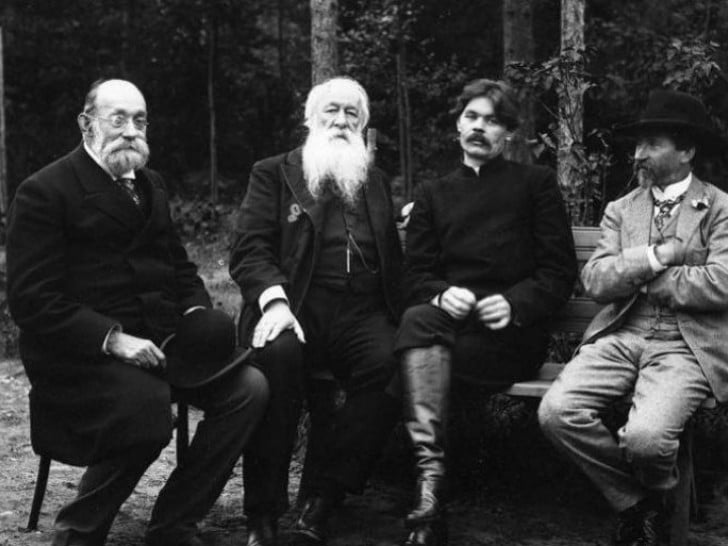
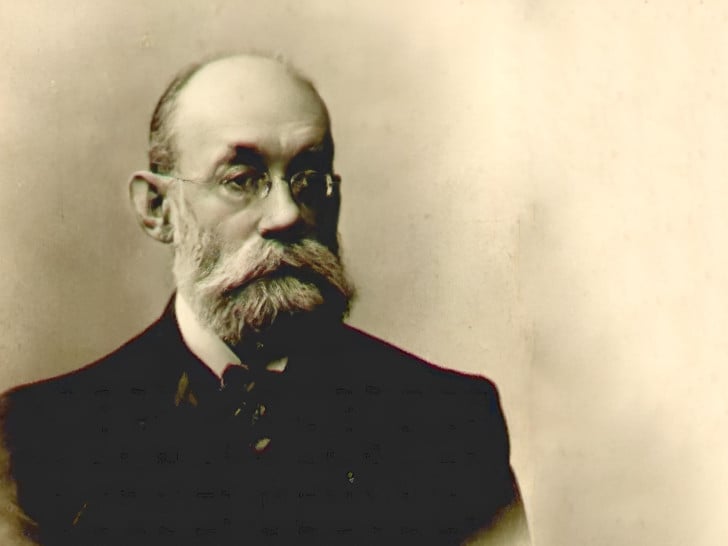
Among them, Stojan Novaković occupies a particularly prominent place. Widely regarded as one of the greatest Serbian intellectuals of the second half of the 19th century, he combined an extraordinary academic career with decades of political and diplomatic service.
He was a member and longtime president of the Serbian Royal Academy, a member of the Russian Academy of Sciences and a corresponding member of the French Academy.
Novaković also served as a professor at Belgrade’s Higher School, president and founder of the Serbian Literary Cooperative, and director of the National Library. His scholarly interests included philology, history, translation and heraldry.
Over four decades of public service, as one of the leaders of the Serbian Progressive Party, he held some of the country’s most important positions, serving three ministerial terms, twice as prime minister, and as Serbia’s diplomatic representative in Constantinople on two occasions and later in St. Petersburg.
From a poor family in Šabac to Serbia’s political elite
Stojan Novaković’s father, Jovan, moved to Šabac from Bosanska Krajina around 1835, fleeing Ottoman oppression and seeking refuge in the Serbia of Prince Miloš Obrenović, as many others did during that period.
Jovan married Janja, and in 1842 they had a son named Konstantin, known as Kosta.
During the national romanticism of his youth, Konstantin adopted the Serbian name Stojan, translating the meaning of his Greek-derived name into Serbian.
In the autumn of 1857, at the age of 15, the impoverished son of a Šabac carpenter arrived in Belgrade, where he completed his secondary education and subsequently studied law at the Lyceum.
His student years were marked by severe financial hardship. He worked various jobs to afford basic food and modest accommodation.
Having experienced poverty firsthand, Novaković later supported disadvantaged students while maintaining a frugal lifestyle himself.
He became known for his tireless work ethic, meticulous organization and extraordinary discipline.
Alongside his official duties, he pursued extensive scientific research, historical studies and journalism. His daily schedule was reportedly so precise that people joked they could set their watches by him.
A passionate patriot and educational reformer
Novaković joined the Serbian Learned Society in 1865 and, two years later, became a member of the United Serbian Youth, an organization that played an important role in promoting Serbian national aspirations.
He soon became a professor at the Higher School in Belgrade and served as teacher and tutor to the young Prince Milan Obrenović between 1868 and 1872.
After Jovan Ristić, another prominent Serbian statesman of Bosnian origin, recognized Novaković’s abilities, Prime Minister Jovan Marinović also took notice of the young scholar.
In 1873, Marinović brought Novaković into high politics by appointing him minister of education and religious affairs.
Novaković learned important aspects of diplomacy from Marinović, whom he later described as “the first true European diplomat Serbia ever had.”
Marinović, born in Sarajevo in 1821, was among the ideological founders of the Serbian Progressive Party.
Another statesman originating from Bosnia and Herzegovina, Cvjetko Rajović of Trebinje, had previously served as Serbia’s foreign minister and prime minister between 1859 and 1860.
As education minister, Novaković implemented fundamental school reforms and introduced compulsory primary education.
He was elected to the State Council in 1882–1883 and again in 1885.
Known for personal integrity and intellectual independence, he earned respect even from fierce political opponents.
He remained committed to legality, strong institutions and the development of democratic political relations.
More than 500 scholarly works and 50 books
Novaković’s intellectual achievements extended across an extraordinary range of disciplines.
He published historical studies, linguistic research, legal analyses, works on church history, Slavic mythology, ethnography, archaeology, cultural history, saints’ biographies and Serbian folk traditions.
He edited the literary publication Književni list, wrote school textbooks and initiated work on a dictionary of the Serbian language.
He also translated works by Scherr, Ranke, Voltaire, Pushkin, Mickiewicz and other major European authors.
During approximately 60 years of scholarly activity, he published more than 500 academic papers and other texts, along with 50 books.
Novaković helped establish modern critical historiography in Serbia, and many of his works remain important references for historical research.
He published medieval charters, studied the last members of the Branković dynasty, examined the work of Matthew Blastares and produced numerous studies of medieval Serbian statehood.
His political and historical writings addressed the Balkan Question, the restoration of Serbian statehood and the Ottoman expansion of the 14th and 15th centuries.
One of his most significant achievements was preparing and publishing Emperor Dušan’s Code on two occasions.
In his first edition, produced as a young scholar, he organized the legal provisions into thematic categories.
Three decades later, in 1898, he published The Code of Stefan Dušan, Emperor of the Serbs, preserving the original structure and adding scholarly commentary.
That second edition became a landmark of modern Serbian historiography.
Another major achievement was his History of Serbian Literature, published when he was only 25 years old.
Despite his intellectual stature, Novaković was remembered as a quiet, modest man with refined European manners.
His close friends included distinguished Serbian artists and writers such as Paja Jovanović, Uroš Predić, Laza Kostić, Simo Matavulj and Jovan Jovanović Zmaj.
Books and education as instruments of national unity
Novaković regarded education and culture as essential instruments for preserving Serbian national identity.
He frequently emphasized “the book and the pen” as the most effective means of strengthening the Serbian people.
He believed that improving the position of Serbs living under Ottoman rule required patience, persistence and the gradual use of every legitimate political and cultural opportunity.
His broader ambition was the liberation and eventual political unification of the Serbian people.
He encouraged younger generations to remain confident in their future and to continue working toward national objectives.
“What can the borders of the seven state authorities that currently govern our people do to prevent our spiritual unity through education, books, patriotism and national ideals?” Novaković asked.
“Let us unite our people in spirit, language, national consciousness and education throughout all Serbian regions. Let us never lose heart, and we shall overcome all the borders that now divide us.”
“Let us unite through culture”
In 1909, Novaković published an influential article in the Dubrovnik journal Srđ titled Let Us Unite Through Culture.
He emphasized culture, solidarity and shared traditions as the foundations of unity among Serbs living in different territories.
“Let us never lose heart. Let us move forward diligently and persistently, because the Serbian spirit has survived every hardship thanks to faith, books, language and song,” he wrote.
“Let us unite the hearts of those on the Bojana River near Shkodër, those on the Morava, those on the Una and those beside the cold Vardar.”
As a historian and linguist, Novaković remained deeply conscious of his family’s roots in Bosanska Krajina.
That background profoundly influenced his emotional and political attachment to Serbs living west of the Drina River.
Throughout his scholarly and political career, he repeatedly returned to the history, culture and political circumstances of Bosnia and Herzegovina.
He sought to contribute to the cultural and political emancipation of the Serbian population there, although he generally acted discreetly to avoid exposing local communities to retaliation by the authorities.
Preserving the historical heritage of Bosnia and Herzegovina
Novaković devoted numerous scientific and political works to Bosnia and Herzegovina, which he regarded as an integral part of Serbian cultural and historical heritage.
In his study Serbian Monuments from the 15th to the 18th Century, he published and preserved numerous Cyrillic documents from medieval Bosnia.
These sources later informed his research into the Bosnian nobility and the Kotromanić dynasty.
He emphasized King Tvrtko’s dynastic claim to the Serbian crown through his grandmother Jelisaveta Nemanjić, daughter of King Dragutin.
Bosnia and Herzegovina also occupied an important place in Novaković’s linguistic and literary research.
He sought to demonstrate the historical continuity of Serbian language and culture in the region and interpreted Bosnia and Herzegovina within a broader Serbian historical framework.
His interest in national symbolism was also reflected in his work as a heraldist.
In 1882, at the request of King Milan Obrenović, Novaković designed a new coat of arms for the Kingdom of Serbia.
His initial proposal featured the double-headed eagle of the Nemanjić dynasty, with a shield containing the cross and four firesteels, three horseshoes representing Raška, and a boar’s head pierced by an arrow.
The latter symbol had appeared in historical heraldic representations of Triballia and in Hungarian armorials associated with territories south of the Sava and Danube rivers.
Through these elements, Novaković sought to establish a heraldic connection between Serbia and Bosnia and Herzegovina.
However, the proposal was modified because of concerns that Austria-Hungary, which regarded Bosnia as falling within its sphere of influence, would object.
King Milan, whose elevation to kingship had received Vienna’s support, was unwilling to risk a diplomatic dispute.
The final version of Novaković’s coat of arms was adopted and remains recognizable today.
Bosnia, the Ottoman Empire and the lessons of the Herzegovina uprising
Novaković also examined Bosnia in his extensive study The Turkish Empire Before the Serbian Uprising, focusing particularly on the position of the Christian population within Bosnia’s distinctive feudal system.
Beyond collecting medieval charters and manuscripts, he gathered examples of folk literature and emphasized the linguistic value of Bosnia and Herzegovina’s epic and lyrical traditions.
He also wrote the preface to Petranović’s collection Serbian Folk Songs from Bosnia and Herzegovina.
When the Herzegovina uprising, known as the Nevesinje Rifle, broke out in 1875, Novaković was serving as minister of education and religious affairs.
Prince Milan and the Serbian government approached the crisis cautiously because Serbia was not adequately prepared, either militarily or financially, for war against the Ottoman Empire.
Novaković sympathized deeply with the suffering of Serbs in Bosnia and Herzegovina.
However, he concluded that the uprising, despite its courage, lacked sufficient diplomatic preparation and ultimately benefited Austria-Hungary’s strategic ambitions.
The experience convinced him that Serbia should never again enter a major national struggle without careful planning, effective state organization and international support.
For Novaković, patriotic enthusiasm alone could not compensate for diplomatic isolation or military unpreparedness.
An independent Serbian foreign policy
During his mature political career, Novaković advocated closer relations with Russia while insisting that Serbia should maintain an independent foreign policy.
Following the Congress of Berlin, he increasingly favored distancing Serbia from Austria-Hungary.
He argued that Serbs should be neither blindly Russophile nor Austrophile, but should pursue policies guided exclusively by the lasting interests of their own country.
As education minister, he organized the distribution of textbooks and other literature to Serbian schools and communities within the Ottoman Empire.
His approach to national policy consistently emphasized education, cultural development and institutional organization.
Novaković became one of the principal architects of Serbia’s national policy toward Old Serbia and Macedonia in the late 19th century.
While serving as diplomatic representative in Constantinople, he helped secure the establishment of Serbian consulates in Skopje, Bitola and Priština.
These diplomatic missions employed prominent Serbian writers and intellectuals, including Branislav Nušić, Milan Rakić, Vojislav Ilić and Vladimir Karić.
The central objective of Novaković’s program was to establish Serbian schools and strengthen church institutions in territories where Serbian communities faced violence and pressure from Albanian armed groups and Bulgarian revolutionary organizations.
He also contributed to the publication of the Blue Book, which documented allegations of violence against Serbs in Old Serbia during the late 19th century.
Through these initiatives, Novaković sought to ensure that the concerns of Serbian communities outside the Kingdom of Serbia remained a major foreign policy priority.
Support for religious and educational autonomy in Bosnia and Herzegovina
Novaković strongly supported the struggle of Serbs in Bosnia and Herzegovina for church and educational autonomy under Austro-Hungarian administration.
When Muslim political leaders subsequently launched their own campaign for religious and educational autonomy, he also offered them assistance.
He developed close relations with prominent Serbian representatives from Bosnia and Herzegovina, including Gligorije Jeftanović and Vojislav Šola.
He also maintained contacts with Muslim leaders, particularly the Mostar mufti Ali Fehmi Džabić.
Novaković emphasized the importance of Serb-Muslim cooperation in opposing the policies of the Austro-Hungarian administration.
Alongside legal and financial assistance, he provided political and diplomatic support through his position in Constantinople.
Much of this activity was conducted discreetly because Austro-Hungarian authorities closely monitored and sought to restrict Serbia’s influence in Bosnia and Herzegovina.
The annexation crisis of 1908
After retiring from regular public service in the early 20th century, Novaković increasingly advocated Serbia’s economic and political independence from Austria-Hungary.
He believed Vienna posed a growing threat to Serbia’s strategic interests.
Following Austria-Hungary’s annexation of Bosnia and Herzegovina in 1908, Novaković warned that further aggressive measures, potentially including an attack on Serbia, could follow.
The annexation brought Serbia close to war.
King Peter I Karađorđević turned to Novaković as a respected and moderate political figure capable of bringing divided political parties together in a national unity government.
Despite Novaković’s longstanding loyalty to the Obrenović dynasty, King Peter held him in high regard as a symbol of legalism, political moderation and intellectual authority.
Since ascending the throne in 1903, Peter had frequently consulted Novaković on major national issues.
As prime minister during the annexation crisis, Novaković prepared declarations, memoranda and diplomatic analyses challenging Austria-Hungary’s actions.
He argued that the annexation violated international legal principles and criticized European powers for failing to protect the national and political rights of Serbs in Bosnia and Herzegovina, particularly their claims to self-determination and autonomy.
His writings collected under the title Balkan Questions formed part of this diplomatic campaign.
Novaković also argued that the Congress of Berlin had disrupted the historical connections between Bosnia, Serbia and Montenegro.
In 1906, two years before the annexation, he had published historical and political analyses describing Bosnia and Herzegovina as a persistent source of instability in the Balkans.
The original article raises the question of whether that assessment retains relevance today.
Austria-Hungary and Serbia’s economic independence
Novaković recognized early that Austria-Hungary could use economic pressure to constrain Serbia’s development.
One prominent example was the customs conflict during which Serbian agricultural exports, including grain and livestock, faced restrictions on routes across the Sava and Danube.
He also believed that Vienna encouraged Albanian national aspirations as a means of limiting Serbian influence in the Balkans.
According to Novaković’s interpretation, Austria-Hungary supported the creation of a larger Albanian political entity to prevent Serbia from gaining access to the sea and to establish a barrier between Serbia and Montenegro.
The original author draws a parallel between those historical policies and contemporary geopolitical pressures on Serbia, arguing that similar strategic objectives continue to appear in different forms.
Throughout his life, Novaković emphasized the importance of cultural development, education and national consciousness.
He encouraged individuals to remain politically aware and committed to their communities, particularly given the geographical fragmentation of Serbian populations across several states.
His scholarly and political work was guided by a belief that knowledge of history, language and cultural heritage was essential to national survival and development.
A statesman committed to law and institutions
Novaković was widely respected for his personal dignity, intellectual honesty and resistance to corruption.
He believed that an independent judiciary, parliamentary government and respect for the law were essential foundations of a strong Serbian state.
His loyalty was directed first toward the state and its laws, rather than toward individual rulers.
He frequently resisted the arbitrary decisions of King Milan Obrenović and was known for addressing the monarch with unusual frankness.
When disagreements over the king’s authoritarian tendencies, political intrigues or confidential arrangements with Vienna became impossible to resolve, Novaković sometimes withdrew from domestic politics into diplomatic service.
Following the dynastic change of 1903, he continued serving Serbia without difficulty, accepting the new monarchy while remaining committed to the continuity of state institutions.
Like many Serbian intellectuals and politicians of his generation, Novaković also supported the idea of South Slavic unification, which he regarded as a geopolitical necessity.
The author argues that advocates of this vision underestimated the strength of distinct national identities and the political divisions that would later challenge Yugoslav unity.
Family life and personal legacy
Stojan Novaković was married to Jelena Kujundžić, sister of the prominent Serbian philosopher, politician and poet Milan Kujundžić Aberdar.
Jelena was an exceptionally educated woman who spoke German, Russian and French and translated literary works from French.
She was also a trusted collaborator in her husband’s intellectual and public life.
Like many educated Serbian women of the period, she participated in humanitarian activities and served as a volunteer nurse during the Serbian-Ottoman wars.
The couple had two children.
Their daughter Milica married into the Rajković family, while their son Mileta St. Novaković became a distinguished expert in international law.
Educated at the University of Paris, Mileta later served as a prominent professor at the Faculty of Law in Belgrade.
Stojan Novaković died in Niš on February 18, 1915, during the difficult wartime period of the First World War.
A symbol of cultural unity
One of Novaković’s final major public appearances in Bosnia and Herzegovina took place in September 1912, when the Serbian cultural and educational society Prosvjeta celebrated its tenth anniversary in Sarajevo.
Novaković attended as the most distinguished guest and was received with exceptional honors.
At the organizers’ request, he chaired the ceremonial assembly.
He was accompanied by a prominent delegation representing the political, cultural and intellectual life of the Kingdom of Serbia.
Together with delegations from other regions, their presence carried considerable cultural, scholarly and political significance for Serbs in Bosnia and Herzegovina.
The gathering was regarded as a symbol of cultural and spiritual unity and as a peaceful but determined expression of opposition to Austro-Hungarian rule and the annexation of Bosnia and Herzegovina.
Exactly one month after the celebration, the First Balkan War began, followed by the Second Balkan War.
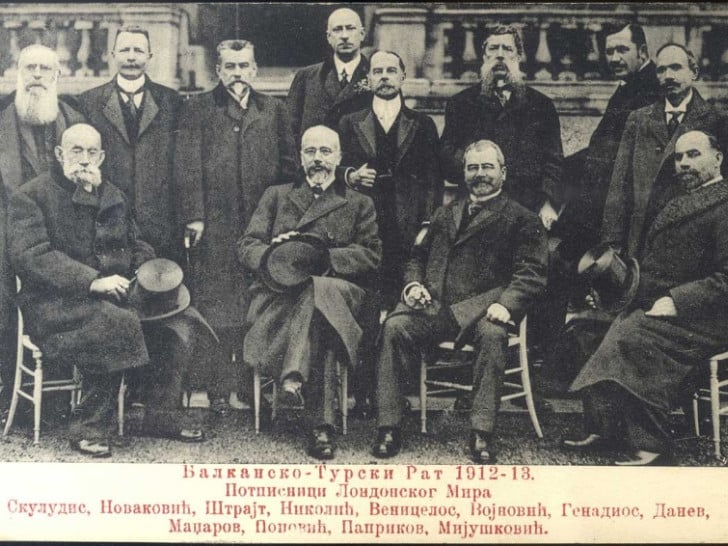
After those conflicts, Stojan Novaković led the Serbian delegation at the London Peace Conference, bringing his long diplomatic career to another defining moment in Serbian history.
Source: Glas Srpske