


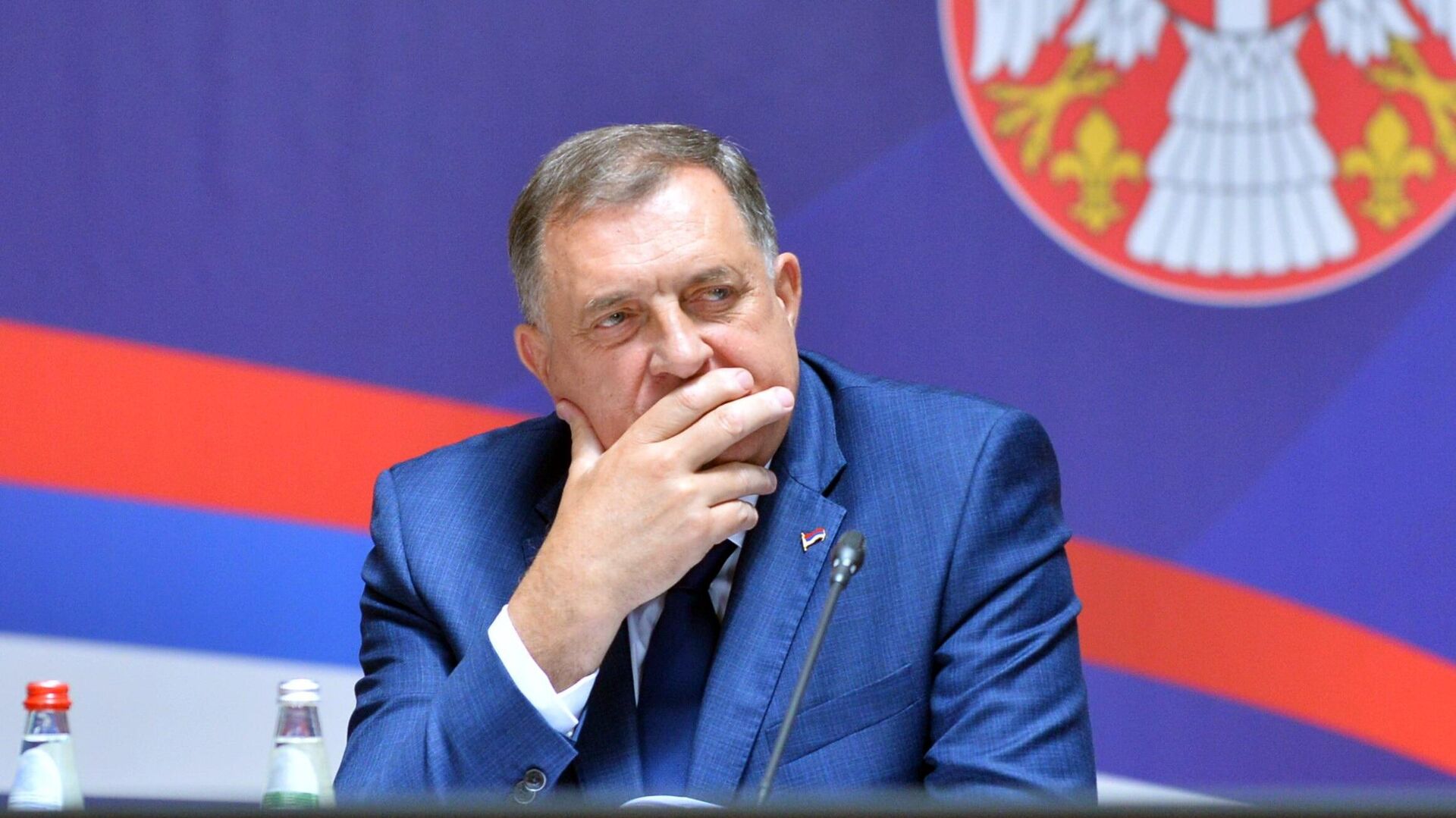
In a recent interview with the YouTube channel of American host Wayne Allyn Root, Milorad Dodik outlined a political doctrine centered on strong support for Israel, sympathy for U.S. President Donald Trump and sharp criticism of the former Joe Biden administration, the European Union and what he views as externally imposed coexistence in the Balkans, Israeli geopolitical analyst and journalist Eli Leon wrote.
In an analysis for Mako, one of Israel’s major online news portals, Leon said Dodik’s support for Israel went beyond general political statements and was rooted in what Dodik described as the shared historical suffering of the Serb and Jewish peoples.
“Dodik does not settle for general and superficial statements of support. He sees the relationship between the Serb and Jewish peoples as a deep historical partnership in destiny, written in blood,” Leon wrote.
He cited Dodik as describing the relationship as a “brotherhood through suffering” that he had known since childhood.
Dodik specifically referred to the Jasenovac concentration camp system, where Serbs, Jews, Roma and others were killed by the Ustasha regime during the Second World War.
Leon also highlighted Dodik’s statements concerning Israel’s response to the Hamas-led October 7 attack. Dodik argued that those responsible for killing Jewish children should expect a decisive response and expressed full support for Israel’s subsequent actions.
According to Leon, Dodik also criticized Bosnian Muslims over their role during the Second World War, making claims about collaboration with Nazi forces and the persecution of Serbs and Jews.
Leon wrote that Dodik presented this historical connection between Serbs and Jews as one of the reasons behind his diplomatic and political support for Israel.
“This historical connection, Dodik explained to Root, was what motivated him to act in Israel’s favor on the diplomatic and international stage as well,” Leon wrote.
According to the analysis, Dodik recalled that while serving as prime minister in 2008 or 2009, he used his political influence within BiH-level institutions to prevent BiH from supporting recognition of a Palestinian state at the UN Security Council.
Leon cited Dodik as saying that his intervention resulted in BiH abstaining from the vote, linking his opposition to Palestinian statehood to broader security concerns.
The Israeli analyst also noted that Dodik drew a parallel between what he described as the illusion of coexistence between Israelis and Palestinians and his criticism of the post-Dayton political structure of BiH.
According to Leon, Dodik argued that the Dayton framework compelled Serbs, Bosniaks and Croats to remain within a common political structure shaped by what he described as the globalist perspective of U.S. policymakers.
Another part of the interview focused on Dodik’s strained relations with Western governments, particularly the former Biden administration, which imposed sanctions on him.
“Dodik claims that he was personally persecuted because of his public support for Trump, who, according to him, is fighting a corrupt establishment,” Leon wrote.
He cited Dodik as saying that sanctions imposed during the Biden administration had severely affected his personal financial situation, including restrictions on his access to banking services.
According to Dodik, the restrictions reached the point where he could no longer receive his salary through a regular bank account and instead had to receive it in cash.
Leon wrote that Dodik views Trump’s return to the U.S. presidency as representing “new hope for the entire world,” contrasting Trump’s policies with those of the Democrats, which Dodik argues threaten national identities.
Source: RTRS