
The first-instance verdict against former leaders of the KLA has been described in Republika Srpska as another mockery of law and justice and a humiliation of Serb victims.
The court in The Hague sentenced four former KLA commanders – Hashim Thaçi, Kadri Veseli, Rexhep Selimi and Jakup Krasniqi – to a combined 81 years in prison. They had been charged with war crimes and crimes against humanity involving at least 407 detainees, at least 102 of whom were killed.
For war crimes committed in Kosovo and Metohija, Thaçi and Krasniqi were each sentenced to 25 years in prison, Veseli to 18 years and Selimi to 13 years. The panel said prosecutors had failed to prove that the defendants committed crimes against humanity.
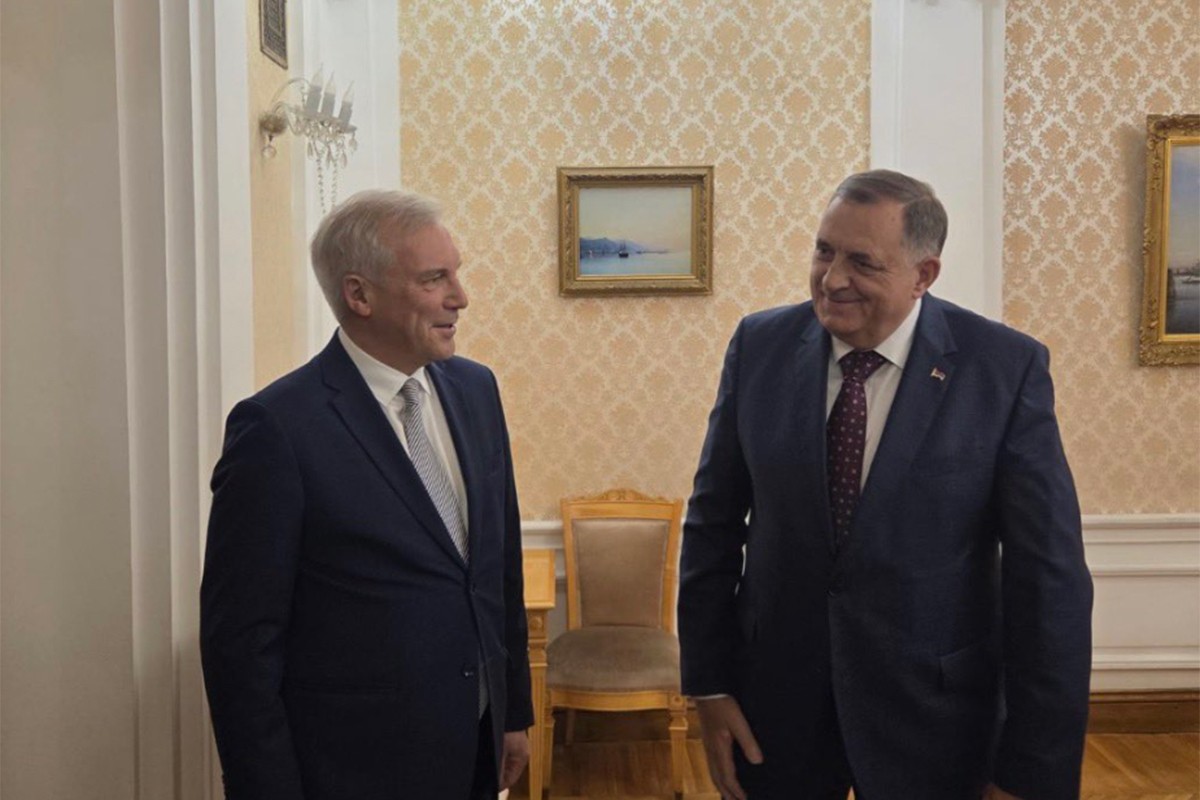
Milorad Dodik described the sentences handed down to Thaçi and the others as a “caricature of justice” that, he argued, serves to relativize crimes against Serbs and absolve the KLA of terrorism.
Republika Srpska Justice Minister Goran Selak said the first-instance verdict represented another mockery of law and justice and a humiliation of Serb victims, arguing that despite findings involving killings, torture and unlawful detention, the defendants were acquitted of crimes against humanity charges.
The Organization of Officers of the Army of Republika Srpska also criticized the verdict, claiming that judicial institutions in The Hague have continued to apply justice selectively, with the strictest standards used in cases involving Serb defendants and more lenient standards in cases involving others.
Isidora Graorac, President of the Republika Srpska Organization of Families of Captured and Fallen Soldiers and Missing Civilians, described the first-instance verdict as disappointing and expressed concern that the sentences could be reduced on appeal.
“What we have heard is disappointing,” Graorac said, adding that the disappointment was even greater because Thaçi and his associates were acquitted of responsibility for crimes against humanity.
Branimir Kojić, President of the Srebrenica Organization of Families of Captured and Fallen Soldiers and Missing Civilians, claimed that the verdict demonstrated that the Kosovo Specialist Chambers in The Hague were seeking to justify those responsible for killing Serbs in Kosovo and Metohija.
He compared the proceedings with cases before the International Criminal Tribunal for the former Yugoslavia involving crimes against Serbs during the war in BiH, arguing that those cases had also failed to deliver justice for Serb victims.
The Association of Families of Kidnapped and Murdered Persons in Kosovo and Metohija said following the verdict that the public should be aware that, according to the association, the defendants had not been tried for crimes against Serbs and that the proceedings had further humiliated Serb victims and their families.
The association expressed concern that an appeals panel could eventually acquit Thaçi and the others, drawing comparisons with the cases of Ramush Haradinaj and Fatmir Limaj. It also made allegations concerning crimes it attributes to Haradinaj, including the deaths of witnesses.
Goran Šehovac, Deputy President of the Presidency of the Republika Srpska Veterans’ Organization, said the sentences were inadequate for the crimes for which the defendants were convicted and argued that prosecutors should seek convictions related to allegations of organ trafficking on appeal.
“Hashim Thaçi deserved a life sentence for all the crimes committed against the Serb people in Kosovo and Metohija, that is, on the territory of Serbia,” Šehovac said.
Socialist Party President Petar Đokić said the first-instance verdict represented only minimal and belated justice.
Đokić argued that the sentences did not fully reflect the scale of terror and suffering experienced by Serbs and members of other non-Albanian communities in Kosovo and Metohija, and said significantly harsher sentences should have been imposed.
Source: RTRS