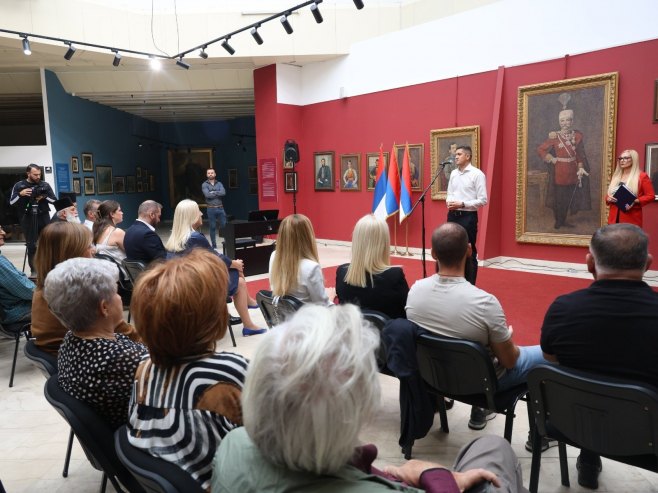

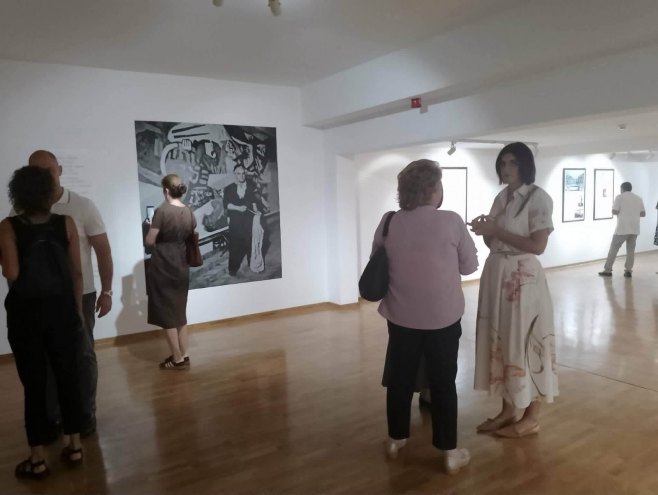
The exhibition Andrić and Italy – Documents has opened at the Petar Lubarda Gallery of the Andrić Institute in Višegrad, presenting lesser-known aspects of the life of Nobel Prize-winning writer Ivo Andrić, with a particular focus on his diplomatic career and his connections with Italy.
The exhibition was organized by the Archives of Serbia and the Archives of Republika Srpska. Its authors are Jelica Reljić, Aleksandar Marković and Miroslav Perišić.
Gorica Ćećez, head of the Petar Lubarda Gallery, said that the Andrić Institute has spent years researching the life and work of Ivo Andrić, with particular emphasis on his ties to Višegrad and the region that shaped his literary legacy.
“This exhibition focuses on some of the lesser-known aspects of Andrić’s life, particularly his diplomatic career and the international cultural connections he built throughout his lifetime. It is exceptionally valuable because it completes the picture of our Nobel laureate and demonstrates the important role he played in the history of European culture and diplomacy,” Ćećez said.
At the opening ceremony, a speech by Miroslav Perišić was read, emphasizing that Italy held a special place in Andrić’s life as a diplomat, writer and admirer of Italian culture, and that the experiences he gained there left a lasting mark on his literary work.
The exhibition catalogue also includes essays by Žaneta Đukić Perišić and Academician Matija Bećković, who examine Andrić’s relationship with Italy and the richness of his literary world from different perspectives.
The exhibition has previously been presented in Trieste, Banja Luka and Trebinje.
Following the exhibition opening, the Fenečki Biseri ensemble performed at Njegoš Square in Andrićgrad as part of the Vidovdan celebrations, presenting a programme of traditional and sacred music.
The concert was organized to mark Vidovdan, the patron saint day of the Church of Saint Tsar Lazar and the Kosovo Martyrs in Andrićgrad, as well as the 12th anniversary of the official opening of the Andrićgrad cultural and tourism complex in 2014.
Source: RTRS