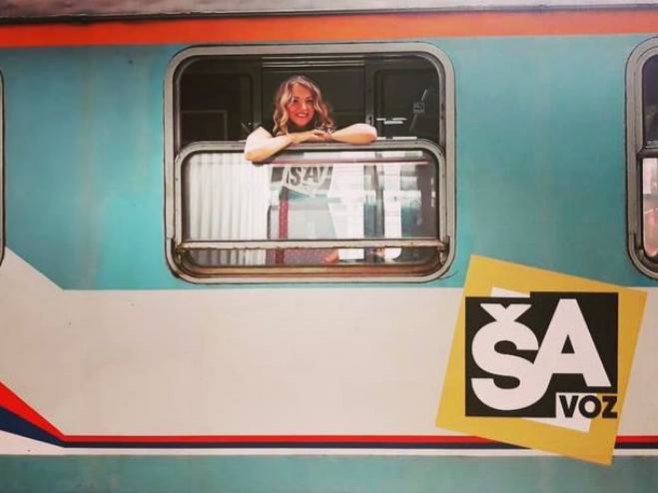


The Cultural Center East New Sarajevo has succeeded in growing alongside the city and establishing itself as a place of culture, dialogue, art and community, its director Nikolina Pandurević told Glas Srpske.
Pandurević said she is particularly proud that the institution has managed to survive, grow and develop over the years while remaining an important part of cultural life not only in East New Sarajevo but throughout the city.
“I am proud of the thousands of people who have passed through our hall, audiences of all generations, numerous artists and major names who have performed on our stage, as well as projects that have left a lasting mark,” Pandurević said.
She added that the Cultural Center has become much more than an institution, developing into a meeting place that connects audiences, artists and the wider community.
Festival of Small Stages and Monodrama
Speaking about the Festival of Small Stages and Monodrama of Republika Srpska, Pandurević said the Cultural Center East New Sarajevo has no longer been its main organizer and producer since last year.
She said she could not comment on the reasons why responsibility for organizing the festival was transferred to the National Theater East Sarajevo, as the change occurred before she became director.
Pandurevic nevertheless expressed regret over the decision, noting that the festival had been one of the Cultural Center’s trademarks and an important part of its identity.
The Cultural Center now hosts the competitive monodrama segment of the festival, and Pandurevic said the institution will work to ensure that every performance is organized to the highest standard.
Modernization among key priorities
When she took over management of the Cultural Center, Pandurevic said she found an institution with enormous potential but also numerous challenges.
One of the biggest problems is the loss of part of its premises, including administrative space, meaning that the management currently operates from rented facilities.
She identified resolving this issue as one of the main priorities for the coming period.
The main hall also requires modernization, including improvements to audiovisual equipment, the gallery area and accompanying facilities.
An initiative has already been submitted to the Municipality of East New Sarajevo, which founded the Cultural Center, and Pandurevic said she was pleased that the project had received municipal support.
She added that the institution currently has no significant staffing problems.
New programs attract audiences
Pandurevic said the Cultural Center has succeeded in offering a rich and diverse program featuring prominent names from theater, literature, music and visual arts.
Many events have attracted record attendance, demonstrating that audiences recognize and appreciate quality cultural programming.
She highlighted several new formats introduced by the Cultural Center, including free children’s music and art workshops and the “Art Talk” program.
The latter brings together artists from the city and wider region for informal conversations about their work, experiences and professional challenges.
Pandurevic said she hopes the format will inspire young people who are beginning to develop their own artistic careers.
Growing demand for cultural events
The recent promotion of a book by Bishop Grigorije attracted more visitors than the Cultural Center’s venue could accommodate, but Pandurevic described such situations as “the best problems a cultural institution can have.”
She noted that this was not the only event for which additional seating was needed.
Whenever possible, the Cultural Center organizes additional performances or sessions of the same program to allow more people to attend.
The existing hall currently cannot be expanded, but Pandurevic believes that continued audience growth could eventually justify serious consideration of increasing the Cultural Center’s capacity.
She described audiences in East Sarajevo as highly interested in cultural events, particularly appearances by prominent writers, actors, musicians and public figures.
At the same time, new formats are also gaining attention.
Pandurevic particularly highlighted free children’s art workshops led by academic painter Milos Popovic, which have attracted strong interest from families.
Municipality remains key partner
The Municipality of East New Sarajevo is the Cultural Center’s founder, principal partner and main source of funding.
Pandurevic described cooperation with the municipality, headed by Mayor Jovan Katic, as excellent and said local authorities understand the importance of culture and support the institution’s projects.
The Cultural Center also applies for funding from other institutions and funds, with additional financial support allowing it to offer more high-quality programs.
Rich program planned from September
Although summer is generally a quieter period, the Cultural Center contributed to this year’s “Summer in East New Sarajevo” event with several programs for local residents.
A busy cultural season will begin in September, featuring theater performances, book promotions, exhibitions, leading stand-up comedians and new programming formats.
“Our goal is for the Cultural Center to be a place that citizens visit with confidence, knowing that a high-quality and carefully designed program awaits them,” Pandurevic said.
She added that the September repertoire will soon be presented to the public.
Cooperation between cultural institutions
Pandurevic also described cooperation between the Cultural Center, the National Theater and the Main Library as regular and constructive.
Since the three institutions operate “under the same roof,” they coordinate programs and schedules and provide mutual support.
Several joint programs have already been successfully organized, with further cooperation expected in the future.
Pandurevic also pointed to an interesting detail: all three institutions are currently headed by women, something she described as a good foundation for successful cooperation.
Source: Glas Srpske