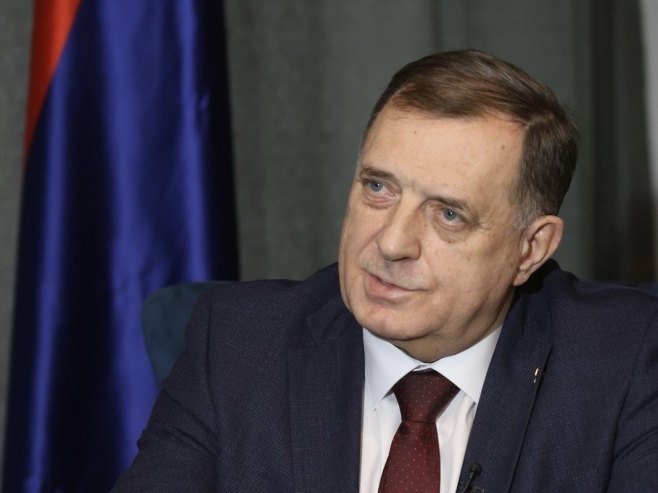

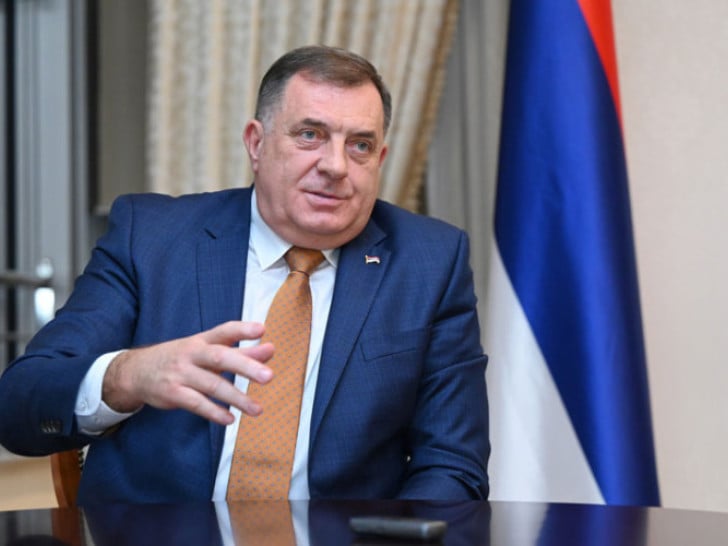
SNSD President Milorad Dodik has stated that the future of Republika Srpska will be determined by its own institutions rather than political authorities in Sarajevo or foreign embassies. Marking the 35th anniversary of the establishment of the Assembly of the Serb People in BiH, Dodik emphasized the historical importance of the institution and its role in protecting the constitutional rights of Republika Srpska.
Speaking to the Srna news agency, Dodik described the establishment of the Assembly on October 24, 1991, as a historic and decisive response by Serb political representatives to what he characterized as political outvoting, marginalization and attempts to undermine the constitutional rights of Serbs as a constituent people.
He emphasized that the Assembly was established by legitimately elected Serb representatives who sought to protect the political position and rights of their people.
Dodik: Republika Srpska emerged through legitimate political decisions
Dodik argued that the establishment of the Assembly demonstrated that Republika Srpska’s institutional development began before the outbreak of the war in BiH.
“The establishment of the Assembly of the Serb People is a historical fact that challenges the false narratives of political Sarajevo and part of the international community about Republika Srpska. It documents that Republika Srpska emerged in peace, through the legal and legitimate will of the people, before any armed conflicts,” Dodik stated.
He described the institution as an expression of the Serb people’s right to self-determination, freedom and survival in their ancestral homeland.
“Republika Srpska was not the result of coincidence, but the institutional expression of a people’s right to self-determination, freedom and survival. From the very beginning, the National Assembly has been the place where Republika Srpska was born and developed, and a guiding light of our state-building idea,” he said.
Dodik criticizes international intervention and centralization of BiH
Reflecting on developments since the end of the war in November 1995, Dodik argued that Republika Srpska continues to face challenges similar to those that preceded its establishment.
According to him, the methods have changed, but the objective of political actors seeking to weaken Republika Srpska has remained the same.
“The methods have changed, but the goal of those who do not support Republika Srpska and want its abolition remains exactly the same: the gradual elimination of Republika Srpska, the unitarization of BiH and the complete removal of the Serb people’s powers,” Dodik said.
He alleged that efforts to undermine Republika Srpska had taken different forms over the decades, including political outvoting, wartime violence, decisions imposed by High Representatives, transfers of constitutional powers and politically motivated judicial proceedings.
Dodik also criticized the Constitutional Court of BiH, arguing that its decisions have undermined the constitutional position of Republika Srpska.
He accused the court of moving away from its primary responsibility of protecting the Constitution and becoming an instrument for restricting Republika Srpska’s rights.
Property remains a red line for Republika Srpska
Dodik placed particular emphasis on disputes concerning the ownership of property and natural resources.
He claimed that attempts to transfer control over forests, rivers, agricultural land and other resources away from Republika Srpska threaten its economic independence and political autonomy.
“We are witnessing daily attempts to seize Republika Srpska’s property, from our forests and rivers to agricultural land,” Dodik stated.
He argued that such policies were intended to weaken Republika Srpska economically before further restricting its political powers.
According to Dodik, the protection of property represents a fundamental political principle from which Republika Srpska will not retreat.
“Following the tradition of those who had the courage to say ‘no’ to the violation of Serb rights in 1991, we are sending a clear and unwavering message: property is a red line we will not cross,” he emphasized.
Dodik insisted that land, air, water, mineral resources and institutions belong to the people of Republika Srpska.
He added that sanctions, political pressure and judicial proceedings would not persuade Republika Srpska’s leadership to abandon what it considers its constitutional rights.
Republika Srpska’s future must be decided by its elected representatives
Dodik stressed that decisions concerning Republika Srpska must be made through its democratically elected institutions.
“The era of foreign interventionism and subservience to foreign embassies is over. The fate of Republika Srpska will not be decided in Sarajevo or in embassies, but exclusively here, in Republika Srpska, through the highest legislative body elected by the people,” Dodik declared.
He described the National Assembly as the highest political and legal authority within Republika Srpska’s institutional framework.
According to Dodik, attempts to bypass or diminish the authority of the Assembly represent an attack on the democratic will of Republika Srpska’s citizens.
Dodik calls for Serb unity and respect for the Dayton Agreement
Dodik emphasized that his political position was based on defending the Dayton Peace Agreement and its original provisions.
“Our policy is not a policy of conflict, but one based on the letter of the law and the defense of the Dayton Peace Agreement in its original form. That means the letter, not the spirit, of Dayton,” he said.
He added that Republika Srpska would maintain what he described as zero tolerance toward attempts to undermine its constitutional position.
Dodik called for greater unity among Serbs, political maturity and national responsibility in responding to ongoing challenges.
“By preserving the dignity, strength and sovereignty of the National Assembly of Republika Srpska, we preserve peace, stability and the right of our descendants and future generations to live freely, proudly and with their heads held high on their own land,” he stated.
Recalling his own participation in the political events of October 1991, Dodik said he remained proud of the decisions made at that time.
“May the historical lesson of October 1991, in which I participated and of which I am extremely proud, remain a lasting inspiration and guide for how to defend and love our homeland,” Dodik concluded.
National Assembly marks 35 years since its establishment
The Assembly of the Serb People in BiH was established in Sarajevo on October 24, 1991, becoming the predecessor of today’s National Assembly of Republika Srpska.
Its first composition consisted of 77 representatives, while the number of parliamentary seats was later established at 83.
On January 9, 1992, the Assembly adopted the Declaration Proclaiming the Republic of the Serb People of BiH.
January 9 is commemorated in Republika Srpska as Republika Srpska Day.
The Assembly subsequently played a central role in adopting the first Constitution and establishing the institutional framework of Republika Srpska.
Source: Glas Srpske