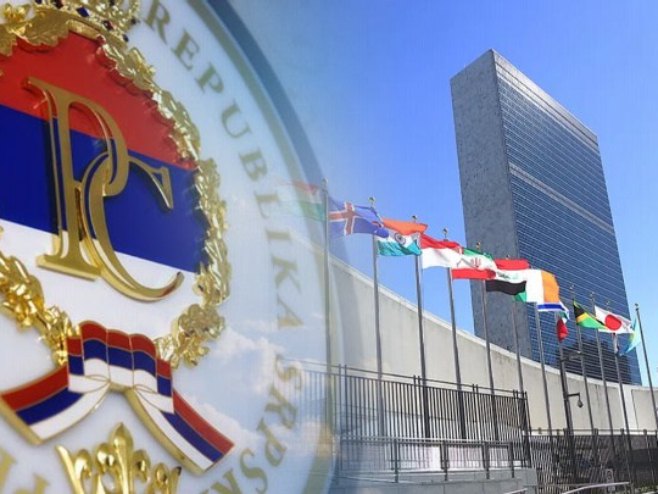




Adopting a new Constitution of Republika Srpska does not necessarily constitute a violation of the Dayton Peace Agreement, but could provide an opportunity to strengthen its constitutional and legal position, protect its vital interests and create conditions for more stable political, economic and social development, constitutional law professor Mile Dmičić said during an appearance on RTRS’s morning program.
Dmičić emphasized that any constitutional reform should preserve the original principles of the Dayton Agreement while addressing contemporary institutional and societal challenges.
Constitutional reform within the Dayton framework
Commenting on announcements that a new Constitution of Republika Srpska could be adopted on January 9, Republika Srpska Day, Dmičić stressed the importance of finding solutions that respond to current needs without undermining fundamental constitutional principles.
“Peace as a legacy represents a challenge for the future,” Dmičić said, arguing that more than three decades after the establishment of post-Dayton Bosnia and Herzegovina, existing constitutional arrangements should be reassessed to develop a more functional distribution of powers and responsibilities.
He recalled that Republika Srpska adopted its first Constitution on February 28, 1992, and that the document has undergone numerous amendments over the following decades, reflecting changes within BiH’s constitutional and legal system.
“A new constitutional text should address the distribution of competencies, protection of vital national interests, property relations, local self-government, and the functioning of institutions and mechanisms for overseeing government authority,” Dmičić explained.
According to him, the essential purpose of constitutional reform should be to define Republika Srpska’s position more clearly within the constitutional order of BiH, while preserving Dayton principles and improving the protection of citizens’ rights and freedoms.
“We have spent three decades building a house, but we have not created a home,” Dmičić said, emphasizing the need for constitutional solutions that contribute to a more stable and functional society.
Banja Luka as capital, East Sarajevo as historical seat
Dmičić also addressed proposals to formally designate Banja Luka as the capital of Republika Srpska and East Sarajevo, with its seat in Pale, as its historical capital.
He believes such an arrangement has a constitutional and legal basis.
According to Dmičić, the new Constitution should clearly define the status of both cities and the locations of institutional headquarters, recognizing their historical, symbolic and political significance.
“Such a solution would not diminish the importance of other parts of Republika Srpska, but would recognize the contributions of Banja Luka and East Sarajevo to its development and constitutional establishment,” he said.
Two-thirds majority and political consensus required
Discussing whether a new Constitution could be adopted by January 9, Dmičić emphasized that the prescribed constitutional procedure must be respected.
He explained that the process requires an authorized proposal for constitutional change, a two-thirds majority in the National Assembly of Republika Srpska and the participation of the Council of Peoples in accordance with constitutional provisions.
Dmičić particularly stressed the importance of political agreement and coordination among the constituent peoples, warning that disagreements could complicate or delay the constitutional reform process.
Addressing the mechanism for protecting vital national interests, he said its primary purpose is to ensure equality among the constituent peoples.
However, he argued that the mechanism should not be used to obstruct constitutional reforms or institutional development.
Legal certainty, economic development and European integration
Beyond institutional arrangements, Dmičić believes the new Constitution should contribute to greater legal certainty, economic and social progress, and the continuation of European integration.
He identified several priorities, including the protection of vital national interests, preservation of Republika Srpska’s special parallel relations with Serbia and the creation of conditions for a safer and better quality of life for citizens.
Dmičić emphasized that constitutional provisions should support institutional efficiency rather than become obstacles to development.
“The key is to ensure that constitutional norms are not barriers to progress, but a foundation for more effective institutions, more stable relations and the realization of citizens’ rights,” Dmičić concluded.
Source: RTRS