

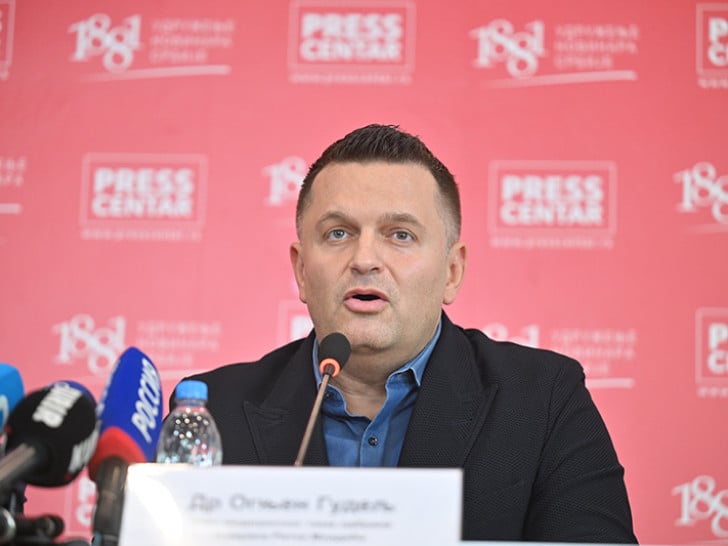
Ratko Mladić’s longtime physician, cardiologist Ognjen Gudelj, has made serious allegations regarding the medical treatment the general received, ranging from irregular monitoring of his blood pressure and kidney function to the discontinuation of diabetes therapy and the administration of fentanyl during the final period of his life.
Speaking on RTS’s morning program, Gudelj said that cooperation with doctors at the prison hospital and medical experts in The Hague had experienced ups and downs during the eight years he was involved in Mladić’s treatment. However, he said that by the end of August it had become clear that “the cooperation was no longer a two-way street.”
Gudelj claimed that those responsible for Mladić’s treatment in The Hague told him they did not want to measure his blood pressure or draw blood because they did not want to cause him pain, while he was simultaneously being treated with fentanyl.
Request for release rejected shortly before death
Gudelj said Mladić’s legal team and the Serbian government, citing humanitarian considerations, had requested that the former commander of the Army of Republika Srpska, who was serving a life sentence, be released to spend his final days at home.
Extensive medical documentation was submitted in support of the request, while the final email Gudelj personally sent to The Hague contained 12 pages of medical arguments.
“Twenty-four hours before his death, experts whose names I will not disclose responded by saying that perhaps it would be best for the general to spend the final hours of his life surrounded by, and I quote, family and friends,” Gudelj said.
He added that he still received no response to his requests and never saw Mladić again.
Asked whether an independent medical panel could conclude from the medical documentation alone, without his testimony, that the standard of medical care had been violated, Gudelj was categorical.
“Absolutely. Absolutely. That is why I requested the documentation,” Gudelj said, adding that doctors around the world are required to follow international treatment protocols, “apparently everywhere except there.”
Body returned without medical documentation
Gudelj compared the case with the death of former Serbian President Slobodan Milošević, saying that at the time a team of forensic experts immediately traveled to The Hague for a joint autopsy and toxicological analyses, while the body was returned to Serbia accompanied by complete documentation.
“His son Darko was unable to visit for seven full days, and in the end they returned him to the Military Medical Academy without a single piece of medical documentation,” Gudelj said, arguing that this indicated a lack of transparency in the handling of the case.
Diabetes therapy discontinued, fentanyl introduced
Speaking about what he described as medical failures, Gudelj recalled that Mladić suffered two strokes in April and said that he and neurology professor Toplica Lepić subsequently found that the diagnostic procedures had not been adequately conducted.
Toward the end of Mladić’s life, Gudelj said he was told that the general’s blood pressure was not being measured because “he is sleeping and is comfortable that way.” He also said Mladić’s final laboratory results showed elevated glucose levels while he was no longer receiving diabetes therapy.
“The decision was made by a panel of general practitioners at the prison hospital. But first of all, that is not the competent body. Where are the experts? Where are the specialists?” Gudelj asked.
He added that, from a physician’s perspective, the idea of allowing someone to die over a period of months through inaction was incomprehensible.
Source: Glas Srpske