
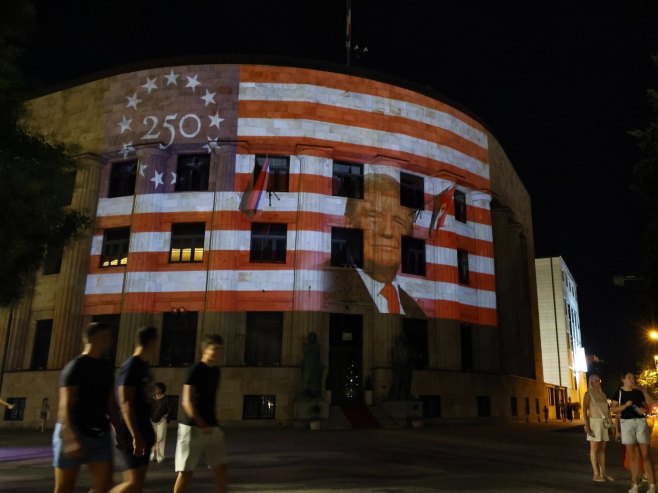
From sanctions and political pressure to new contacts with Washington, economic cooperation and a more open discussion about the position of Republika Srpska — this is how the shift in U.S. foreign policy toward Republika Srpska and BiH could be described. Sarajevo, however, is unwilling to accept this new dynamic, having grown accustomed to portraying Srpska as the sole culprit for all problems.
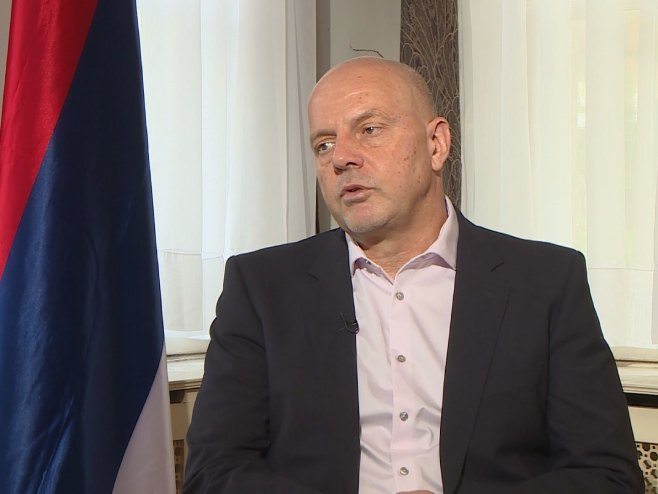
For years, U.S. policy toward Republika Srpska was marked by pressure, sanctions and attempts at political isolation. Today, the picture is significantly different. Igor Dodik, SNSD organizational secretary, says Republika Srpska now has interlocutors in the new U.S. administration who understand its position.
“The attitude and relationship toward us have fundamentally changed. There are no longer any impositions, no more cowboy-style policies of Murphy and Schmidt, who at the time exerted enormous pressure on the leadership of Republika Srpska,” Igor Dodik said.
The change is also visible on the economic front. According to Dodik, Republika Srpska wants to attract new investments, while opportunities have opened for major technology companies to invest in Srpska.
“Today, we have issued bonds twice and received substantial amounts of funding for investments from American funds and banks, as well as global and European institutions. While we were under sanctions, we simply could not gain access to them. Now that has completely opened up and changed,” Igor Dodik said.
The door is also open to the other part of BiH. However, Ana Trišić Babić says that any indication of improved relations triggers what she described as hysteria in Sarajevo, whose political circles still want a Republika Srpska that has no say in decision-making.
“We became active and promoted Republika Srpska and the Dayton Peace Agreement. We explained what Republika Srpska and a strong Republika Srpska within the Dayton Peace Agreement mean and how that contributes to regional stability. This was recognized in the United States. It was recognized in political and administrative circles, in think tanks, among some journalists, and also in investment circles,” said Ana Trišić Babić, Acting Director of the Republika Srpska Office for International Cooperation.
The new political relationship has also opened a question that for years was almost unimaginable in U.S. political discourse — what if discussions about the future of BiH begin to include the possibility of Republika Srpska’s independence?
“What we have seen in the media in recent days is the potential for U.S. support for the independence of Republika Srpska, in line with the new policy of the U.S. administration, which views relations in the Balkans, as well as globally, differently. Therefore, it is not surprising that the United States, as well as many other countries around the world, now see this potential possibility as something that could actually contribute to regional stability,” said Vladimir Marinković, president of the Congress of Serbian-American Friendship.
The shift is also evident in the fact that U.S. media outlets such as the Washington Times are now writing about Serb victims of the 1992–1995 Defense-Patriotic War, something that until recently was almost unimaginable.
Denis Bojić, director of the Republika Srpska Memorial Center, spoke to the newspaper on the subject. The latest article also argues that Washington no longer views Serbs and Serbia as a problem, but increasingly as partners.
Source: RTRS