
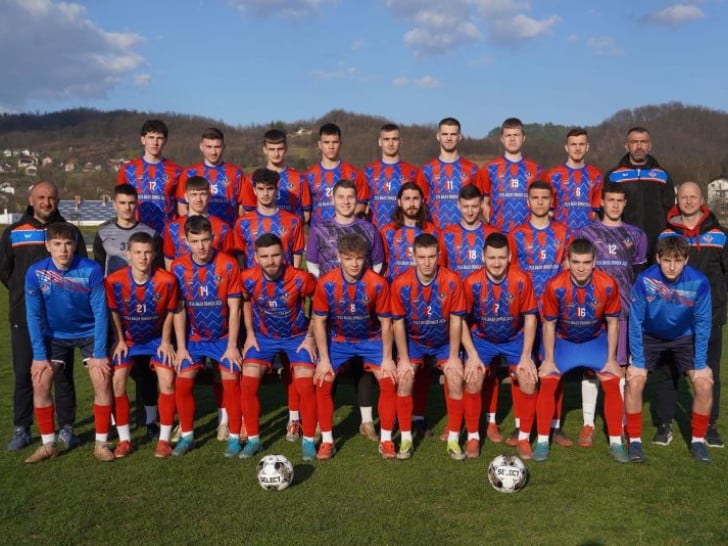
There is no reliable information about exactly when the first football arrived in the Teslić area, although it can be said with some certainty that the game was introduced in the 1920s by workers at the wood distillery and sawmill who came from Austria, Czechoslovakia and Hungary.
In those early years, proper footballs were largely reserved for officials and members of the middle class, while local workers from the industrial and sawmill settlements played with improvised cloth balls.
Football quickly captured the imagination of young people in Teslić. Teams began forming at almost every workshop and factory department, while local shoemakers had their hands full repairing footballs until they could no longer be used.
Under the influence of factory management, the club Bosna was formed in the early 1920s. However, many workers, technicians and lower-ranking employees regarded it as something foreign to their community and began working toward the creation of a club that would truly represent working-class Teslić.
The birth of Proleter
An organizing committee was established consisting of Ivica Zovko, Eduard Kranjc, Đuro Trifković and Franjo Jauševac.
In the summer of 1926, the founding assembly was held. Josip Radvanski, Ivan Frank, Alojz Beranek, Hilmo Šeić, Sejdo Voloder and Petar Kelava joined the club’s leadership, while Franjo Jauševac was elected its first president.
Proleter was born, with Eduard Kranjc credited with choosing the name.
The club’s first match ended in a convincing 3-0 victory over Ozren from Doboj, marking the beginning of a football story that continues to this day.
The owners of Teslić’s factories were reportedly far from enthusiastic about the name Proleter. Yet Teslić was fundamentally a workers’ town, home to one of the largest industrial complexes in this part of Europe at the time, employing almost 2,500 workers.
The enthusiasm for football was impossible to suppress.
Through voluntary work, a community centre was built in the heart of the town, and after its completion in 1927 Proleter received its own premises and meeting place.
At the end of the 1930s, Proleter participated in the First Workers’ Rally in Sarajevo alongside clubs from Višegrad, Banja Luka and Jajce.
Borac defeated Proleter 4-1 in the final. The illustrated magazine Snaga wrote that the team from Teslić had performed admirably and lost honourably.
Inside the club, however, that description was reportedly met with amusement. A saying began circulating that Proleter had not been founded to lose honourably, but to win honourably.
The Hrabri era

After a decade of efforts to provide supporters with new matches, victories and reasons to celebrate, the club’s leadership eventually accepted pressure from factory owners and changed the club’s name.
At the suggestion of prominent merchant Veljko Dodik, the club became Hrabri in 1936.
Under its new name, the team continued playing clubs from across the region, including opponents from Zagreb and Sarajevo.
Matches against Borac Banja Luka, however, carried special significance.
Travelling to Banja Luka was an adventure in itself. Players would take the narrow-gauge railway to Pribinić, cross Borja on foot and then continue by train toward Banja Luka. After such a journey, simply playing the match felt like a reward.
Football during the Second World War
During the Second World War, some players were sent to forced labour in Germany or imprisoned in concentration camps.
Football nevertheless endured.
After Teslić was liberated for the second time on July 10, 1944, a match was played between the military units that had entered the town and Proleter.
The game was interrupted in the second half when news arrived that German troops were returning.
Football stopped again, but only temporarily.
By the end of that year, the club resumed its activities, and former officials Zovko, Jauševac, Kelava and Kranjc restored the name Proleter.
The first official post-war match was played in June 1945 against Bratstvo from Gračanica and ended 1-1.
Radolinka and a footballing identity
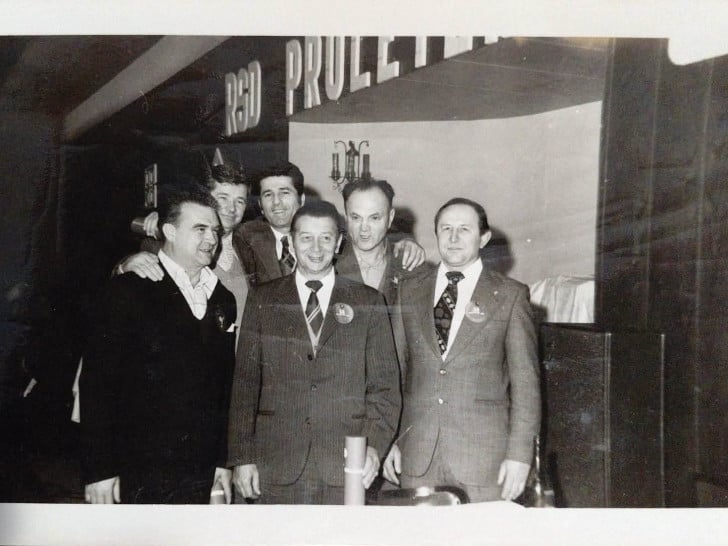
Regardless of changes in name or outside attempts to reshape the club, Proleter repeatedly returned to its roots among the workers’ settlements where football had first taken hold.
The area of Radolinka, close to both the former and present-day Proleter stadium, became a symbol of this football culture.
One of Proleter’s finest post-war players, Josip Juras, attracted the attention of Partizan Belgrade.
When representatives of the Serbian giants arrived, Juras reportedly hid in the workers’ settlements because he did not want to leave Proleter.
After encouragement from his family and friends, he eventually spent one season at Partizan. Legendary coach Illés Spitz wanted him to remain in Belgrade, but Juras chose to return to Teslić.
Years later, Mirso Galijašević, another product of Radolinka, moved to Čelik Zenica.
In October 1972, he scored the winning goal against Fiorentina in the 90th minute of the second leg of the Central European Cup final, becoming a legend of the Zenica club.
One defeat also holds a special place in Proleter’s history—the 1951 Bosnia and Herzegovina Cup round-of-16 match against Sarajevo.
The match demonstrated the courage, imagination and quality of a small club on a big stage.
Bajtl entered club folklore after scoring an own goal that allowed Sarajevo to progress, in what was nevertheless remembered as one of Proleter’s finest performances.
After the match, the pacey Kolesnik was ranked among the leading right-wingers in Bosnia and Herzegovina.
Football as entertainment
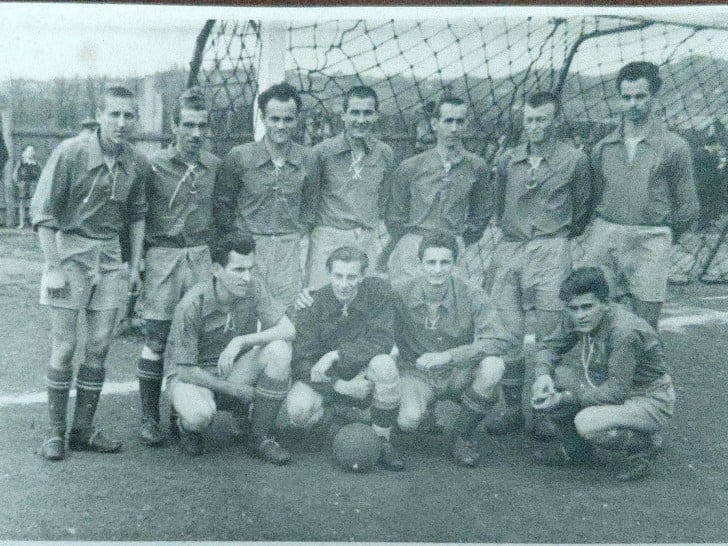
Proleter became known for a recognizable playing style based on improvisation, short passing and individual moves that entertained supporters.
Club chronicles recall friendly victories of 11-0 over TOŠK Tešanj and 12-0 over Podrinje Janja.
One long-standing anecdote says that before certain friendly matches Proleter’s captain would ask the opposing captain what the date was—the joke being that the date would become the number of goals Proleter intended to score.
Slavko Kotaranin was also remembered for occasionally wearing a piece of detergent cloth as a captain’s armband during friendly matches, not as an insult to opponents but as a signal that the entertainment was about to begin.
Proleter finished the autumn half of the 1956 Tuzla Football League at the top of the standings ahead of Tekstilac Derventa.
A club report from that season recorded that the team trained and played matches with only two footballs because of a shortage of equipment.
Among the many individuals who shaped the club was Mehmed Ahmetkadić, a successful goalkeeper who later became a youth coach.
In 1969, he received the Yugoslav Football Association Memorial Charter for his work with young players.
Goalkeeper Besim Klepić became famous for spectacular saves, while Marin Rašić earned a reputation for scoring directly from corner kicks, reportedly netting around a dozen such goals during his career.
A club passed down through generations
Neither exhausting travel nor difficult conditions could extinguish Proleter’s passion for football.
Players travelled by truck, narrow-gauge railway, overcrowded buses and sometimes on foot.
A journey to play in Čapljina and return home could take five days.
Family tradition also played an important role in the club’s history.
Six members of the Kotaranin family played for Proleter, along with three members each of the Brandolek and Frank families, as well as brothers from the Cap, Kolesnik, Livančić and Martinović families.
Football was passed from parents to children, generation after generation.
Since its foundation in 1926, Proleter has remained closely tied to Teslić and its residents.
Supporters such as Bora Ljiljak, Sejma Cerovac and Milan Kitić became part of club folklore by rarely missing a match, regardless of where it was played.
The Leaders supporters’ group, founded in 1989, now sees the club’s centenary as proof that Proleter has survived every prediction that its footballing spirit would eventually disappear.
New generations of Leaders have continued the tradition, painting murals and decorating the town in the club’s red and blue colours.
Yet supporters are also aware that the club has endured periods of uncertainty and missed opportunities.
Their ambition is clear: Proleter’s first year in its second century should end where they believe the club belongs—in the First League of Republika Srpska.
Centenary celebrations
To mark Proleter’s 100th anniversary, the Leaders organized a major fireworks display across Teslić.
A friendly match was also played against Trepča from Kosovska Mitrovica, adding another symbolic moment to a century-long football story.
Source: Glas Srpske / glassrpske.com
Source: Glas Srpske