

Republika Srpska has managed, through diplomatic channels, to improve its relations with the United States administration to a certain extent following the return of Donald Trump to power, and it remains ready to do the same with the European Union if Brussels demonstrates respect.
In recent months, Republika Srpska has strengthened its geopolitical position while maintaining traditionally good relations with the Russian Federation and other international partners. At the same time, relations with Washington have improved, resulting in the removal of U.S. sanctions against several officials from Republika Srpska.
Changes in American foreign policy have also led to different messages within the United Nations Security Council regarding Bosnia and Herzegovina, particularly concerning the role of the Office of the High Representative (OHR) and the need to reduce the level of international supervision in the country.
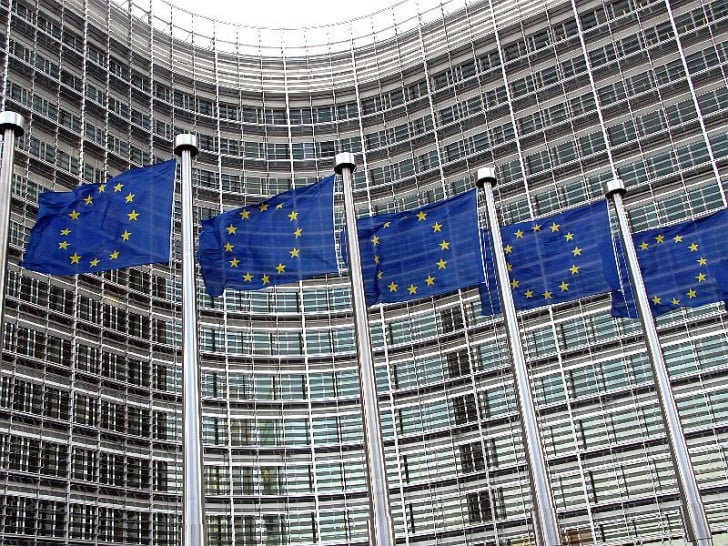
On the other hand, European officials have reaffirmed, even after the latest discussions on Bosnia and Herzegovina, that Brussels remains committed to its previous positions, especially regarding Republika Srpska.
While acknowledging that certain officials from Republika Srpska have been removed from U.S. sanctions lists and noting that authorities in Banja Luka have hired lobbying firms whose contracts allegedly promote secessionist ideas, European institutions have continued to insist on the adoption of EU-related legislation. They have also criticized Republika Srpska’s close ties with Russian officials.
In one of its latest reports, the European Commission reaffirmed its support for the OHR and reiterated that its closure should occur only after the fulfilment of the “5+2 Agenda” conditions, including the issue of so-called state property.
An Outstretched Hand
Nevertheless, Speaker of the National Assembly of Republika Srpska Nenad Stevandić recently emphasized that the door remains open.
“We are determined to achieve with the European Union what we have achieved with the United States – a complete revitalization of relations based on mutual respect, without humiliation and without the loss of sovereignty,” Stevandić said, adding that Republika Srpska’s loyalty belongs solely to Republika Srpska, not to the EU, high representatives, or any foreign state.
Commenting on the possibility of easing tensions between Republika Srpska and the EU, geopolitics professor Srđan Perišić of the University of East Sarajevo noted that Republika Srpska’s foreign policy in recent years has largely relied on Russia until divisions emerged within the West.
“The United States has begun pursuing a significantly different foreign and geopolitical strategy from Brussels, and that naturally contributed to better relations with Republika Srpska. The improvement of relations with Washington is a consequence of the deterioration of relations between Washington and Brussels. Had that split not occurred, Republika Srpska would never have improved relations with the United States,” Perišić told Glas Srpske.
A Geopolitical Opportunity
According to Perišić, Republika Srpska successfully used divisions within the West to improve ties with the United States, although he emphasized that it is still too early to speak of a strategic partnership.
The European Union, however, remains on what he described as the same course it has followed since the signing of the Dayton Peace Agreement more than three decades ago.
“That course essentially means the gradual reduction of Republika Srpska’s competencies with the ultimate aim of eliminating its autonomy. The EU has not changed its approach. Brussels continues to use Bosnia and Herzegovina’s EU accession process as a tool for centralization, while the United States has partially moved away from that position,” Perišić argued.
He remains convinced that significant rapprochement between Republika Srpska and the EU is unlikely, particularly in light of current international circumstances and the ongoing conflict in Ukraine.
“This will become an additional obstacle. The European Union is effectively engaged in a confrontation with Russia and is preparing for a future phase of that confrontation. Consequently, Brussels will continue to apply pressure and impose conditions. At the same time, nobody in Republika Srpska wants to participate in any conflict against Russia,” Perišić concluded, adding that the EU is unlikely to abandon its support for a more centralized Bosnia and Herzegovina.
Republika Srpska’s Position on the European Path
Republika Srpska’s view of Bosnia and Herzegovina’s European integration process was also outlined in the latest report submitted to the United Nations Security Council in May.
As in previous reports, particular emphasis was placed on the Constitution of Bosnia and Herzegovina as the core element of the Dayton Peace Agreement.
“Respect for the federal constitutional structure and its protective mechanisms is essential for the stability of Bosnia and Herzegovina. As in other multinational European states such as Switzerland and Belgium, Dayton’s arrangements, which recognize the interests of different peoples, represent a strength rather than a weakness and remain the only viable guarantee of lasting peace in a country with such a complex history,” the report states.
A ‘Trojan Horse’
The report further emphasizes that Republika Srpska supports Bosnia and Herzegovina’s path toward European Union membership, but not at the cost of surrendering the autonomy guaranteed to it under the Dayton Peace Agreement.
“Republika Srpska will not allow Bosniak political parties to use European integration as a ‘Trojan horse’ for the centralization of Bosnia and Herzegovina, contrary to the Dayton Constitution and the mechanisms that protect both Croats and Serbs,” the document, signed by Prime Minister Savo Minić, concludes.
Source: Glas Srpske