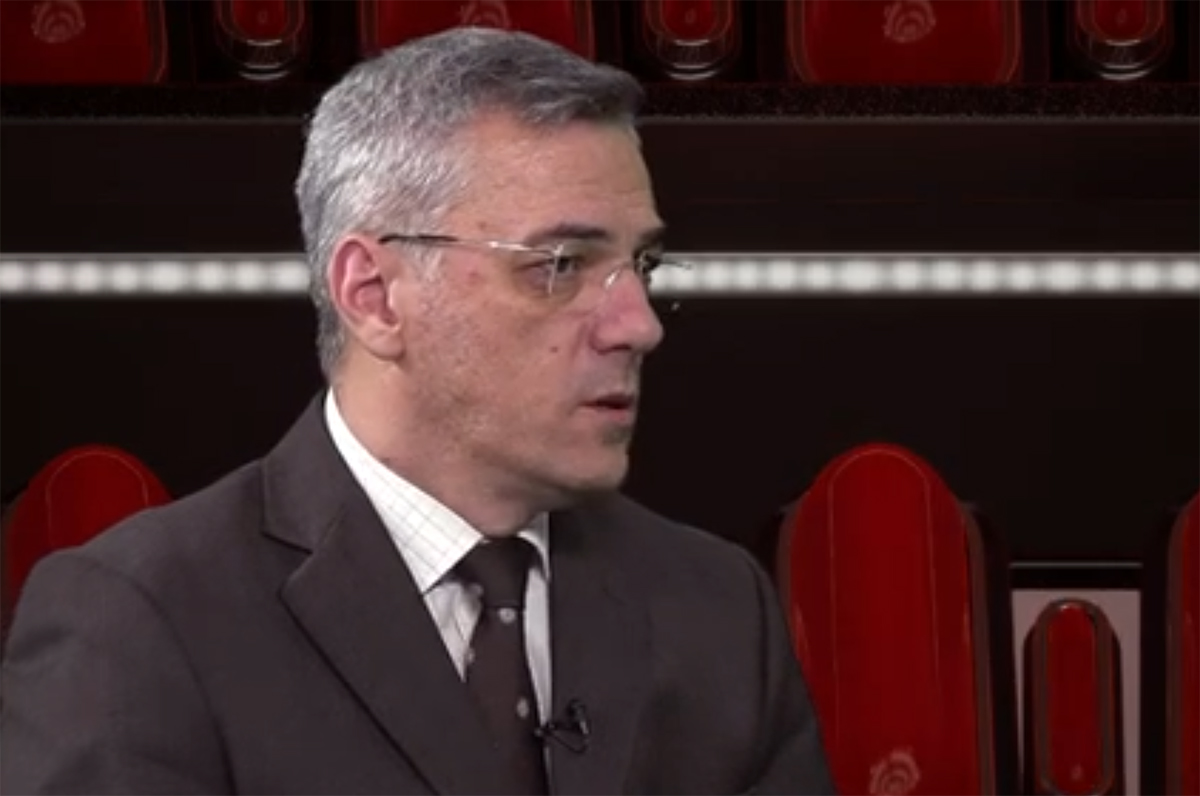


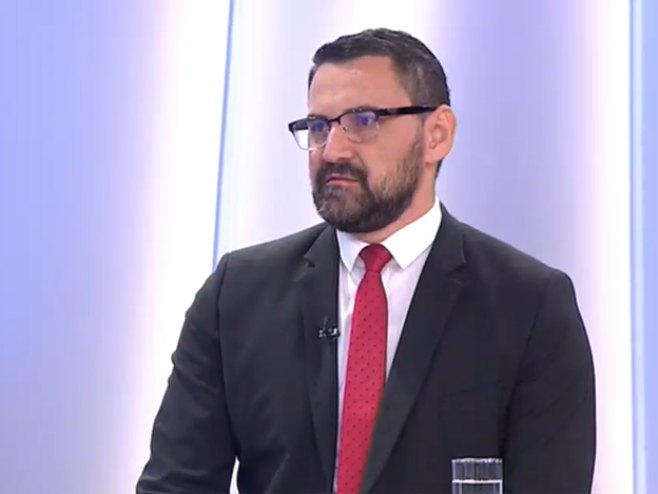
The Minister for European Integration and International Cooperation of Republika Srpska, Zlatan Klokić, stated that Republika Srpska remains committed to Bosnia and Herzegovina’s European path, but will not accept solutions that would lead to the transfer or reduction of its constitutional competences.
Speaking about the stagnation of the European integration process, Klokić assessed that the coordination mechanism should enable unified communication between Bosnia and Herzegovina and the institutions of the European Union, but that political representatives from Sarajevo often view the European process as an opportunity for state centralization.
“For us, the red line is the protection of the competences of Republika Srpska as defined by the Constitution and the Dayton Peace Agreement. European integration should be a process of reforms and adaptation to the European market, not the creation of new institutions at the level of Bosnia and Herzegovina,” Klokić said.
Commenting on the conditions for opening negotiating chapters with the European Union, he stressed that it is important to harmonize the negotiating framework and the method of conducting negotiations with Brussels. As one of the unresolved issues, he cited the establishment of an appellate chamber of the Court of Bosnia and Herzegovina, emphasizing that it is unacceptable for Republika Srpska for such an institution to be located outside Banja Luka.
Klokić also highlighted the importance of cooperation between Republika Srpska and Serbia, assessing that relations between the two sides are at their highest level in recent decades. As concrete results, he pointed to Serbia’s financial support for numerous local communities and infrastructure projects, including the construction of the motorway that will connect Belgrade and Banja Luka.
According to him, certain joint projects, such as the construction of hydroelectric facilities on the Drina River and the airport in Trebinje, continue to face blockages at the level of Bosnia and Herzegovina’s institutions.
Speaking about the international position of Republika Srpska, Klokić assessed that participation in international economic forums, including the recent forum in Saint Petersburg, provides an opportunity to present development potential and establish new economic partnerships.
“At a time of geopolitical changes, it is important for Republika Srpska to be present where discussions are being held about future economic trends and investment opportunities,” the minister said.
He recalled that a Representative Office of Republika Srpska was opened in France this year, while no new representative offices are currently planned, although that possibility remains open depending on future geopolitical circumstances.
Klokić also referred to cooperation with the diaspora, noting that a portal has been launched for the registration of people of Republika Srpska origin living abroad. He added that there is growing interest among the diaspora in returning and investing, supported by a favourable business environment, a low corporate profit tax rate and the availability of business zones.
When it comes to European funds, Klokić stated that significant financial support is available to Republika Srpska through various European Union programmes. He recalled that IPA funds for the 2025–2027 period envisage approximately €140 million for Bosnia and Herzegovina, while numerous local communities and businesses have already received support through projects in the fields of energy, local development and the economy.
Klokić also announced a new support measure for potential beneficiaries of European funds, under which the Government of Republika Srpska will provide co-financing for applicants who lack part of the required own contribution.
“In this way, we want to increase the utilization of European funds and enable a greater number of municipalities, businesses and organizations to participate in international projects,” Klokić concluded.
Source: RTRS