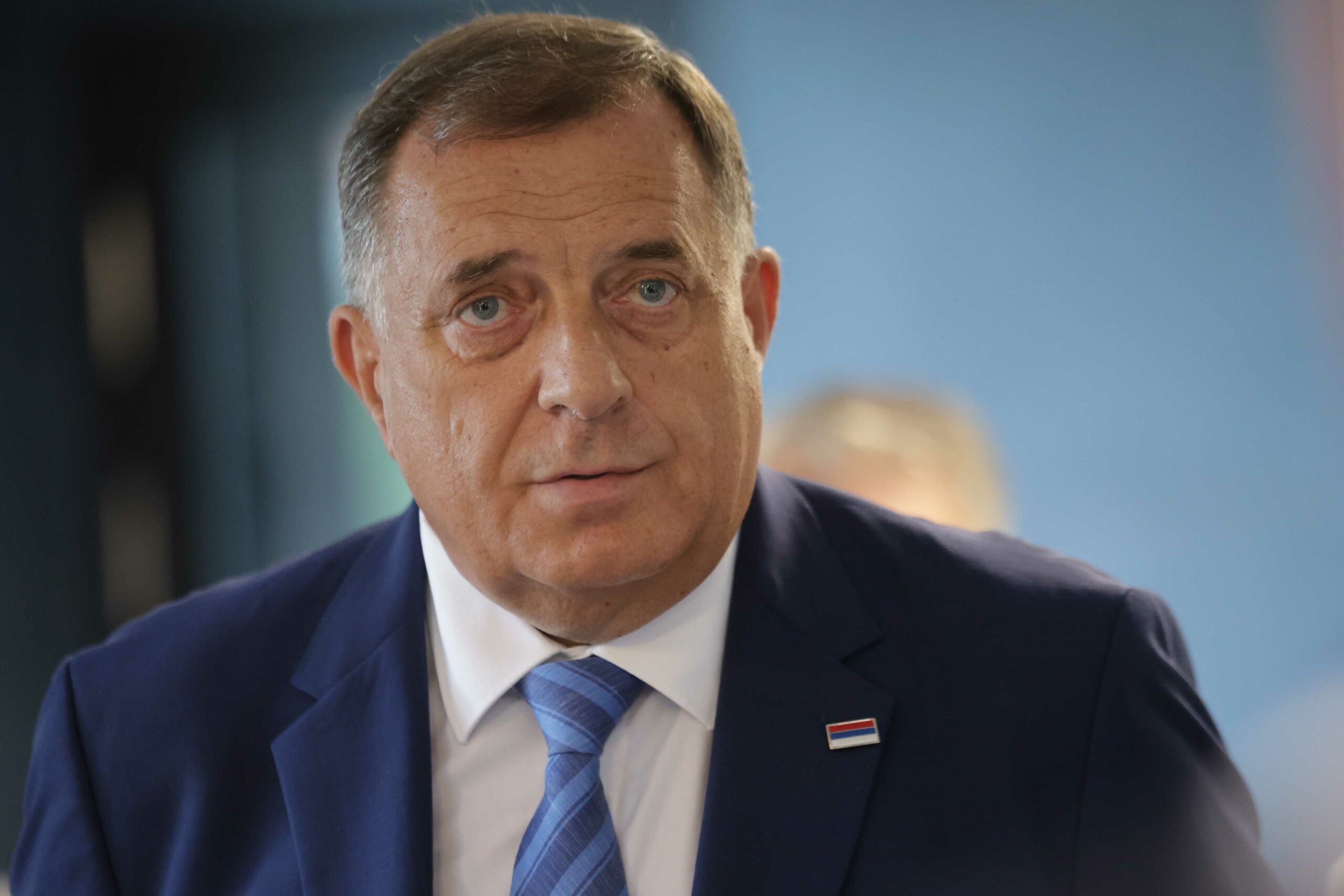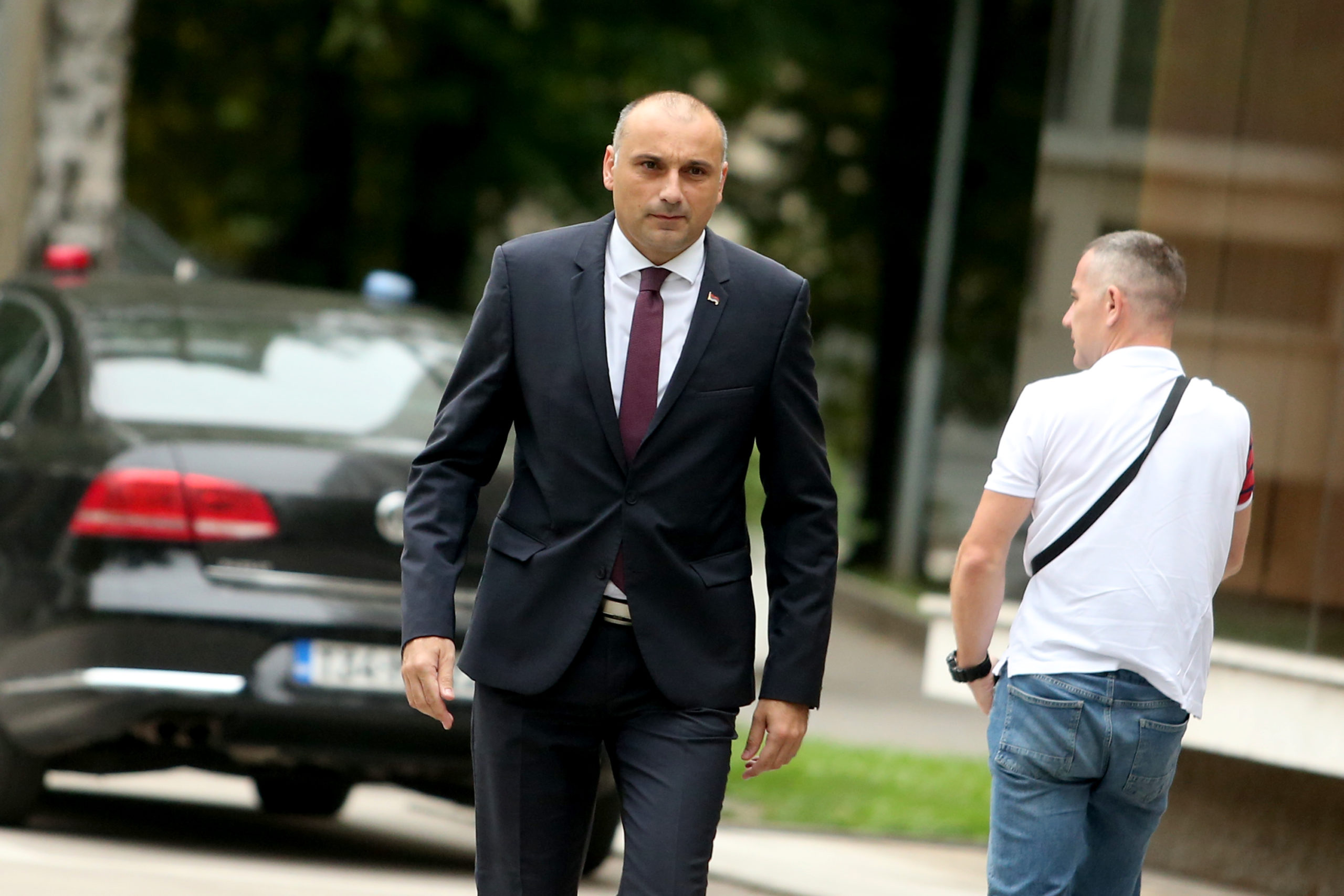

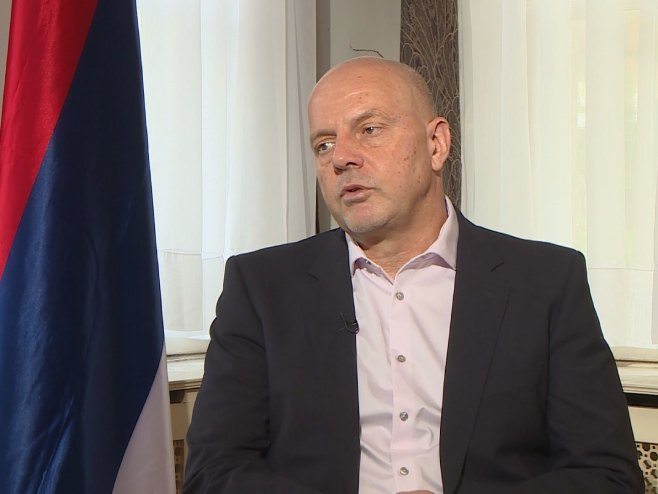

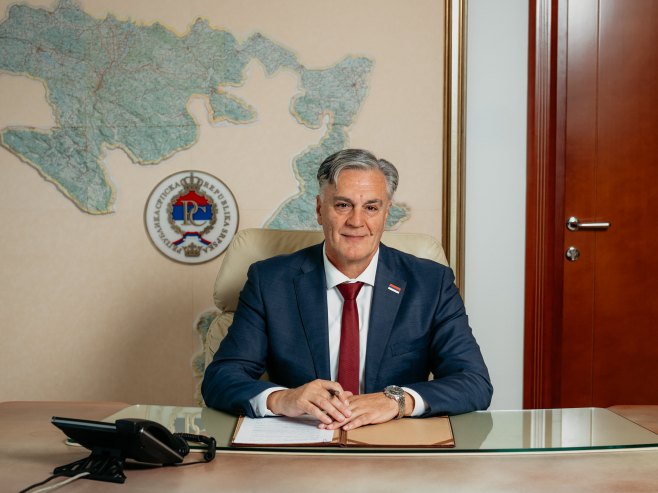
President of Republika Srpska Siniša Karan said that his first official visit will be to Serbia, emphasizing that the trip will be substantive rather than symbolic, reflecting the close historical, national, and cultural ties between Republika Srpska and Serbia.
Karan stated that Republika Srpska views Serbia not only as a historical and identity-based ally, but also as a partner in defending the Dayton constitutional structure within Bosnia and Herzegovina.
“The visit to President Aleksandar Vučić will not be symbolic, but substantive. We want to demonstrate that Serbia, in line with the Declaration and Special and Parallel Relations, and as a signatory of the Dayton Peace Agreement, has every right to care about the status of Republika Srpska, and that we maintain continuous communication,” Karan said in an interview for Politika.
He stressed that the Serb national identity is unified, adding that the breakup of Yugoslavia showed that Serbs disappeared where they lacked their own state.
Karan highlighted that relations between Republika Srpska and Serbia are stronger than ever, largely due to cooperation between leaders Milorad Dodik and Aleksandar Vučić, noting that Serbia has supported infrastructure projects in nearly every local community in Republika Srpska.
He also said that international pressure on Republika Srpska has decreased, along with what he described as negative influence from political actors in Sarajevo.
According to Karan, Republika Srpska has recognized global geopolitical shifts and is among the few entities maintaining strong relations with both Eastern and Western powers, including the United States, Russia, China, and Hungary.
“Pressure on Republika Srpska has decreased—we are at the table, not on the table. Strategic partnerships are visible and extend beyond politics, as today politics is closely linked with the economy,” Karan said.
He added that Republika Srpska currently lacks interlocutors in the Federation of Bosnia and Herzegovina due to the influence of parts of the international community, but expressed belief that this could change once external interference subsides.
Karan: Dayton autonomy is not secession but a constitutional right
Karan also stated that “Dayton autonomy” is not secession, but rather a constitutional right of a federal unit, which Republika Srpska represents within Bosnia and Herzegovina.
He argued that Republika Srpska’s rights are guaranteed by the Dayton Peace Agreement and that the entity will continue to defend its institutions, property, and the will of its people without compromise.
Karan claimed that over the past 30 years, Republika Srpska has faced unconstitutional and unlawful pressures aimed at centralization, including decisions imposed by High Representatives, rulings by the Constitutional Court, and external political pressure.
“Bosnia and Herzegovina is not a unitary state, but a complex federal community. Attempts at centralization undermine equality and create dominance rather than balance,” Karan said.
He emphasized that property is a key element of statehood and warned that efforts to redefine ownership are linked to broader attempts at centralization.
“Republika Srpska, as the owner of its property, is ready to allow its use by Bosnia and Herzegovina institutions where necessary, but it must be clear that the ownership remains ours,” he said.
Karan reiterated that Republika Srpska remains committed to the original Dayton framework and will seek to restore competencies it believes were transferred unconstitutionally.
He concluded that Republika Srpska’s political approach rests on what he described as a “four plus three” formula: the will of the people, international verification through the Dayton Agreement, economic autonomy, and strong political institutions—alongside constitutional principles of division of powers, parity, and consensus in decision-making.
Source: RTRS