


Zmijanjski embroidery, one of the most recognizable symbols of the cultural heritage of Republika Srpska, began its journey toward global recognition more than a decade ago and today stands as a model of successfully preserving tradition in a modern context.
As Danijela Đukanović, museum advisor and ethnologist at the Museum of Republika Srpska, explains, the nomination process for inscription on the UNESCO Intangible Cultural Heritage List began after Bosnia and Herzegovina ratified the Convention for the Safeguarding of the Intangible Cultural Heritage in 2009.
By 2011, Republika Srpska had established its own list of intangible heritage, where Zmijanjski embroidery was included among seven elements. At the initiative of the Homeland Association “Zmijanje,” the nomination process was launched, with the Museum of Republika Srpska playing a central role.
“Based on research, fieldwork, and years of studying traditional embroidery, we concluded that Zmijanjski embroidery deserves international recognition,” Đukanović said.
Research began in 2012, and the application was submitted the following year. Zmijanjski embroidery was officially inscribed on the UNESCO list on November 24, 2014, becoming the first element from Bosnia and Herzegovina to receive this prestigious recognition.
Numerous associations took part in the nomination process, including the humanitarian women’s association “Duga” and the national ensemble “Veselin Masleša,” as key custodians of the tradition.
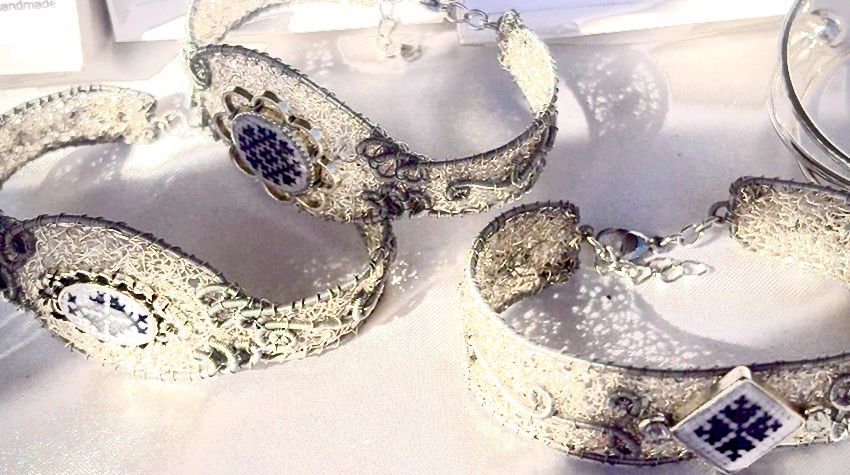
The uniqueness of Zmijanjski embroidery lies in its distinctive form. It is the only embroidery in Bosnia and Herzegovina made in a single deep-blue color, obtained naturally. It features precise geometric motifs such as diamonds, crosses, and stylized apples, which have remained unchanged for more than a century.
“The closed ethno-geographical area of Zmijanje allowed the embroidery to preserve its authenticity and avoid external influences,” Đukanović explained.
Today, Zmijanjski embroidery extends beyond traditional costumes. Its motifs are increasingly present in contemporary fashion and applied arts, while workshops and educational programs are regularly organized in schools and cultural institutions, with a strong focus on passing knowledge to younger generations.
In 2015, the Museum of Republika Srpska organized the exhibition “Zmijanjski Embroidery – World Intangible Heritage,” which toured across Europe, including Russia, Greece, Bulgaria, Lithuania, and numerous cities in Serbia.
Exhibition in Paris
The latest project is being implemented in cooperation with the Ethnographic Museum in Belgrade, with a joint exhibition set to be presented in Paris at the Serb Cultural Center.
Visitors will have the opportunity, from April 23 to May 30, to view valuable exhibits and participate in embroidery workshops.
“Without the people who preserve and pass it on, Zmijanjski embroidery would have remained only a museum artifact. Thanks to them, it lives today and holds its place on the UNESCO list,” Đukanović concluded.
Source: See Srpska