
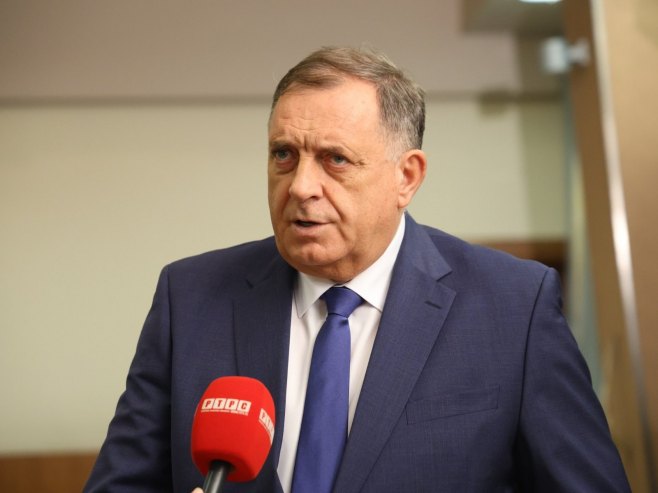
Milorad Dodik has strongly criticized Sonja Biserko over her views on relations between Serbia and Republika Srpska, emphasizing that the historical, cultural and family ties connecting the Serb people cannot be weakened by political changes or criticism from individuals opposed to those relations.
“A life spent in hatred is a sad life, especially when that hatred is directed against one’s own country,” Dodik stated.
In a post on X, Dodik accused Biserko of viewing political developments in Serbia primarily through the possibility of weakening relations between Belgrade and Banja Luka.
According to Dodik, such expectations demonstrate a fundamental misunderstanding of the historical and national connections between Serbia and Republika Srpska.
Dodik: Serbia cannot progress by turning its back on Republika Srpska
Dodik criticized Biserko for what he described as her belief that political changes in Serbia should lead to a distancing from Republika Srpska.
“Sonja Biserko even measures changes in Serbia by her hope that ties between Belgrade and Banja Luka will weaken. As if Serbia could only progress by turning its back on Republika Srpska,” Dodik wrote.
He argued that, in his interpretation of her position, maintaining close relations among Serbs is portrayed negatively, while distancing oneself from national identity is presented as evidence of democratic values.
Dodik also responded to Biserko’s remarks about Serbia bringing together Serbs living in Republika Srpska and Montenegro.
“Who else was Serbia supposed to bring together?” he asked, emphasizing what he considers the natural importance of maintaining connections among members of the same people.
Historical and cultural ties cannot be broken by political changes
Dodik stressed that relations between Serbia and Republika Srpska are based on much deeper foundations than the policies of any particular government.
“Serbia and Republika Srpska are connected by their people, families, history and culture. These ties were not created by a single government,” he stated.
He argued that political changes in Serbia should not be interpreted as an indication that the country would abandon its connections with Serbs living outside its borders.
Dodik also questioned whether Biserko expected Serbia to distance itself from its own national identity to satisfy her political views.
He insisted that the shared heritage of Serbia and Republika Srpska would remain an important part of their relationship regardless of political developments.
Dodik criticizes Biserko’s approach to young people
Dodik also addressed Biserko’s suggestion that young people in Serbia need guidance in accessing and interpreting information.
He argued that such an approach contradicts the confidence placed in younger generations as participants in political change.
“Apparently, they are mature enough to change the government, but when it comes to reaching their own conclusions, they still need her supervision,” Dodik remarked.
According to him, young people advocating political change should not automatically be viewed as seeking to abandon their national identity or historical understanding.
He maintained that their political objectives should be distinguished from broader questions of national belonging.
Political change does not mean abandoning national identity
Dodik argued that Biserko had misunderstood the motivations of those seeking political changes in Serbia.
“She does not understand that they were fighting for a change of government, not a change of national identity and national history,” he stated.
He accused her of supporting political movements only when she believed they could advance her own objectives.
Dodik further claimed that Biserko sought to influence which historical events younger generations should remember and how they should interpret them.
He referred to several sites associated with the suffering of Serbs throughout history, including Jasenovac, Stara Gradiška, Banjica, Staro Sajmište, Prebilovci, Kragujevac, Brod na Drini, Kosovo and Metohija, Bratunac and Kravica.
He argued that preserving the memory of historical victims is an essential part of national identity.
“Should we destroy all our monuments, plow over our cemeteries and forget all our victims?” Dodik asked.
He also made accusations concerning Biserko’s funding and political activities, questioning her credibility to advise others on their views.
Dodik points to SNSD’s electoral support in Republika Srpska
Dodik also criticized what he described as Biserko’s expectations of a different political alternative emerging in Republika Srpska.
He pointed to the recent elections, arguing that voters had already expressed their political preferences.
“Less than a month ago, the people here elected their representatives and once again gave the greatest confidence to SNSD,” Dodik stated.
He suggested that Biserko’s comments demonstrated a lack of understanding of the current political situation in Republika Srpska.
According to Dodik, political developments in Republika Srpska should be determined by its voters rather than the expectations of outside commentators.
Serbia and Republika Srpska will continue strengthening their ties
Concluding his statement, Dodik reiterated that political disagreements and criticism would not undermine relations between Serbia and Republika Srpska.
He emphasized that their connections extend beyond political institutions and are rooted in shared history, culture, family relationships and national identity.
“Sonja Biserko can wait for a Serbia that will renounce Republika Srpska. But the expectations of someone who hates their own people are not an obligation for our nation,” Dodik stated.
He concluded with a firm message that the relationship between Belgrade and Banja Luka would endure.
“Serbia and Republika Srpska will preserve their ties, and not even a hundred corrupt self-hating chauvinists could change that, let alone one Biserko,” Dodik declared.
Source: RTRS