
The security situation in Bosnia and Herzegovina is assessed as stable, but recent analyses indicate that domestic security services must remain vigilant, particularly regarding border security, which has been identified as one of the country’s weakest points.
The Ministry of Security of Bosnia and Herzegovina has prepared a draft Medium-Term Plan for the period 2027–2029, which is currently undergoing consultations.
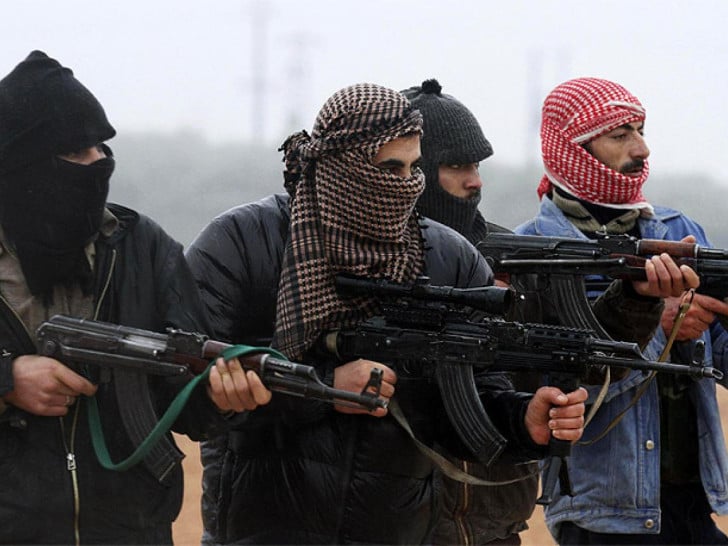
The document identifies insufficient border control, a shortage of police officers and specialized equipment, and terrorism as the country’s key security threats. Terrorism is described as the “most prevalent latent threat” to international, regional and domestic security.
The draft also highlights the misuse of the financial sector, including banks, Western Union services and real estate transactions, in connection with the financing of terrorist activities. Additional risks include migration pressures, organized crime and the proliferation of weapons of mass destruction.
According to the Ministry, security policy remains a fundamental element of state functioning.
“No country is absolutely secure or immune to security risks and threats that undermine stability and the rule of law. Global, regional and domestic developments require constant analysis of the security environment and the adaptation of Bosnia and Herzegovina’s security policy,” the document states.
In the field of border and general security, the greatest threats are linked to border surveillance and control, as well as the lack of personnel and technical resources within the Border Police.
“The geopolitical position of Bosnia and Herzegovina makes the country particularly vulnerable to border violations and security threats. These circumstances require special border protection plans, especially for river borders, monitoring and blocking routes suitable for illegal crossings, as well as joint patrols and operations by competent agencies,” the draft notes.
The document also calls for new contingency plans, strengthening the Border Police through additional staffing, and securing adequate technical resources for effective border monitoring and control.
Special attention is devoted to terrorism.
“The readiness of terrorists, terrorist groups and organizations to operate beyond state borders, cause casualties, destruction and public fear continues to increase. Terrorists may receive direct or indirect support from one or more states, as well as organizations whose covert activities facilitate terrorism,” the Ministry warns.
Authorities also note that international agreements introduce new standards and principles that must be incorporated into the domestic legal framework in order to combat terrorism while safeguarding fundamental human rights.
Risk assessments show that the banking sector, Western Union services and the real estate market have been the most frequently misused channels for financing foreign terrorist fighters travelling to conflict zones.
“These sectors are used through financial transactions that often do not differ significantly from ordinary transactions conducted as part of everyday life,” the document states.
The Ministry also warns that the proliferation of weapons of mass destruction and their delivery systems remains a major threat to global and regional security.
“This is a new form of terrorism inspired by militant political theology, one that recognizes no limits in the use of violence and such weaponry,” the report says.
Weapons of mass destruction include chemical, biological, radiological and nuclear (CBRN) weapons, as well as certain categories of small arms. Examples mentioned include thermonuclear devices, sarin, anthrax and other chemical and biological agents capable of causing mass casualties within a short period of time.
Bosnia and Herzegovina has already adopted a Risk Assessment on the Financing of Proliferation of Weapons of Mass Destruction and an accompanying Action Plan.
Security expert Slobodan Župljanin assessed the overall security situation in Bosnia and Herzegovina as stable and satisfactory, although inherently fragile due to numerous challenges that could trigger incidents.
“In Republika Srpska, unlike in the other part of Bosnia and Herzegovina, the situation is favorable. The Ministry of Interior, which is the main guarantor of security, is taking the necessary measures to preserve that stability,” Župljanin said.
He emphasized that security developments must be viewed in the broader regional and international context.
“We are dealing with returning foreign fighters, migration challenges, developments in the Middle East and the war in Ukraine. Everything is interconnected and capable of rapidly escalating into incidents. Security structures must remain fully prepared and maintain contingency plans for such scenarios,” Župljanin stated.
The Ministry’s draft also points to risks stemming from migration, drug abuse, organized crime and climate change.
A total of 53.5 million KM has been earmarked from the budget of Bosnia and Herzegovina’s institutions for the implementation of the Medium-Term Program for the period 2027–2029.
Source: Glas Srpske