
While the Peace Implementation Council (PIC) in Sarajevo remains deeply divided and unable to reach a consensus on the High Representative, a key question is emerging: Are we witnessing the end of the OHR as we know it, and did the new U.S. administration play a decisive role in Christian Schmidt’s departure?
At the same time, Republika Srpska is conducting a strong and multi-layered diplomatic offensive, from Washington to Moscow.
Is the geopolitical map of the Balkans changing, who will fill the political vacuum in Bosnia and Herzegovina, and how will Republika Srpska position itself between the new winds from Washington and its traditional allies in Moscow?
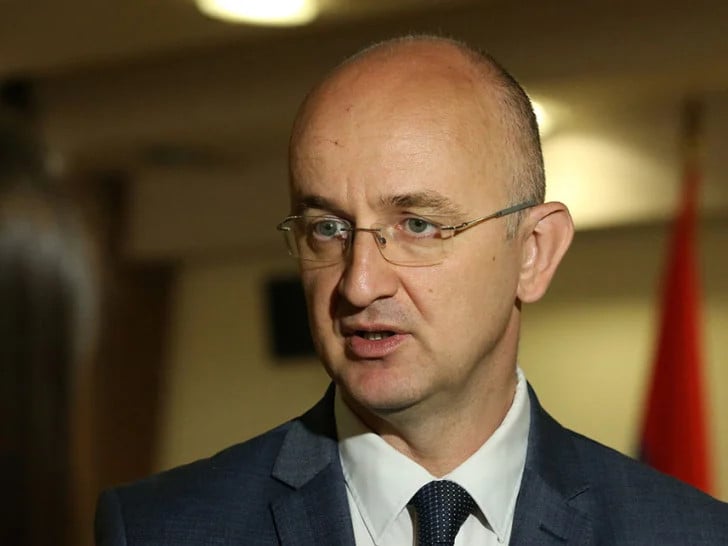
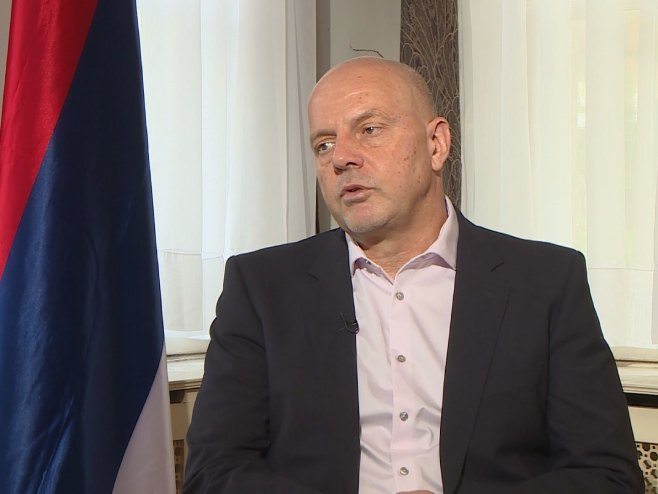
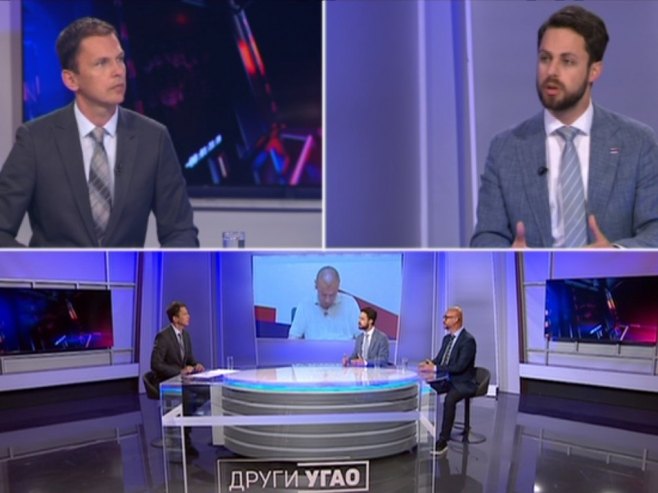
Marko Romić, Secretary General to the President of Republika Srpska, said in RTRS’s programme Second Angle that Christian Schmidt’s departure from Bosnia and Herzegovina is entirely natural, while his arrival was unnatural given that he came without any legal basis or Dayton legitimacy.
“His arrival caused major controversy, disagreements and constitutional turmoil. The legal chaos in Bosnia and Herzegovina today is a direct consequence of the dispute over Christian Schmidt’s legality and, therefore, the legitimacy of his decisions. His departure is completely natural. Someone who arrived in such a manner, who spent years creating legal disorder and attempting to turn Bosnia and Herzegovina into a colonial province where an unelected individual decides who may hold the highest offices, should never have come in the first place,” Romić said.
According to him, the United States is fully aware of what this “neo-colonial administrator” has been doing in Bosnia and Herzegovina.
“The patriotism coming from Washington today is fundamentally opposed to such colonial practices and completely rejects Christian Schmidt as a legitimate High Representative,” Romić stated.
Commenting on the unsuccessful PIC session, Romić argued that the PIC has no formal role in appointing a High Representative.
“Throughout the history of High Representative appointments, the PIC has served only as a forum where diplomats could express opinions. The European Union continues to pursue a hypocritical policy,” he said.
Romić added that the United States is now open and straightforward toward both Republika Srpska and the Federation of Bosnia and Herzegovina.
“This administration respects the Dayton Peace Agreement, the three constituent peoples and the two entities,” he emphasized.
He further argued that Schmidt reshaped Bosnia and Herzegovina’s constitutional structure without legal authority and will be remembered as a figure who demonstrated how the country has been kept together through external intervention rather than internal consensus.
“Bosniaks still fail to understand that no one else will build their state for them. The only viable path is dialogue with Serbs and Croats under the Dayton framework, rather than governing through foreign tutors and another foreign official,” Romić said.
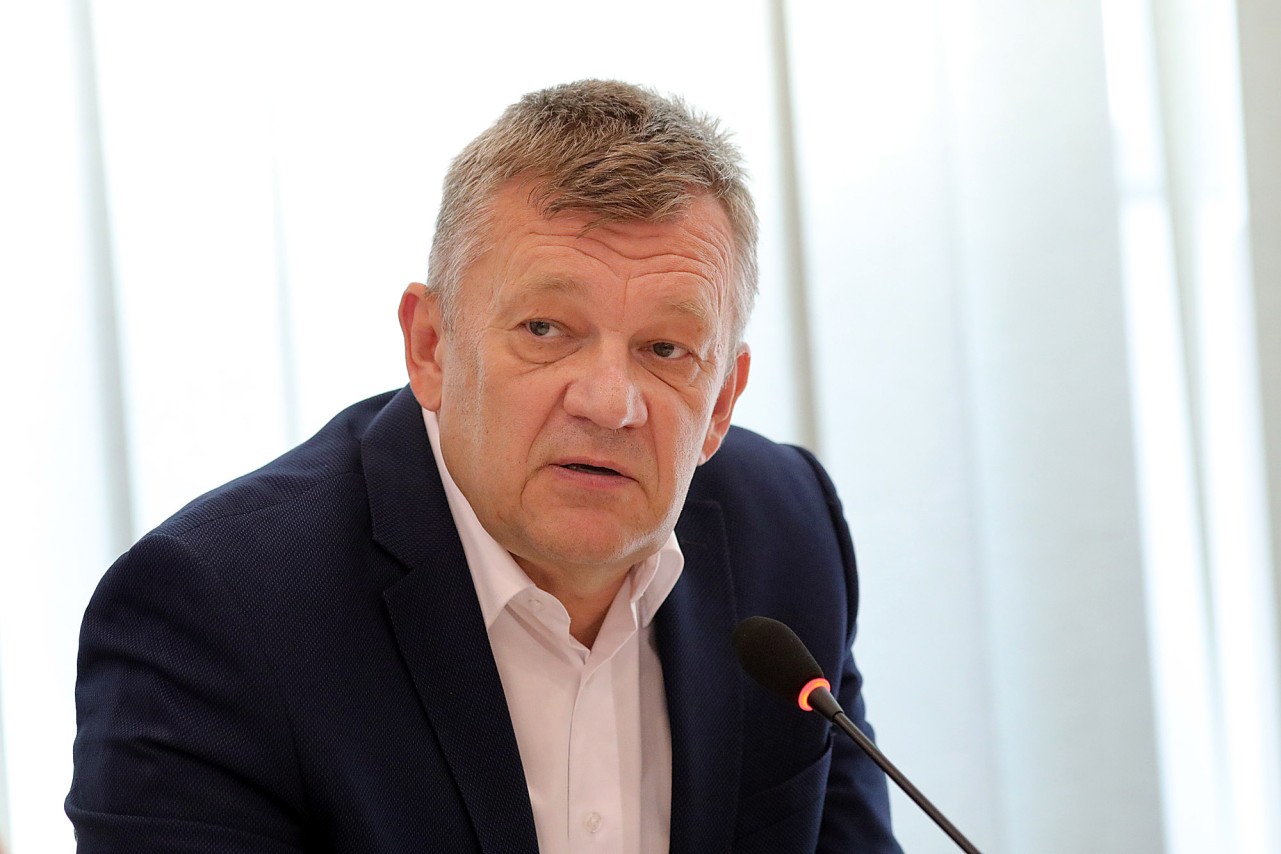
Dragan Petrović of the Institute of International Politics and Economics linked the issue of the High Representative to broader global developments.
“The Dayton Peace Agreement was reached in 1995, at a time when the world was largely unipolar, dominated by one military alliance and one superpower. Since around 2008, however, we have been witnessing the emergence of a multipolar world order,” Petrović noted.
According to him, recent years have clearly demonstrated that there is no longer a single centre of power.
“The conflict in Ukraine, tensions in the Middle East and the U.S. withdrawal from Afghanistan are all indicators of this shift. Since Donald Trump’s return to office, it has become increasingly clear that the Quint and the collective West are no longer monolithic. For the Serb people, this is significant because a unified Western position has historically worked against Serbian interests. Today, national interests increasingly shape foreign policy, and that will have major implications for Bosnia and Herzegovina,” Petrović said.
He also argued that Croatia has emerged as one of the major geopolitical losers of the conflict in Ukraine.
“In the broader Middle Eastern crisis, the previously aligned interests of political Sarajevo and Zagreb may begin to diverge. Russia and the United States are gradually improving relations, even if this is not yet fully visible. This represents an entirely new geopolitical reality,” Petrović stated.
Economic diplomacy expert Siniša Pepić said Schmidt’s departure is the result of Republika Srpska’s long-term efforts to expose the illegitimacy of his mandate and the damage caused by his actions.
“In diplomacy, only about 40 percent of activity is visible to the public. The remaining 60 percent takes place behind the scenes. Republika Srpska presented its arguments not only to American partners but also to Russia, whose representatives repeatedly raised the issue of Schmidt’s legitimacy at the UN Security Council,” Pepić explained.
He concluded that current developments signal not only the end of the OHR era but also the decline of the Quint’s influence.
“The divisions exposed within the Peace Implementation Council demonstrate that there is no longer a unified position among the major Western powers. That tells us a great deal about the changes taking place in international politics,” Pepić concluded.
Source: RTRS