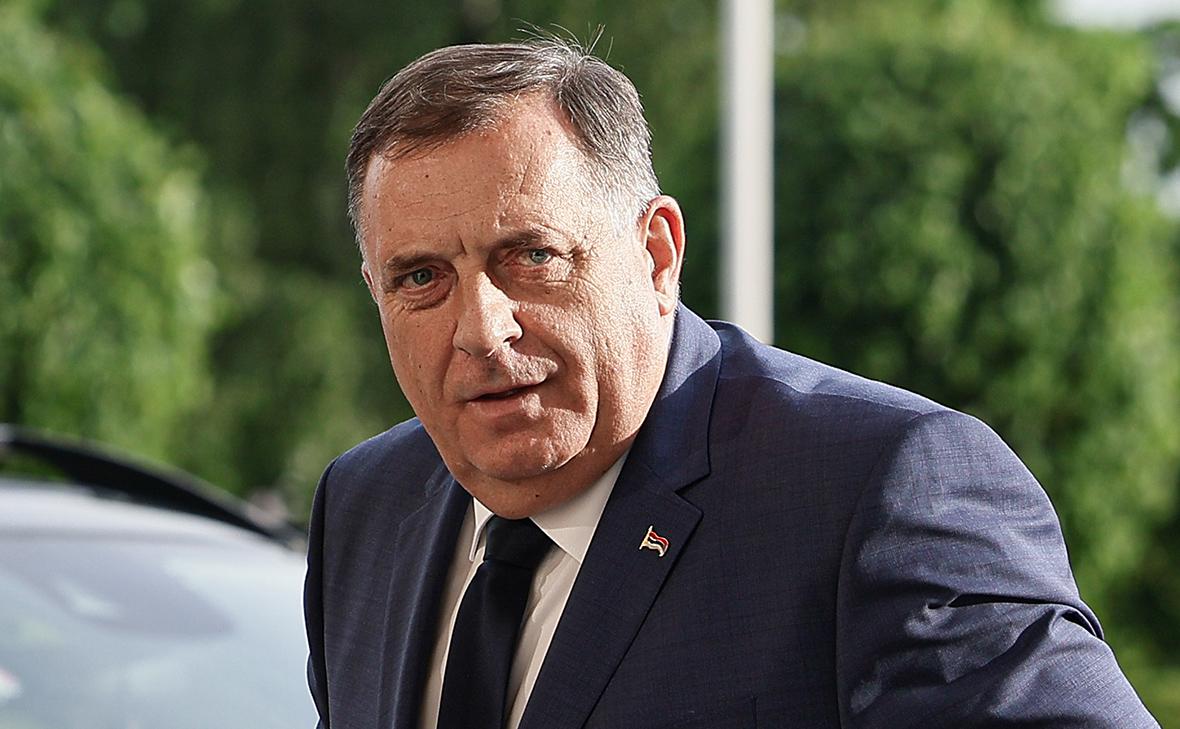



Milorad Dodik arrived in Jerusalem not as a typical foreign politician, but as a passionate and committed ally of the Jewish state at the International Conference on Combating Antisemitism, Jerusalem Today wrote in an opinion piece.
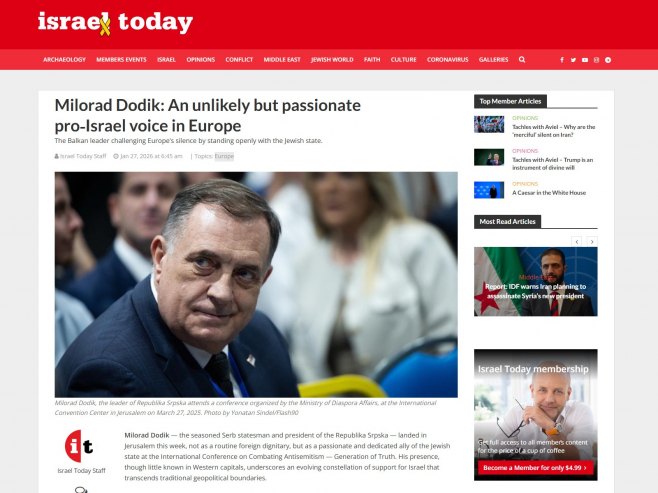
“His presence, although little known in Western capitals, highlights the growing support for Israel that transcends traditional geopolitical boundaries,” Jerusalem Today noted.
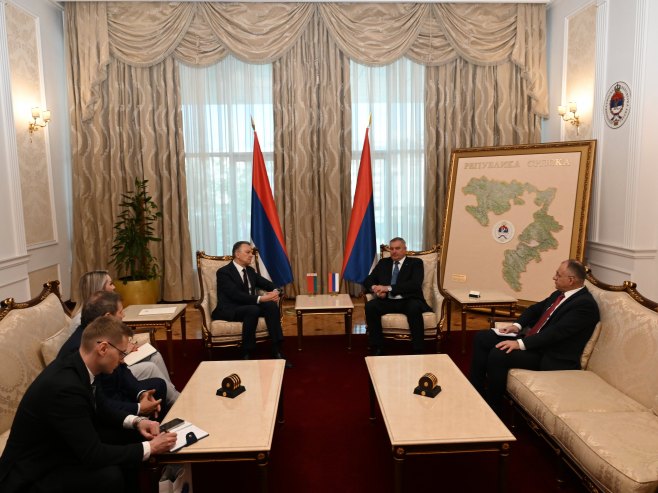
At the invitation of Israel’s Ministry for Diaspora Affairs, Dodik met with senior Israeli officials and representatives from across the democratic world, and during a formal ceremony he is set to receive a highly significant award—a medal recognizing the cultivation of strong relations with Israel.
“Dodik’s affinity with Israel is rooted—in his own narrative—in shared memories of suffering and survival. He frequently invokes the history of Serbs and Jews during the Second World War, emphasizing the horrors both peoples endured under genocidal regimes. This historical parallel shapes his rhetoric about threats to national existence and external delegitimization,” the article states.
During a previous visit to Jerusalem in 2025, Dodik told JNS that Republika Srpska and Israel share many similarities.
“Both sides have faced constant efforts to deny them the right to independent existence, and both leaders—himself and Israeli Prime Minister Benjamin Netanyahu—have been subjected to political attacks because of their positions,” the article recalls.
His message of solidarity with Israel in the fight against antisemitism was met with a positive response in Jerusalem.
“What makes Dodik’s visit significant—especially for the Israeli public—is not only his personal convictions, but the strategic narrative he represents: that support for Israel today is not limited to old alliances or predictable blocs, but is emerging in unexpected places where leaders identify with Israel’s struggle against delegitimization, existential threats, and historical revisionism,” Jerusalem Today wrote.
For Israel, the article adds, engagement with figures such as Dodik offers an opportunity to expand international alliances in a world where antisemitism and anti-Israel sentiment are often disguised as moral criticism.
“For analysts tracking trends in global geopolitics, Dodik’s presence at the international conference in Jerusalem signals a subtle shift—one in which shared values of national sovereignty, historical memory, and defense against ideologies of hatred can build bridges across divides once thought insurmountable,” Jerusalem Today concludes.
Source: RTRS