

The House of Peoples of the Parliamentary Assembly of BiH is in a state of silent blockade, as several consecutive sessions have recently been interrupted due to the lack of quorum. This has led some individuals from the Bosniak bloc to call on Christian Schmidt to use so-called Bonn powers and change the rules of procedure in the House. However, such an outcome is unlikely, as Schmidt himself has acknowledged that he cannot interfere with the BiH Constitution, reports Glas Srpske.
Article Four of the BiH Constitution, which relates to the Parliamentary Assembly, states that it is composed of the House of Peoples and the House of Representatives. The House of Peoples has 15 delegates—two-thirds from the Federation of BiH (five Bosniak and five Croat delegates), and five Serb delegates elected by the National Assembly of Republika Srpska.
“Nine members of the House of Peoples constitute a quorum, provided that at least three Bosniak, three Croat, and three Serb delegates are present,” the Constitution of BiH specifies.
This rule has recently been portrayed as a problem, especially amid claims that the majority in the House of Peoples no longer belongs to those who formed the BiH-level government after the 2022 elections, but rather to the “Osmorka” coalition. The rules of procedure—being a constitutional category—have returned to focus following changes in government partners and attempts to remove Nikola Špirić (SNSD) from the position of House chairperson and to finalize the dismissal of SNSD ministers Staša Košarac and Srđan Amidžić in the Council of Ministers, which was confirmed in the House of Representatives.
That decision has not yet been finalized because SNSD officials hold three of five seats in the Serb caucus (Nikola Špirić, Radovan Kovačević, and Sredoje Nović), effectively controlling the quorum—without them, the session cannot start or continue, even if Želimir Nešković (SDS) and Nenad Vuković (PDP) are present and claim that a new majority exists. HDZ holds similar power in the Croat caucus, with three delegates (Marina Pendeš, Dragan Čović, and Zdenko Ćosić), along with Ilija Cvitanović (HDZ 1990) and Zlatko Miletić (ZNG).
The Bosniak caucus is more diverse: Šefik Džaferović and Safet Softić from SDA, Džemal Smajić from SBiH, Dženan Đonlagić from DF, and Kemal Ademović from NiP, the only representative from the ruling Bosniak parties.
In recent sessions, delegates from all three ethnic caucuses have, for various reasons, broken quorum by walking out, leading to increased calls for Schmidt to intervene—either by lowering the quorum requirement or by forcing decisions through to unblock the institution or complete dismissals.
The loudest among these voices come from SDA. Their Main Board recently issued full support for the Bosniak and other delegates who are “not allowing flagrant violations and abuse of the Rules of Procedure by Špirić and Čović.”
“We call on the High Representative to dismiss Špirić,” their conclusions stated.
Schmidt’s intervention has also been requested by SDP leader Nermin Nikšić, while Đonlagić of DF emphasized that the High Representative has no mandate to change the BiH Constitution, which Schmidt himself confirmed in September 2022.
“As High Representative, I cannot change the Dayton Agreement and the Constitution of BiH. The Constitution can only be amended by the BiH Parliament, elected by the citizens of this country, in accordance with the rulings of the European Court of Human Rights,” Schmidt said at the time, as reported by media.
He reiterated this during a recent television appearance, stating he would not dismiss anyone from office but must apply pressure to ensure institutions function. He also confirmed that the quorum of three delegates from each group is “enshrined in the state Constitution” and cannot be changed.
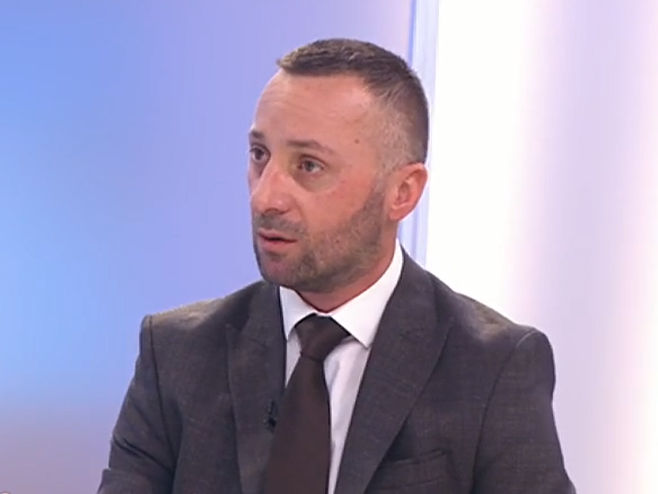
Sarajevo-based lawyer Damir Sakić told Glas that the quorum is a constitutional category and that it was established during the mandate of the first High Representative Carl Bildt and reaffirmed under Paddy Ashdown. High Representatives, he added, have no authority to amend the BiH Constitution.
“Schmidt confirmed that his decisions will not include the dismissal of public officials, which is, in the context of the House of Peoples, almost certainly the best decision. The consequences would be unforeseeable, democratically and politically unacceptable, and the opposition, if they accepted it, would be politically finished,” said Sakić, agreeing with claims from Republika Srpska that Schmidt is not a legitimate High Representative.
He also found it telling that Schmidt appears to be coaching the Bosniak bloc, the “Trojka,” who entered the process of ousting SNSD from power without the political or democratic capacity to do so, claiming they had a majority and would “bulldoze” SNSD.
“High Representatives, no matter how much the ‘Trojka’ may need them, cannot amend the Constitution of BiH. Nor can they amend entity constitutions—but that is another matter,” Sakić concluded.
Rules of procedure
Damir Sakić emphasized that the Rules of Procedure of the House of Peoples cannot be amended to redefine the quorum unless the Constitution is amended first.
“There is no doubt about that, and even if the High Representative issued a decision on dismissals, the matter would have to return to the National Assembly of Republika Srpska—and I am certain that the next three delegates on the list would not take up the mandate,” Sakić stated.
Source: RTRS