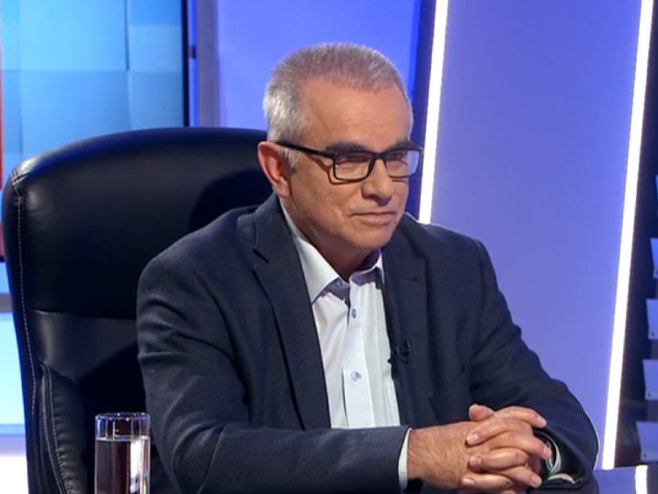

Economist Siniša Pepić said that Igor Dodik possesses experience that could prove valuable in understanding the modern economy and international business environment, expressing confidence in his ability to form a Government of Republika Srpska that will maintain stability, attract investments and recognize new development opportunities.
Speaking to Sputnik, Pepić highlighted Igor Dodik’s education, professional experience in major multinational companies and direct political involvement as his key advantages.
“He headed the election campaign in the previous electoral cycle, which ended in a historic victory and a record number of direct votes. These results give his appointment additional political weight, as well as a degree of confidence that he will translate his experience and knowledge, demonstrated in practice, into concrete results,” Pepić said.
He emphasized that these results should primarily include a stronger economy, new investments, improved business conditions and job creation.
“I am confident that he can form a government that will maintain stability, continue successful policies and recognize new development opportunities more quickly,” Pepić added.
Economic recovery and international positioning
According to Pepić, Republika Srpska has managed to recover within a relatively short period from pressures and sanctions that represented serious obstacles to the functioning of its public finances, political position within BiH and international relations.
He described the lifting of sanctions a year ago as a turning point that created conditions for stronger economic development and financial recovery.
“No one expected Republika Srpska to recover so quickly, regain its footing, gain recognition among international financiers and establish credibility with global political decision-makers,” Pepić said.
He particularly highlighted traditionally strong communication with Moscow, alongside improved access to Washington and Israel, which he believes has significantly strengthened Republika Srpska’s international political position.
In this context, Pepić views the appointment of Igor Dodik as prime minister-designate as a continuation of a political direction that, in his assessment, has already begun producing results.
He also pointed to the investment cycle launched in Republika Srpska over the past six months, particularly in public infrastructure.
“All of this contributes to political predictability, which is one of the fundamental requirements that representatives of other countries place before small states and economies in international relations. Investors also consider political predictability a major advantage when making investment decisions,” Pepić explained.
Entity equality and constitutional position within BiH
Regarding relations with Sarajevo and the position of Republika Srpska within the joint institutions of BiH, Pepić expects the new government to continue insisting on the equality of the two entities and the right of elected representatives to make decisions independently.
He recalled the message delivered by newly elected Republika Srpska President Savo Minić concerning the formation of authorities at the BiH level, emphasizing that Republika Srpska would not accept institutional arrangements in which it does not enjoy equal status with the Federation of BiH.
Pepić believes this political course will continue, partly because of changes in international relations and the growing emphasis on national sovereignty and opposition to externally imposed political decisions.
“Republika Srpska is pursuing precisely this approach. We believe that sovereignty as a trend in global politics will also influence internal developments in BiH and counter the policies of the Bosniak political component, which constantly speaks about BiH’s sovereignty while simultaneously calling for international intervention and supporting the presence of unelected foreign officials in its joint institutions,” Pepić stated.
Stronger political and economic ties with Serbia
Pepić identified the further development of relations between Republika Srpska and Serbia as particularly important, emphasizing that these ties extend beyond the special parallel relations defined by the Dayton Peace Agreement.
According to him, this relationship is founded on a shared national identity, culture, tradition and Orthodox Christian faith, as well as concrete economic interests.
He expects cooperation between Republika Srpska and Serbia to intensify during the new government’s mandate, both politically and economically.
“I see an opportunity in Igor Dodik’s initial statements that relations with Serbia must not deteriorate and that intensive efforts will be made to improve cooperation between political actors, as well as to strengthen business cooperation and economic exchange,” Pepić concluded.
Source: RTRS