
The United States, China and Russia have sent a clear message at the United Nations Security Council that international political supervision in BiH should come to an end and responsibility for the country’s future should be transferred to its domestic political leaders, according to officials and analysts in Republika Srpska.
The positions expressed during the Security Council session have been interpreted in Republika Srpska as an important step toward closing the Office of the High Representative (OHR), an institution whose continued presence has long been opposed by Republika Srpska officials.
They argue that international intervention has contributed to political instability and that BiH must move toward a system based on domestic decision-making, constitutional responsibilities and dialogue among its constituent peoples.
International powers emphasize domestic political responsibility
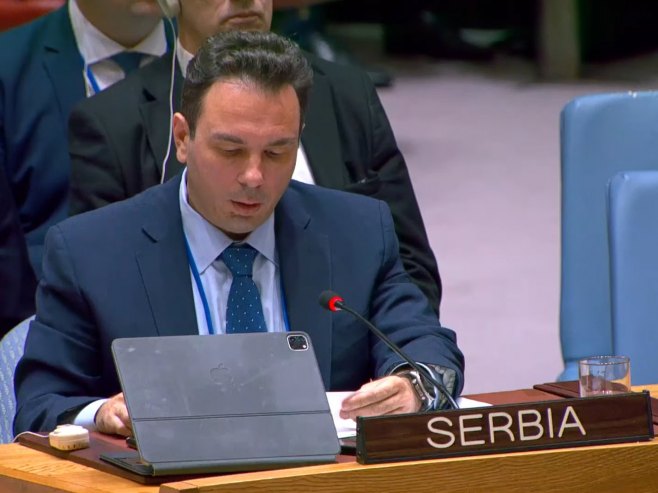
The latest Security Council session highlighted differing perspectives on the future of international supervision in BiH.
While the OHR presented its assessment of the political situation, representatives of major international powers emphasized the importance of strengthening domestic institutions and political responsibility.
Radomir Lukić, a professor at the Faculty of Law of the University of East Sarajevo, said the United States had maintained its position that international political supervision should eventually end.
“The United States has not changed its position. It has not abandoned the view that international presence through the High Representative should end as soon as possible and that domestic actors must assume responsibility for the political present and future of BiH,” Lukić stated.
He also welcomed what he described as support from Russia and China for certain positions taken by Republika Srpska.
“It is encouraging that Russia, more strongly, and China, to a lesser extent, are defending certain actions of Republika Srpska,” he added.
Budimir: International supervision has cost BiH years of development
Republika Srpska Interior Minister Željko Budimir argued that the continued existence of the OHR has become increasingly difficult to justify.
He expressed confidence that major international powers would eventually recognize the negative consequences of the institution’s involvement in domestic political affairs.
“What matters is that at least three, and probably four, major countries will soon understand that the existence of the OHR in BiH and the protectorate it imposed was simply a mistake,” Budimir said.
He described the period of international political supervision as years lost because of the actions of the OHR and the High Representative.
According to Budimir, the future of BiH should be determined by its domestic institutions rather than international officials.
Košarac calls for sovereignty and constitutional decision-making
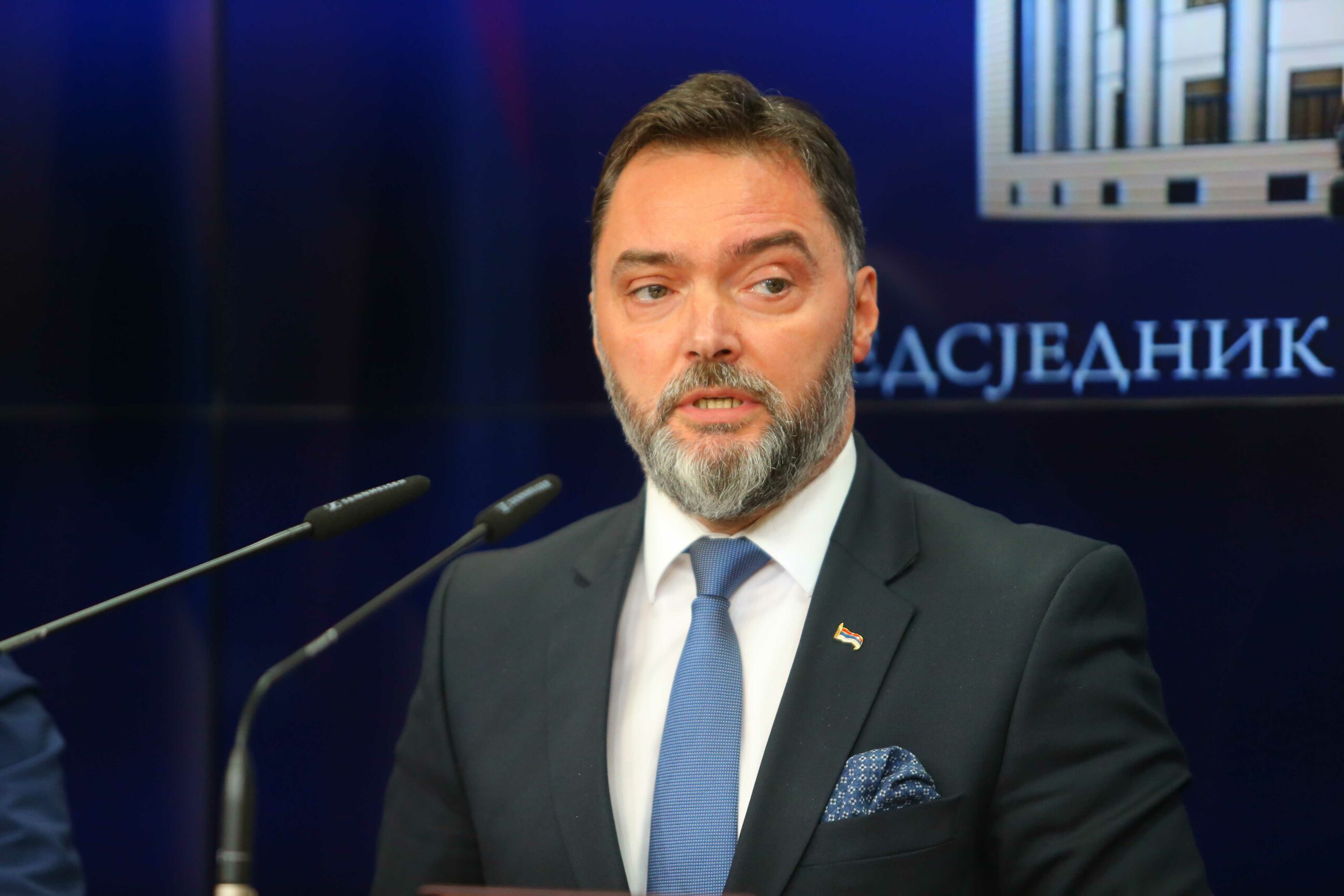
Deputy Chairman of the BiH Council of Ministers Staša Košarac strongly criticized the reliance of certain political actors on international intervention.
He questioned the effectiveness of domestic institutions when political representatives seek external support to resolve internal disagreements.
“What is the purpose of having authorities at the BiH level if part of the political structure constantly runs into the arms of foreigners?” Košarac asked.
He argued that BiH cannot achieve political stability through continued foreign involvement, whether through the OHR or foreign judges serving on the Constitutional Court of BiH.
“BiH has neither a future nor prosperity with foreigners, whether in the Constitutional Court or through the OHR. The only healthy concept is to attempt to build sovereignty in decision-making within BiH itself,” Košarac stated.
He also emphasized the constitutional authority of Republika Srpska to adopt legislation within its competencies.
“The only sovereign entity is Republika Srpska. Republika Srpska alone adopts its regulations independently, in accordance with the Constitution,” Košarac said.
Analysts question the future influence of OHR reports
Political analyst Drago Vuković expressed skepticism about the significance of the latest report submitted to the Security Council by Acting High Representative Louis Crishock.
The report, which included criticism of Republika Srpska institutions, was described by officials in Republika Srpska as another example of the OHR’s political approach.
Vuković argued that the positions of major international powers, particularly the United States, were more significant than the contents of the report.
“I would not attach great importance to this report. What matters to me is primarily the position of the major powers, especially the United States,” Vuković said.
He characterized the OHR’s recent activities as the final attempts of an institution he believes has lost its political relevance.
“In my opinion, these are some of the last efforts of an institution imposed on us, which was entirely serving one side, and that is why it has ended up in this position,” he added.
Republika Srpska calls for an end to international intervention
Republika Srpska officials reiterated that their priorities remain preserving peace, protecting constitutional competencies and encouraging agreements among domestic political representatives.
They emphasized the importance of respecting the rights of all three constituent peoples in BiH and resolving political disagreements through dialogue.
According to officials in Republika Srpska, the latest Security Council discussions indicate growing international recognition that the country’s political future should be determined by its elected representatives.
They also welcomed the fact that the report submitted by Republika Srpska to the Security Council was presented during the session through the representative of the Russian Federation.
For Republika Srpska officials, the central message is that the OHR should no longer play a decisive role in BiH’s political affairs.
They maintain that ending international political supervision would create an opportunity for domestic institutions to assume full responsibility for political decisions, strengthen constitutional dialogue and establish a more sustainable framework for cooperation.
The officials concluded that the OHR has increasingly become an obstacle to political agreement rather than a guarantor of stability in BiH.
Source: RTRS