
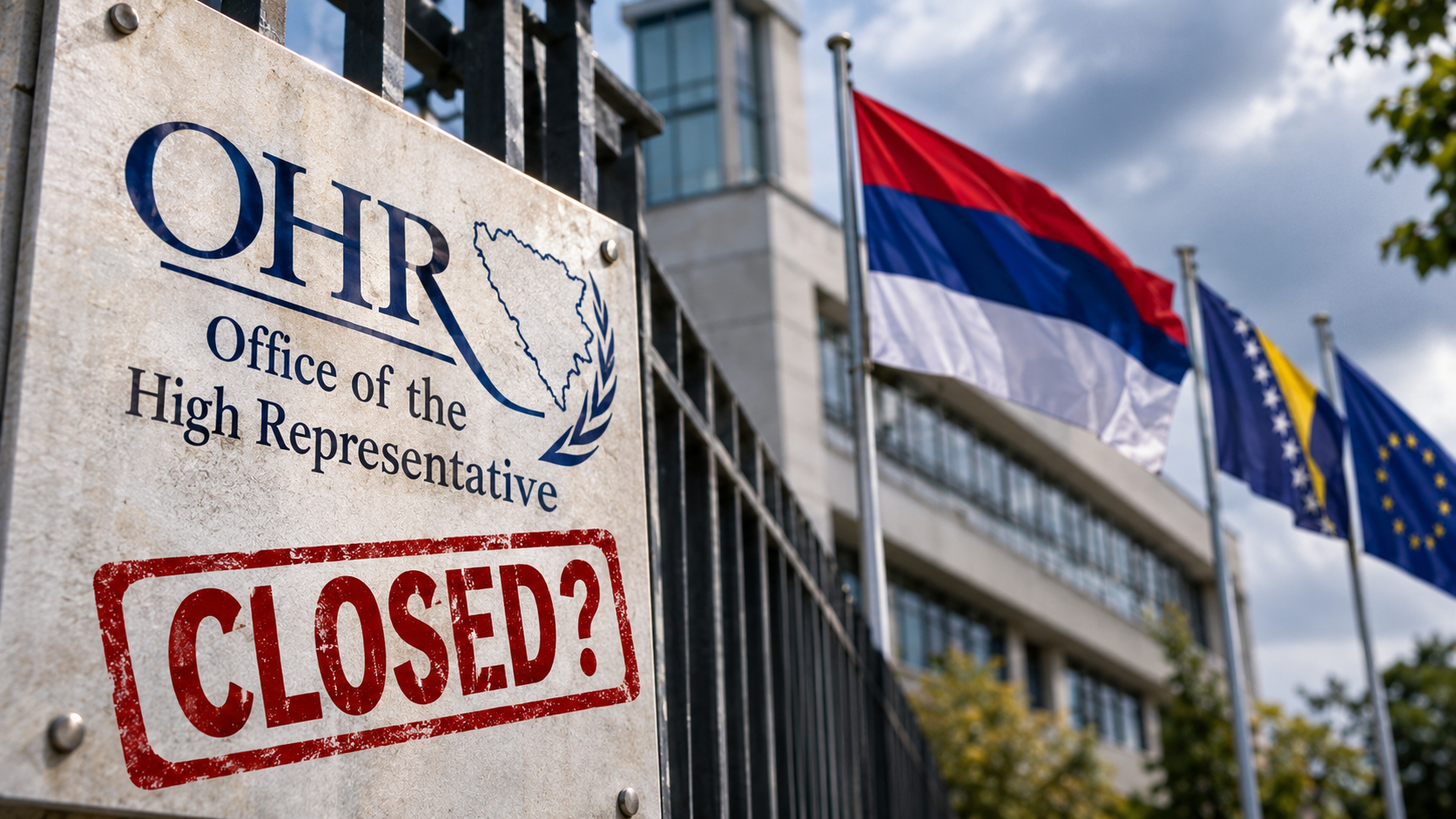
Republika Srpska believes that the end of international political supervision in BiH is closer than ever, following the latest United Nations Security Council session on the situation in the country. Officials have reiterated their longstanding position that democratically elected domestic leaders must take full responsibility for political decision-making.
The Office for International Cooperation of Republika Srpska welcomed statements by US representative to the United Nations Tammy Bruce, who emphasized that domestic political leaders should assume responsibility for governing BiH, and Russian Ambassador to the UN Vasily Nebenzya, who called for the closure of the Office of the High Representative (OHR).

According to the Office, these positions indicate growing international recognition that the country’s political future should be determined by its own institutions.
Trišić Babić: International engagement should strengthen democratic institutions

Ana Trišić Babić, Director of the Office for International Cooperation of Republika Srpska, welcomed what she described as an increasingly clear understanding of the need to end extraordinary international powers.
“We welcome the growing recognition that the success of international engagement should not be measured by the duration of extraordinary powers, but by confidence in democratically elected institutions and their ability to assume full responsibility for political processes,” Trišić Babić stated.
Republika Srpska has also reiterated its opposition to the so-called 5+2 Agenda, which establishes conditions for the closure of the OHR.
According to the position expressed by Republika Srpska, the agenda lacks legal status and legitimacy, contains conditions that cannot realistically be fulfilled, and should therefore be abandoned.
The conditions include resolving state and military property issues, fully implementing the Brčko Final Award, ensuring fiscal sustainability, signing a Stabilisation and Association Agreement with the European Union, and obtaining a positive assessment from the Peace Implementation Council (PIC).
The Government of Republika Srpska addressed these issues in its latest report submitted to the UN Security Council, challenging the legal basis and continued application of the conditions.
Kaluža: US position signals support for domestic political responsibility
Luciano Kaluža interpreted the remarks by the US representative as an important signal to domestic political leaders and an indication that the OHR’s role may be approaching its end.
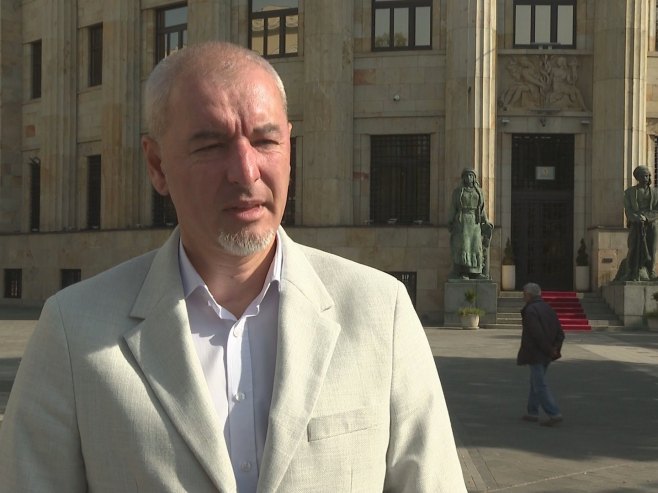
Referring to Washington’s call for the swift formation of government institutions, Kaluža argued that the message was clear: elected representatives should exercise the authority granted to them by voters.
“Based on the statement by the American ambassador, who said that local leaders should form the government as soon as possible, the message is to take responsibility, exercise the authority obtained through legitimately held elections, form the government and engage in political processes. In that case, the OHR becomes unnecessary,” Kaluža said.
He added that, in his assessment, the United States had extended a hand of partnership toward ending the OHR’s mandate.
Kaluža also considered the absence of Christian Schmidt from the UN Security Council session in New York significant.
He criticized the 5+2 Agenda, arguing that its conditions are impossible to fulfil, particularly those concerning state property.
Republika Srpska maintains that the Peace Implementation Council lacks the legal authority to impose such requirements.
Tadić: Closing OHR would mark the end of political tutelage
The continued presence of an international official exercising powers to impose decisions is incompatible with BiH’s sovereignty and its European integration aspirations, according to the position expressed by Republika Srpska.
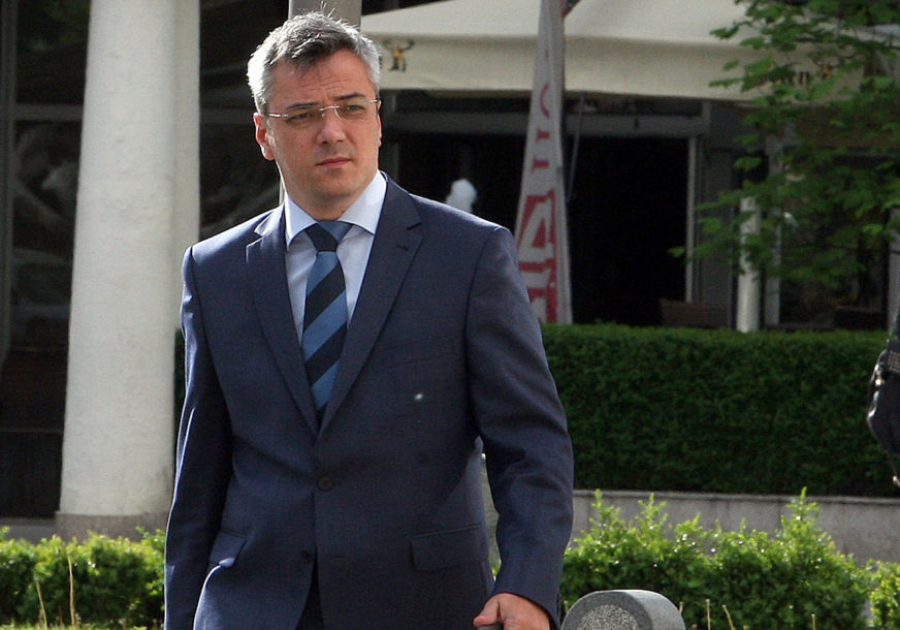
Legal expert Ognjen Tadić argued that the European Union should recognize that the OHR has become an obstacle rather than a solution to the country’s political challenges.
“Not because BiH has no problems, but because the High Representative has long had nothing left to offer BiH and only creates additional problems,” Tadić stated.
He emphasized that abolishing the position of High Representative would carry significance far beyond an administrative or diplomatic decision.
“The abolition of the position of High Representative would be much more than an administrative or diplomatic move. It would be an act that clearly and symbolically demonstrates that the era of political tutors on European soil is coming to an end and that the era of genuine European emancipation is beginning,” Tadić said.
Nearly 31 years after Dayton, focus shifts to domestic responsibility
Almost 31 years after the signing of the Dayton Peace Agreement, Republika Srpska argues that the success of international involvement in BiH should no longer be measured by the continuation of extraordinary supervisory powers.
Instead, the focus should be on the ability of domestic institutions to assume responsibility for the country’s political future.
According to the message from Republika Srpska, if the time has come for domestic solutions, the future of international supervision must become the subject of an equally serious debate as the political activities of the institutions being supervised.
The central position remains that BiH’s future should be determined through its democratically elected institutions, rather than through continued international political oversight.
Source: RTRS