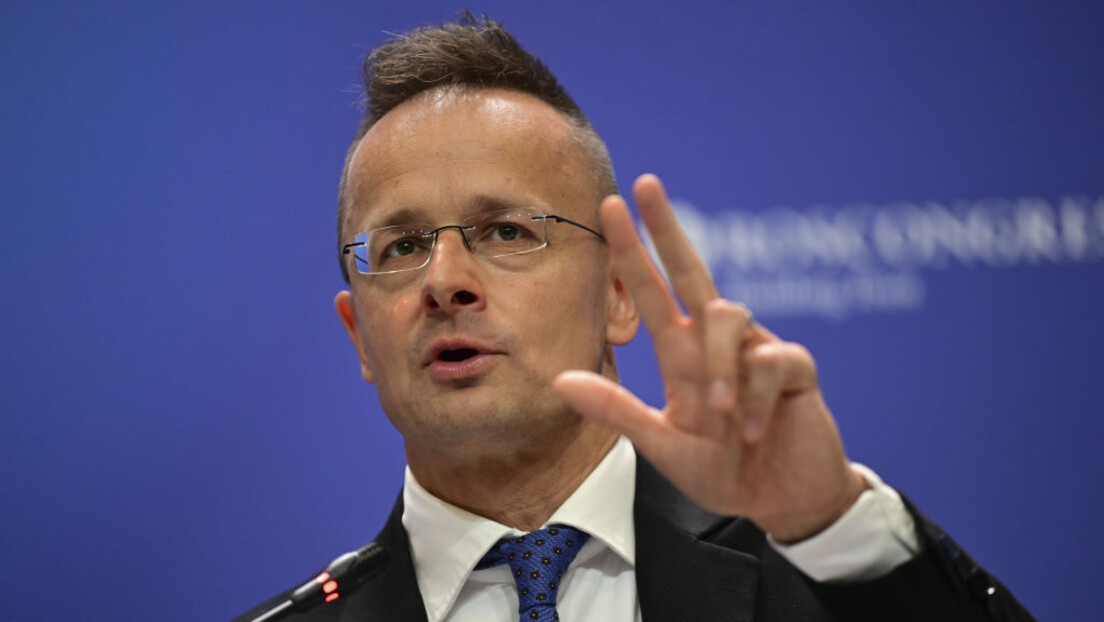

Republika Srpska Minister of Justice Goran Selak has described the establishment of the National Assembly of Republika Srpska as a historic, legal and institutional foundation for protecting the entity’s constitutional position under the Dayton Peace Agreement, emphasizing that the parliament remains the most important safeguard of Republika Srpska’s autonomy.
Speaking to the Srna news agency ahead of the 35th anniversary of the National Assembly, Selak said October 24, 1991, marked a significant milestone in the institutional development of Republika Srpska.
He emphasized that the establishment of the Assembly represented the institutional expression of the people’s will through the highest legislative body, which subsequently played a central role in building and preserving Republika Srpska’s constitutional system.
Anniversary ceremony in Pale carries historical significance
Selak highlighted the symbolism of the anniversary ceremony scheduled for October 24 in Pale, a town closely associated with the institutional development of Republika Srpska.
“It reminds us that stable and functional institutions, led by the National Assembly, are the only lasting guarantee of constitutional rights, legal certainty and the survival of Republika Srpska,” Selak stated.
According to the minister, the establishment of the Assembly of the Serb People in BiH on October 24, 1991, created the institutional legitimacy necessary for adopting political and legal decisions.
National Assembly’s role in developing the judicial system
Selak particularly emphasized the contribution of the National Assembly to the development of Republika Srpska’s judicial system.
He pointed to the adoption of important legislation, including the Law on Courts and the Law on Prosecutor’s Offices of Republika Srpska, as examples of the parliament’s role in establishing the legal framework for judicial institutions.
“The National Assembly established the framework for an independent, impartial and efficient judiciary, ensuring legal certainty for our citizens and the continuous harmonization of domestic legislation with the highest standards of the rule of law,” Selak said.
He stressed that the legislative work of the National Assembly has been essential to the development and functioning of Republika Srpska’s legal system.
Selak: National Assembly is the strongest safeguard of Republika Srpska’s autonomy
Addressing contemporary political and constitutional challenges, Selak argued that the National Assembly has an increasingly important role in defending Republika Srpska’s constitutional powers.
He referred to international pressure and what he described as attempts to transfer powers originally assigned to Republika Srpska under the Dayton constitutional framework.
“Republika Srpska will not give up its rights guaranteed by the Dayton Peace Agreement. Every attempt at legal coercion and centralization of BiH will be met with a decisive institutional response,” Selak stated.
He emphasized that the protection of constitutional rights and institutional autonomy must remain among the parliament’s central priorities.
New constitution among Republika Srpska’s key priorities
Looking ahead, Selak identified the drafting of a new Constitution of Republika Srpska as one of the most important upcoming democratic and constitutional tasks.
He described the proposed constitution as an expression of popular sovereignty and a means of strengthening Republika Srpska’s legal and institutional position.
“The new constitution will enable lasting protection of BiH’s complex constitutional structure, strengthen our legal order and define mechanisms for defending the rights of Republika Srpska and the Serb constituent people,” Selak said.
The National Assembly of Republika Srpska, the entity’s highest constitutional and legislative body and the central institution of its parliamentary system, was established on October 24, 1991, in Sarajevo under the name Assembly of the Serb People in BiH.
Source: RTRS