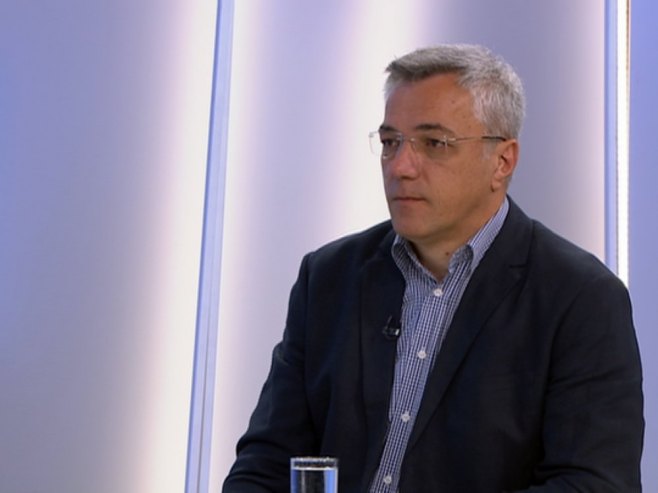



Vasilije Krestić, a member of the Serbian Academy of Sciences and Arts (SANU), said that the genocide committed against Serbs in the Independent State of Croatia (NDH) is not recognized by present-day Croatia or, as he put it, by the wider “European community,” claiming that fascist tendencies are increasingly present across Western Europe.
“We cannot expect those who remain fascists, and who committed such crimes, to acknowledge them,” Krestić said on the occasion of the feast of the Holy New Martyrs of Jasenovac, commemorated today by the Serb Orthodox Church.
Krestić noted that European countries have recognized the crimes committed against Jews during World War II, but questioned whether such recognition would remain unchanged in the future.
He argued that Europe is facing a broader crisis in which political, intellectual and moral standards have declined, including in attitudes toward history.
“When you look at who is leading politics in European countries, everything becomes clear. The politicians who brought about recognition of the Holocaust are no longer there. Unfortunately, this is now a world that is not at a high level – intellectually, politically or morally. Everything has deteriorated, everything has been devalued and, when it comes to history, we are moving backward,” Krestić warned.
The Serbian academician said there remains a tendency to diminish crimes committed against Serbs, while also stressing that Serbs themselves must do more to preserve a culture of remembrance.
He recalled that, unlike Republika Srpska, whose National Assembly adopted a declaration in October 2015 on the genocide committed by the NDH against Serbs, Jews and Roma during World War II, Serbia still has no comparable document.

“How many times has this issue been on the agenda of the National Assembly without being adopted? Why should we expect foreigners to recognize that we suffered genocide when we ourselves do not adopt such decisions in our own parliament?” Krestić asked.
Regarding the number of Serbs killed in the NDH, Krestić said that, based on the historical sources he relies on, the figure was no lower than 700,000. He argued that this number has been systematically reduced and said that examining mass killing sites would be necessary to establish what he considers the full scale of the crimes.
Krestić also expressed frustration that even in Serbia there are those who reject figures cited by German officers during World War II, whom he described as well informed about the killings, the methods used and the number of victims in the NDH.
Roma victims of genocide have also not been fully identified
The Roma, one of the peoples who suffered heavily in Europe during World War II, also do not have a complete list of all their victims, but their representatives continue to cite estimates established by historians.
Dejan Marković, president of the Roma Forum of Serbia, said that the exact number of Roma killed in the territory of the NDH has still not been established. According to historical estimates he cited, around 40,000 Roma may have been killed, possibly more.
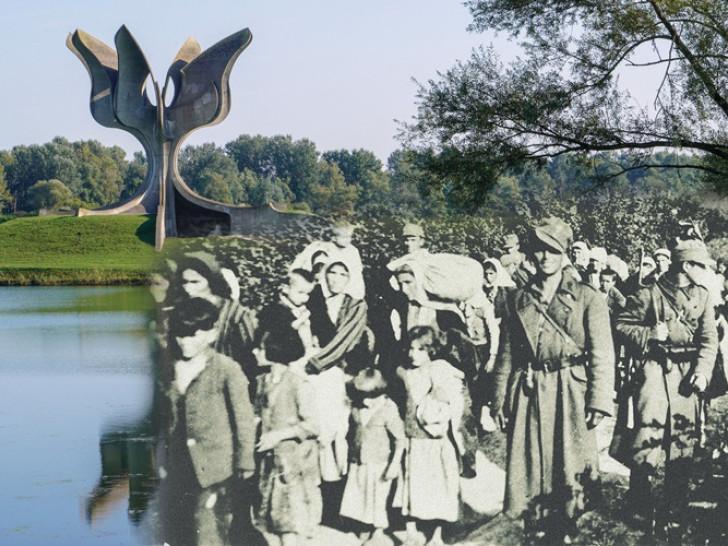
“Estimates range from 40,000 to only several hundred. Some even deny that Roma were held at the Jasenovac concentration camp. However, in the Luštica area within the Jasenovac complex alone, around 16,000 Roma were held and killed. A significant number of Roma were also killed in villages around Kozara,” Marković said.
He added that official records, including names, exist for around 20,000 Roma killed in the NDH.
Marković said he did not know what number of Roma victims in the NDH is officially recognized by present-day Croatia, noting that interpretations vary considerably, particularly among Croatian officials.
“It has turned into an issue of day-to-day politics rather than history. There are also some pseudo-historians who deny that genocide was committed against the Roma during World War II,” Marković said.
He argued that when victims of the NDH are discussed in the public sphere in present-day Croatia, Roma are rarely mentioned, or are simply described as victims without deeper examination of why they were persecuted or how many were killed.
Marković also noted that the Roma never received war reparations for the genocide committed against them or compensation for property that was destroyed.
“Roma inclusion and emancipation existed between the two world wars in the Kingdom of Yugoslavia. Roma had their own homes and cultural centers – premises of Roma associations – and they also published newspapers,” Marković said.
Source: Glas Srpske