

The decision to expel officials from the Serbian Embassy in Sarajevo, signed by BiH Foreign Minister Elmedin Konaković on his own initiative, represents a continuation of political adventurism and the deterioration of relations in the region, according to officials and political representatives from Republika Srpska, who also argue that Konaković has disregarded the assistance Serbia has provided to BiH over the years.
Konaković declared Milan Dulanović, the military attaché at the Serbian Embassy in BiH, and Danko Maksimović, an adviser to the representative of Serbia’s Security Intelligence Agency (BIA) at the embassy, persona non grata, giving them 48 hours to leave BiH.
According to available information, Maksimović’s mandate had already expired and he was no longer in BiH.
The move prompted strong reactions from Serb political representatives, who described it as political populism and an abuse of BiH institutions. Serbian officials, meanwhile, said they would assess the legal and political implications of the decision.
Call for BiH Prosecutor’s Office to investigate
Officials from Republika Srpska linked Konaković’s decision to reactions surrounding the funeral of General Ratko Mladić at Topčider Cemetery in Belgrade, while some argued that the BiH Prosecutor’s Office should examine whether he exceeded his legal authority.
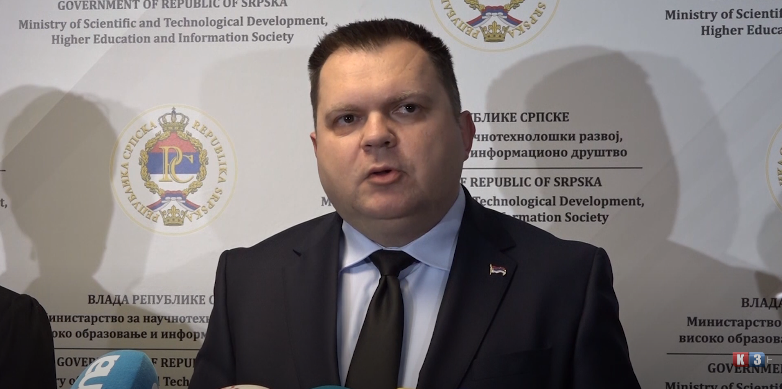
“Everything needs to be investigated because it is possible that, by acting outside his jurisdiction, he committed a criminal offense. That is why I call on the BiH Prosecutor’s Office to open a case,” Republika Srpska Justice Minister Goran Selak said.
Selak also argued that Konaković, who is president of the People and Justice party (NiP), is aware that matters concerning a military attaché involve the Council of Ministers.
Republika Srpska National Assembly Speaker Nenad Stevandić said that political representatives in Sarajevo were using Mladić’s funeral as a pretext for hostility toward Serbs.
“Here, the death of one man has been used as an excuse to demonstrate how much they hate everything Serbian – Serbia, the Serbian military, the Serbian state, Republika Srpska and all our institutions. Tomorrow they will look for another excuse because they cannot rid themselves of that hatred and have not undergone catharsis,” Stevandić said.
Cvijanović: He should stay in Republika Srpska
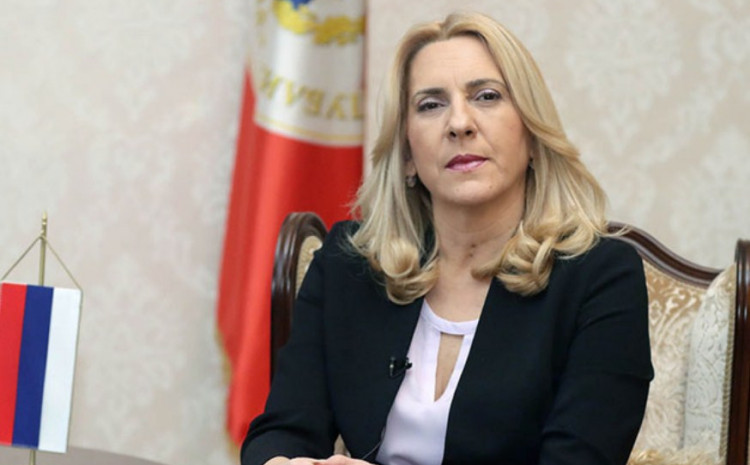
Serb member of the BiH Presidency Željka Cvijanović noted that one of the two officials described as being “expelled” had already left after his mandate expired and invited the military attaché to remain in Republika Srpska.
“Consent for the arrival of a military attaché is not given by the foreign minister but by the Council of Ministers, and the same applies when it comes to terminating their stay,” Cvijanović said.
She added that she would request information on whether there were grounds for the move.
Republika Srpska Minister for European Integration and International Cooperation Zlatan Klokić also reacted to the decision.
“We may have different views on certain events from the past and on relations in the region, but the task of diplomacy is to leave room for dialogue even in the most difficult moments,” Klokić said.
Mlađen Cicović, head of the Republika Srpska Representative Office in Serbia, said the Serb people understood the message Konaković was sending through his actions.
Belgrade: An unconstructive move
The Serbian Ministry of Foreign Affairs also described Konaković’s latest move as another unconstructive action.
“It is particularly concerning that Konaković continuously resorts to escalation and uses extremely difficult and painful issues from our shared past as an instrument of daily politics and election campaigning,” the Serbian authorities said.
Belgrade said it would examine the legal and political aspects of the announced decisions, as well as their potential consequences for diplomatic relations and the interests of citizens of both countries.
“Serbia will act responsibly and in accordance with international law, without allowing the election rhetoric of any individual to determine the future of relations between two neighboring countries,” the Serbian Foreign Ministry said.
Konaković’s term marked by protest notes
Konaković’s tenure as BiH foreign minister has been marked by a series of diplomatic protest notes sent to countries across the region.
Among other instances, he sent protests to Serbia and Montenegro over the All-Serb Assembly backed by Serbia and Republika Srpska.
He also criticized remarks by Croatian Parliament Speaker Gordan Jandroković, who said during a visit to BiH that he believed the concept of three constituent peoples would ultimately prevail because otherwise, in his view, BiH would cease to exist.
During this year’s summit in Turkey, Konaković again criticized Republika Srpska and Serbia. He has also sent a protest to Belgrade over the presence of Serbian officials at January 9 celebrations in Republika Srpska.
Serbia’s assistance to BiH
Serbian officials have repeatedly stated publicly that they support the territorial integrity and sovereignty of BiH.
At the same time, Serbia has provided assistance to BiH through financial support, infrastructure projects, humanitarian aid and medical assistance.
During the coronavirus pandemic, Serbia donated vaccines and medical equipment. Belgrade has also advocated better transport links between Belgrade and Sarajevo, including a highway connection, and financed the construction of a new bridge at Rača.
Assistance has also been provided during emergencies, including fires and floods.
The article argues that this history of assistance has been overlooked by Konaković in his approach toward Serbia.
Srđan Mazalica, deputy chairman of the Committee for European Integration and Regional Cooperation in the National Assembly of Republika Srpska, said Bosniak politics often amounted to “shooting yourself in the foot in order to hit our toe.”
“It does not matter that Serbia provides assistance. If it helps Republika Srpska and builds a bridge that Bosniaks and Croats will also use, it is still considered more important to present oneself as an opponent of Serbia and the Serb people,” Mazalica said.
He also accused Konaković of frequently acting independently and outside the constitutional framework.
“Here, he is essentially someone who manages the diplomatic and consular network and serves the BiH Presidency, and that says it all,” Mazalica concluded.
Konaković is the seventh person to serve as BiH foreign minister. His predecessors include Jadranko Prlić of HDZ, Zlatko Lagumdžija of SDP, who held the position twice, Mladen Ivanić of PDP, Sven Alkalaj of SBiH, Igor Crnadak of PDP and Bisera Turković of SDA.
“Gravedigger of BiH”
Goran Petronijević, president of the Center for the Restoration of International Law, described Konaković as the “gravedigger of BiH,” accusing him of violating the country’s Constitution.
“Only the Serbs continue to adhere strictly to Dayton, yet they are the ones being accused of undermining that agreement,” Petronijević told Serbian media.
Commenting on reactions to the funeral of General Ratko Mladić, Petronijević argued that the responses from across the region reflected fear of greater unity among Serbs.
“We need to stop being so tolerant and uncomfortably silent in response to these reactions from the region. Everyone should receive an appropriate response,” Petronijević said.
Source: Glas Srpske