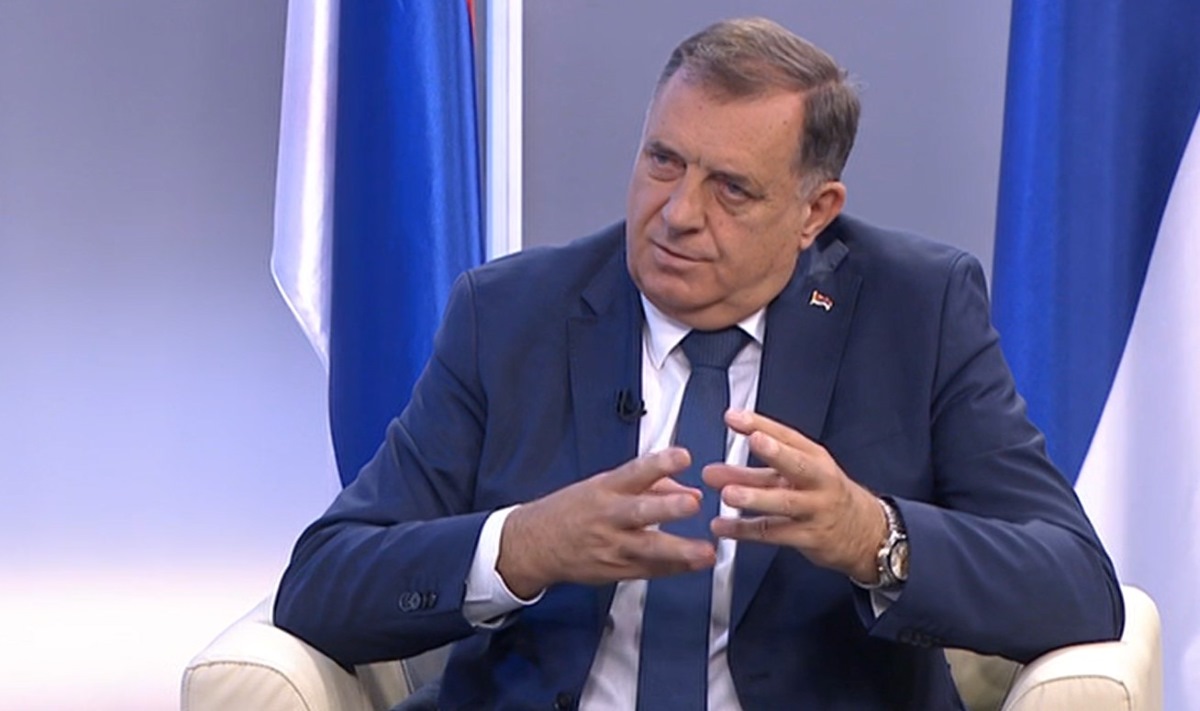

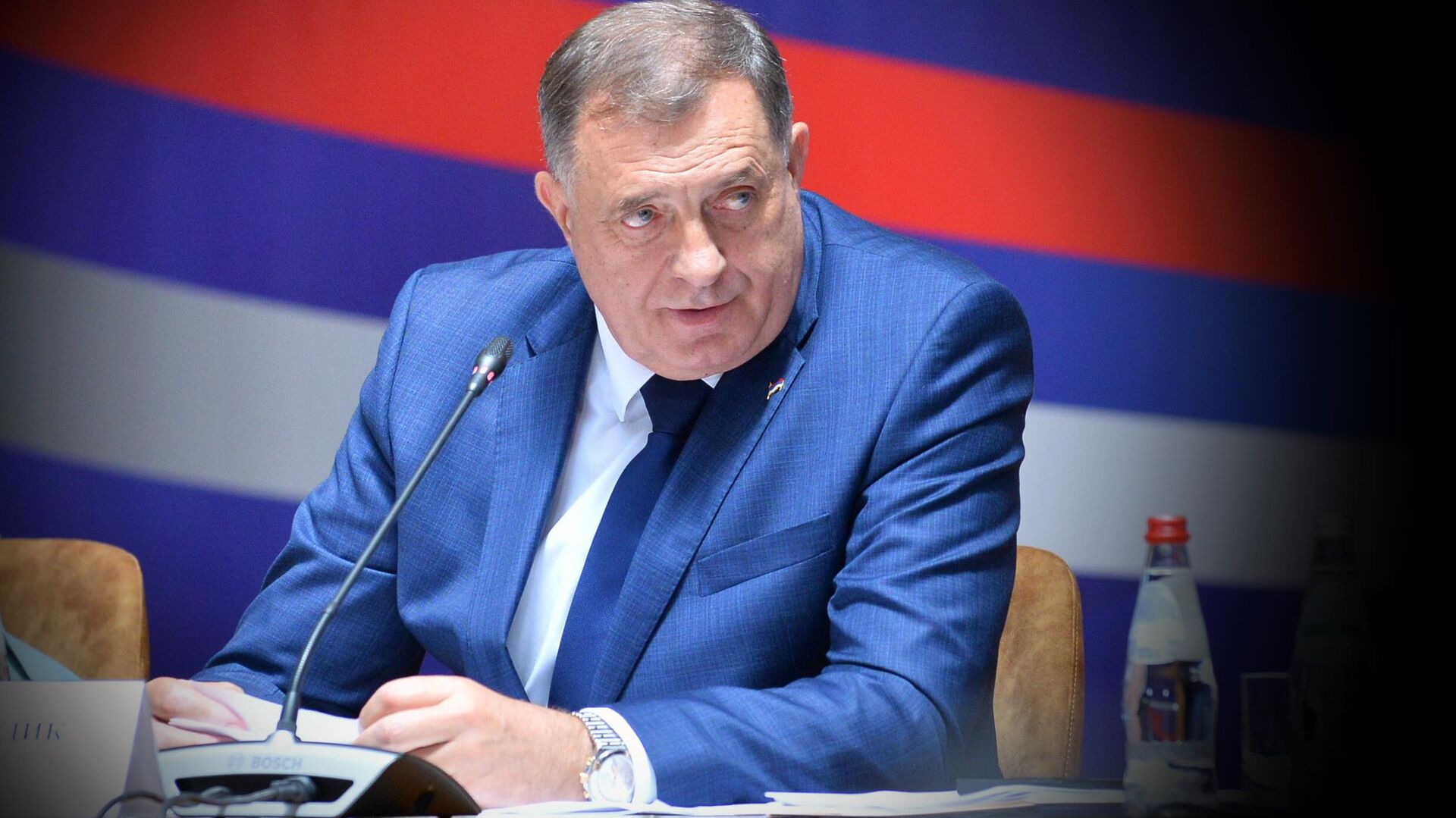
Republika Srpska President Milorad Dodik stated that political Sarajevo is most troubled by the unity between Serbia and Republika Srpska, emphasizing that this unity cannot be undermined by political pressure, provocations, or hostility.
According to Dodik, Serbia and Republika Srpska today stand together, united by a shared historical memory, mutual responsibility, common interests, and a shared vision for the future of the Serbian people.
“The more they attack this unity, the more clearly they demonstrate how much they fear it. And if they fear it so much, that is the strongest proof of how important it is. We will not abandon it—neither today, nor tomorrow, nor when times become most difficult. A nation that abandons its unity abandons its future. The Serbian people have no right to abandon themselves, Serbia, or Republika Srpska,” Dodik said.
In an opinion piece published by the Serbian daily Politika, Dodik described Serbian President Aleksandar Vučić’s recent visit to Republika Srpska, where he attended a commemoration for Serbian victims of the 1995 Croatian-Muslim offensive and visited his ancestral village near Bugojno, as far more than a ceremonial occasion.
“It was a clear, profound, and historic message that the Serbian people are not a nation without roots, memory, or the right to their ancestors, homeland, and future,” Dodik wrote.
He argued that the visit triggered strong political reactions in Sarajevo because it demonstrated the close relationship between Serbia and Republika Srpska.
“What troubles them is not any particular statement or even the visit itself. What troubles them is the image of Serbian unity. They are troubled by the fact that Serbia today is not weak, that it does not remain silent, and that it does not turn its back on Republika Srpska,” Dodik stated.
He criticized political representatives in Sarajevo for responding to the visit with what he described as accusations, provocations, and threats rather than political restraint.
“They failed to understand that by acting in this way they were not humiliating Vučić, Serbia, or Republika Srpska, but themselves. Aggression toward Serbia and hostility toward Republika Srpska do not produce strength—they produce political weakness,” Dodik said.
He added that both he and President Vučić deliberately sent a message that they remain committed to a strong Republika Srpska, a strong Serbia, and the Serbian people wherever they live.
“We will not give up the right to remember our victims and commemorate our suffering. Nor will we give up the right to remain connected to our roots, even if they are today located within another administrative entity,” Dodik stated.
Dodik further argued that political Sarajevo continues to pursue the idea that Serbs should not have the right to their own political identity, historical continuity, or institutions beyond what others are willing to permit.
He concluded by stressing that Serbian unity is not directed against any other people and does not represent a threat to anyone.
Republika Srpska President Milorad Dodik stated that political Sarajevo is most troubled by the unity between Serbia and Republika Srpska, emphasizing that this unity cannot be undermined by political pressure, provocations, or hostility.
According to Dodik, Serbia and Republika Srpska today stand together, united by a shared historical memory, mutual responsibility, common interests, and a shared vision for the future of the Serbian people.
“The more they attack this unity, the more clearly they demonstrate how much they fear it. And if they fear it so much, that is the strongest proof of how important it is. We will not abandon it—neither today, nor tomorrow, nor when times become most difficult. A nation that abandons its unity abandons its future. The Serbian people have no right to abandon themselves, Serbia, or Republika Srpska,” Dodik said.
In an opinion piece published by the Serbian daily Politika, Dodik described Serbian President Aleksandar Vučić’s recent visit to Republika Srpska, where he attended a commemoration for Serbian victims of the 1995 Croatian-Muslim offensive and visited his ancestral village near Bugojno, as far more than a ceremonial occasion.
“It was a clear, profound, and historic message that the Serbian people are not a nation without roots, memory, or the right to their ancestors, homeland, and future,” Dodik wrote.
He argued that the visit triggered strong political reactions in Sarajevo because it demonstrated the close relationship between Serbia and Republika Srpska.
“What troubles them is not any particular statement or even the visit itself. What troubles them is the image of Serbian unity. They are troubled by the fact that Serbia today is not weak, that it does not remain silent, and that it does not turn its back on Republika Srpska,” Dodik stated.
He criticized political representatives in Sarajevo for responding to the visit with what he described as accusations, provocations, and threats rather than political restraint.
“They failed to understand that by acting in this way they were not humiliating Vučić, Serbia, or Republika Srpska, but themselves. Aggression toward Serbia and hostility toward Republika Srpska do not produce strength—they produce political weakness,” Dodik said.
He added that both he and President Vučić deliberately sent a message that they remain committed to a strong Republika Srpska, a strong Serbia, and the Serbian people wherever they live.
“We will not give up the right to remember our victims and commemorate our suffering. Nor will we give up the right to remain connected to our roots, even if they are today located within another administrative entity,” Dodik stated.
Dodik further argued that political Sarajevo continues to pursue the idea that Serbs should not have the right to their own political identity, historical continuity, or institutions beyond what others are willing to permit.
He concluded by stressing that Serbian unity is not directed against any other people and does not represent a threat to anyone.
Source: RTRS