

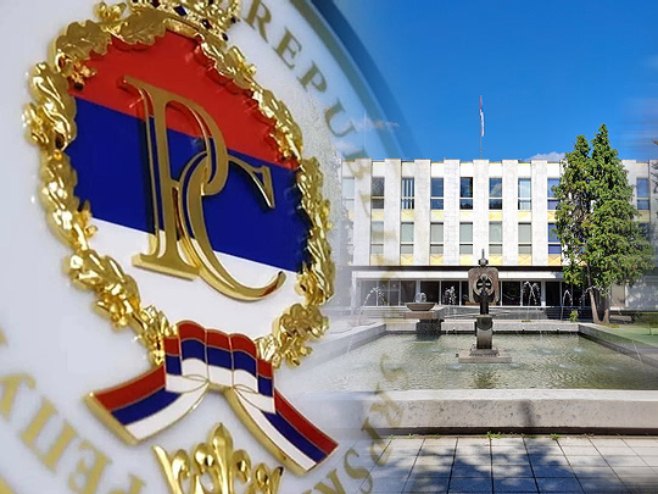
Republika Srpska’s National Assembly is expected to hold a special session to consider the veto initiated by Serb member of the Presidency of Bosnia and Herzegovina Željka Cvijanović against what she described as the unconstitutional appointment of members to the Commission to Preserve National Monuments of Bosnia and Herzegovina.
According to the report, Cvijanović was outvoted during the Presidency session. After declaring the decision destructive to the vital interests of Republika Srpska and leaving the meeting, Presidency members Denis Bećirović and Željko Komšić proceeded to appoint four of the Commission’s five members.
Representatives of both the governing coalition and the opposition in Republika Srpska have announced that they will support Cvijanović’s veto, making the required two-thirds majority in the National Assembly likely.
Cvijanović argued that the Presidency acted without the necessary quorum after her departure and that the subsequent voting on individual candidates had no legal basis.
“After I declared the decision destructive to the vital interests of Republika Srpska and announced that I would seek constitutional protection through the National Assembly, they proceeded into even greater institutional disorder by voting on individual candidates despite lacking a quorum,” she said.
Former Commission member Angelina Ošap Gaćanović said Denis Bećirović had continued what she described as a process of disregarding the position of Republika Srpska that had begun earlier this year.
She also criticized the involvement of UNESCO’s regional office in Bosnia and Herzegovina in proposing foreign experts, noting that a UNESCO analysis from 2012 had concluded that responsibility for cultural heritage protection lies with the entities.
Cvijanović argued that the matter falls within foreign policy because it concerns Annex 8 of the Dayton Peace Agreement, an international treaty, involves communication with UNESCO, and includes the appointment of two foreign experts by the organization’s Director-General rather than its office in Bosnia and Herzegovina.
“The Presidency has not actually adopted any decision because no decision can become final until the National Assembly of Republika Srpska takes its position. Even if the Assembly were not to act, everything that happened during that session was, in itself, unlawful and invalidated such a decision,” she said.
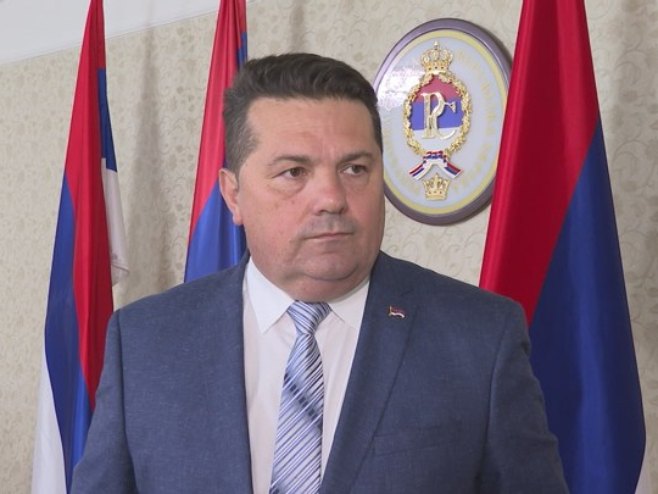
National Assembly Speaker Nenad Stevandić said he expects Cvijanović’s formal request to arrive soon and indicated that a special session could be held before the Assembly’s previously scheduled sitting.
“This is an attempt to place foreign members in the Commission for National Monuments and create the same outvoting mechanism that exists in the Constitutional Court. That is contrary to both the Constitution and the Dayton Agreement,” Stevandić said.
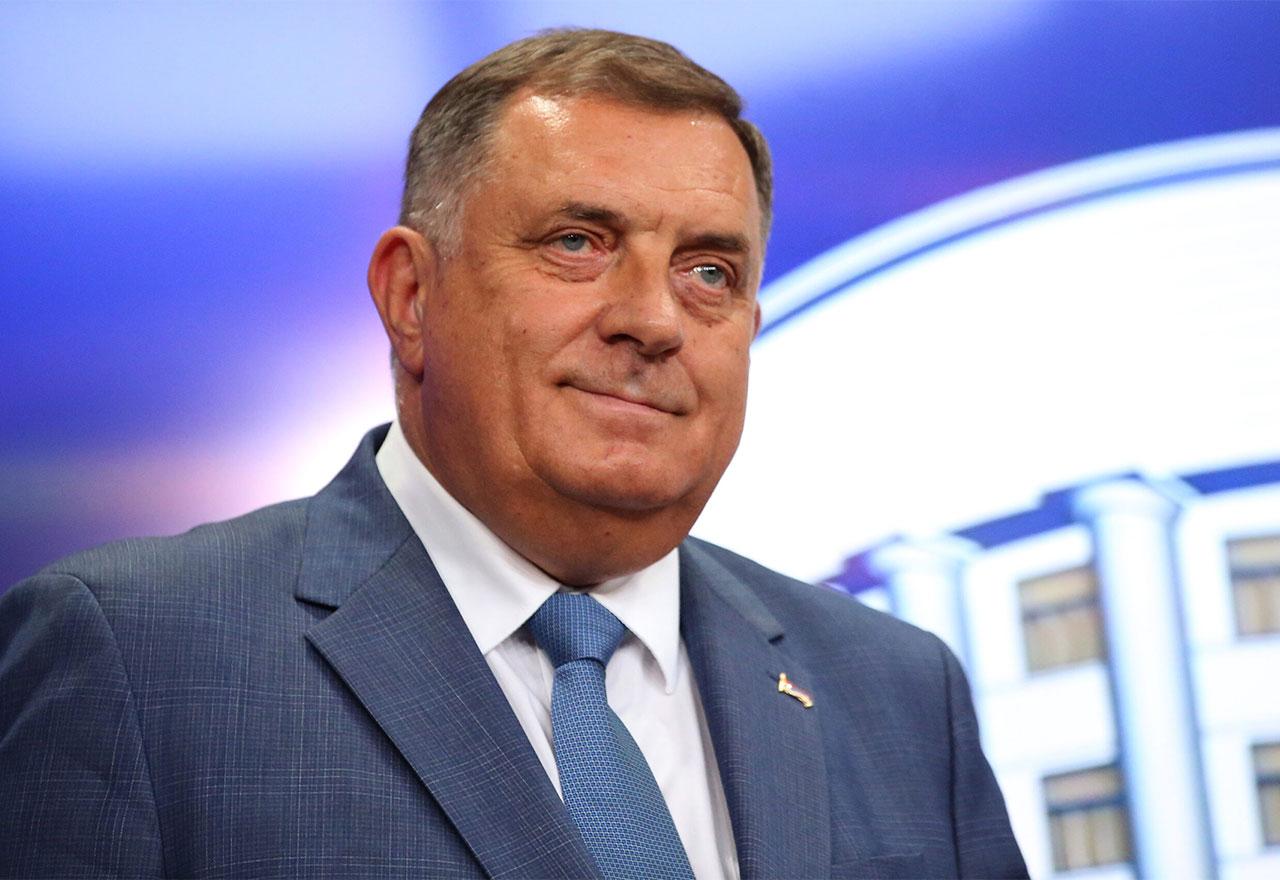
SNSD President Milorad Dodik said members of his party would support the veto, describing it as a common position of the governing coalition in Republika Srpska.
“The National Assembly of Republika Srpska is where the final decision belongs. When the Assembly declares that something is unacceptable, then it is unacceptable. There is no further discussion,” Dodik said.
Opposition parties also announced their support. The Serb Democratic Party (SDS) and the Party of Democratic Progress (PDP) said they would back the veto, arguing that the involvement of foreign officials in such matters is unacceptable and that the protection of Republika Srpska’s vital interests takes precedence over party politics.
Radovan Kovačević, the Serb delegate in the House of Peoples of the Parliamentary Assembly of Bosnia and Herzegovina, said the Presidency session demonstrated what he described as an attempt to allow foreign members to outvote Serb representatives while denying the Serb member of the Presidency the constitutional right to invoke protection of Republika Srpska’s vital interests.
SNSD lawmaker Sanja Vulić called for an end to what she described as foreign interventionism, saying domestic institutions should make decisions independently.
Marinko Čavara of the Croatian Democratic Union (HDZ BiH) also criticized the proposal, saying it was contradictory for those advocating a stronger state of Bosnia and Herzegovina to simultaneously support foreign participation in decision-making.
According to the report, some Sarajevo-based media outlets claimed that Cvijanović had submitted her veto too late. Her chief of staff, Dušan Petrović, rejected those claims, stating that the veto is a constitutional right of every member of the Presidency and that media outlets cannot determine when a member may invoke the protection of vital interests.
Source: RTRS