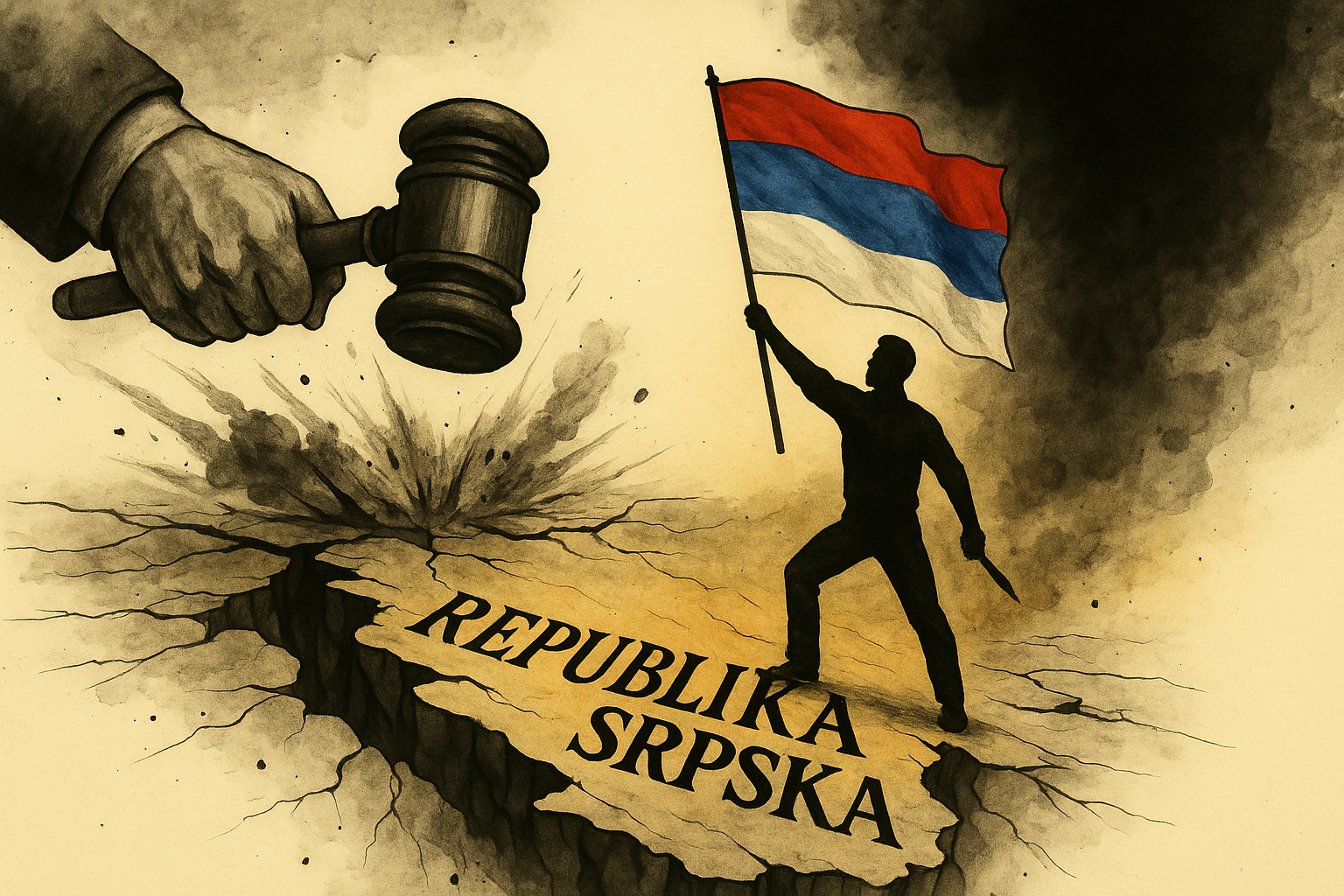



Property ownership in Bosnia and Herzegovina is not a political issue open to negotiation, nor is it a matter of the country’s European future to be resolved through political compromise. It is a constitutional and legal issue whose answer is already contained in the existing constitutional order, the Republika Srpska Lawyers Association said in a statement.
“Our position is consistent and will not change. Property belongs to the entities—Republika Srpska and the Federation of Bosnia and Herzegovina—not to any level of state government. Property is one of the fundamental elements of statehood, and for Republika Srpska it represents the foundation of its constitutional status,” the statement said.
The Association issued the statement in response to a document published by the Sarajevo-based Centre for Geopolitical Research (GEOPOL), entitled The Issue of State Property in Bosnia and Herzegovina.
According to the Association, the paper presents a legal argument that is unsupported by the Dayton Peace Agreement, the Constitution of Bosnia and Herzegovina or the case law of the Constitutional Court of Bosnia and Herzegovina.
The lawyers argued that ownership of property is governed by the constitutional framework established under the Dayton Peace Agreement and cannot be altered through political proposals, expert opinions or externally imposed decisions.
They stressed that Annex 4 of the Dayton Peace Agreement, which serves as the Constitution of Bosnia and Herzegovina, forms part of an international treaty and therefore falls under the principle of pacta sunt servanda, meaning that international agreements must be respected rather than unilaterally altered.
The statement also argues that Annexes 8 and 9 of the Dayton Agreement reinforce the decentralized constitutional structure by assigning responsibilities related to cultural heritage and public enterprises to the entity level.
According to the Association, even decisions and measures adopted by successive High Representatives since 2005 have not transferred ownership of property to the state level but have instead acknowledged that ownership remains with the entities while temporarily restricting the disposal of certain assets.
The Association further cited the example of the Brčko District, arguing that the district’s ownership of property within its territory demonstrates that decentralization—not centralization—is consistent with the constitutional framework.
Referring to the jurisprudence of the Constitutional Court of Bosnia and Herzegovina, the Association maintained that the Court has never ruled that disputed property belongs to the state. Instead, it argued, the Court has repeatedly stated that the issue should be resolved through legislation adopted by the Parliamentary Assembly of Bosnia and Herzegovina rather than by judicial decision.
The lawyers also rejected arguments based on the 2001 Agreement on Succession Issues, stating that the treaty governs relations among the successor states of the former Yugoslavia and does not regulate internal ownership relations within Bosnia and Herzegovina.
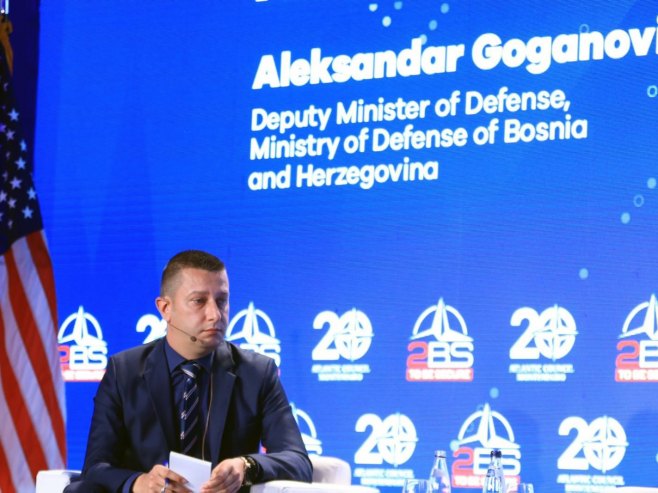
The statement further recalled that Republika Srpska and the Federation of Bosnia and Herzegovina reached an agreement in 2007 and 2008 regarding prospective military property, under which the entities recognized themselves as the owners while making certain assets available for use by the Armed Forces of Bosnia and Herzegovina.
In conclusion, the Republika Srpska Lawyers Association argued that all attempts to reinterpret the Dayton Peace Agreement in a manner that centralizes property ownership are legally unfounded.
The Association stated that Republika Srpska considers its constitutional ownership rights over property to be settled under the Dayton constitutional framework and said those rights are not open to political negotiation or reinterpretation, regardless of the source of such proposals.
Source: RTRS