

In the shadow of the Tazkirahnama programme of the Islamic Community of Bosnia and Herzegovina: “To forget one’s ancestors means to be a stream without a source and a tree without roots”…
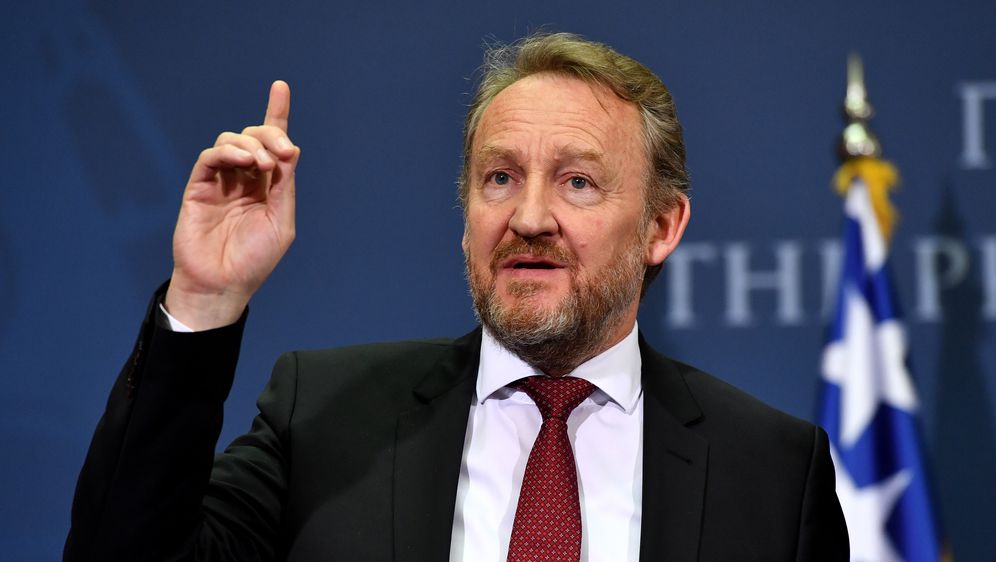
The occasion for this text was the appearance of Bakir Izetbegović on the Newsmax Balkans programme entitled “I believe in victory, but after the elections a difficult task awaits us…”, broadcast on June 6, 2026.
In this interview, Bakir Izetbegović appears in the tone of a “reasonable statesman”, emphasizing that society in Bosnia and Herzegovina is politically mature enough not to allow a new conflict. However, his overall narrative largely relies on the selective allocation of political responsibility, with that responsibility being predominantly attributed to other peoples (Croats and Serbs) and their political actors in the country.
During the conversation, Izetbegović devoted considerable space to criticism of Croatian policy towards Bosnia and Herzegovina, warnings about alleged projects of territorial reorganization, and linking certain Croatian political demands with the idea of a third entity and the restoration of Herzeg-Bosnia. At the same time, a critical analysis of policies and actions coming from the Bosniak political corpus was almost entirely absent, including issues that for years have represented a source of political disputes and distrust among the constituent peoples.
In the introduction, he speaks of “Balkan policies that do not see the beam in their own eye but see the speck in another’s”, semi-ironically quoting the Gospel in the New Testament of the Christian Bible, only to immediately associate that metaphor of Jesus primarily with Croatian politics. However, an equally critical review of political processes, ideological legacies and controversies coming from the Bosniak political corpus is absent.
While once again raising the issues of the late Franjo Tuđman, the first President of the Republic of Croatia, and Gojko Šušak, the wartime Minister of Defence, and linking them with the legacy of Herzeg-Bosnia, there is no questioning whatsoever of the controversies surrounding the political legacy of his father Alija Izetbegović, the wartime role of certain units of the Army of Bosnia and Herzegovina, or the ideological roots of a very significant and leading part of the Bosniak political movement.
Particularly interesting is the absence of any reaction to the official poster by which the Public Institution “Bosnian Cultural Centre of Tuzla Canton”, the Majlis of the Islamic Community Tuzla and the “Youth Network” invite the public to a panel discussion marking April 15, the Day of the “Army of the Republic of Bosnia and Herzegovina”, scheduled for April 14, 2026, at the Bosnian Cultural Centre in Tuzla.
The poster contains a photograph of the former President of the “Republic of Bosnia and Herzegovina”, Alija Izetbegović, as well as Sakib Mahmuljin, who was finally convicted by the Court of Bosnia and Herzegovina for war crimes, together with a depiction of the formation of members of the 7th Muslim Brigade and the “El-Mujahid” detachment.
No public reaction to such visual and symbolic content was recorded, neither from him nor from anyone within the Bosniak political corpus. Such a depiction also raises the question of its compliance with the provisions of the Criminal Code of Bosnia and Herzegovina imposed in 2021 by the former High Representative Valentin Inzko.
Those amendments prohibit and criminally sanction the denial of genocide, as well as the glorification or public approval of persons finally convicted of war crimes.

In that context, the absence of a reaction from the Office of the High Representative (OHR) and the current outgoing High Representative Christian Schmidt may be viewed as a political and institutional paradox, given the fact that the OHR itself has the mandate to oversee the implementation of the civilian aspects of the Dayton Peace Agreement, including the normative framework that emerged from Inzko’s decision.
Additional weight to the entire case is given by the fact that the organizers of the commemorative event and panel discussion were the Public Institution “Bosnian Cultural Centre of Tuzla Canton”, the Majlis of the Islamic Community Tuzla, and the “Youth Network”, which points to a direct intertwining of cultural-institutional and religious structures in shaping a public political-symbolic narrative.
In that sense, this represents a pronounced symbolic convergence of religious infrastructure, wartime iconography and institutional politics, in which various actors do not appear as separate historical subjects, but rather as elements of the same ideological-memorial narrative.
In this way, a closed interpretative framework is established in which the boundaries between political responsibility, military hierarchy and the religious-mobilizational context of the war are erased.

Particular weight is given by the fact that, on the official poster marking the Day of the “Army of the Republic of Bosnia and Herzegovina”, Alija Izetbegović and Sakib Mahmuljin are visually placed within the same symbolic space, depicted in a formation scene associated with the 7th Muslim Brigade and the “El-Mujahid” detachment.
Such a visual composition creates a strong impression of equating political authority with military command responsibility, whereby individual roles and historical differences are reduced to a single memorial message.
In this context, an additionally relevant fact is that Sakib Mahmuljin was finally convicted of war crimes, whereas no final court verdict was ever reached in relation to Alija Izetbegović, given that the proceedings against him were terminated by his death.
The same pattern of intertwining religious infrastructure and political narrative was also clearly visible on March 18, 2026, when, at the “Gazi Husrev-beg Library in Sarajevo”, on the initiative of the Islamic Community in Bosnia and Herzegovina, the Bosniak Cultural, Educational and Humanitarian Society “Merhamet” and the “Council of the Congress of Bosniak Intellectuals”, 33 representatives of academic, political, cultural, social and religious life signed the “Declaration on the Condemnation of Hate Speech, Islamophobia and False Narratives about Bosniaks and Bosnia and Herzegovina”.
At the centre of this paper is the “Third Point” of the aforementioned Declaration, through which the contemporary statement of the signatories is placed directly into continuity with the alleged “anti-fascist Muslim resolutions” of Bosniak leaders from the Second World War.
“Point 3” claims that those leaders had then “come forward with Muslim resolutions in which they condemned Nazi crimes on racial and national grounds”, thereby invoking the spirit of ZAVNOBiH and the “anti-fascist achievements of the Bosniak people” as a legitimising framework for today’s struggle against Islamophobia.
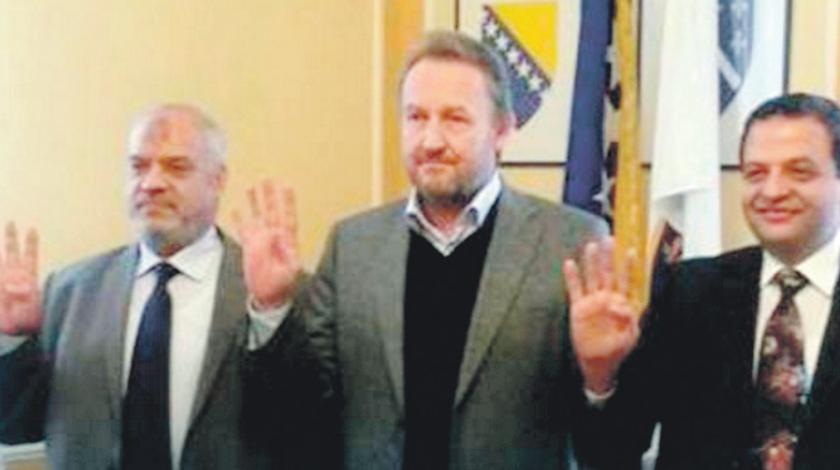
However, this very key claim requires detailed historical analysis, because the fundamental origin of those resolutions lies in the activities of the organisation “El-Hidaje” and its president Mehmed ef. Handžić, who shaped his theological and political views within the intellectual environment of the “Al-Azhar” University in Cairo during the 1920s, in the immediate vicinity of the emergence and spread of the ideology of the “Muslim Brotherhood”.
This paper does not enter into a detailed historical discussion of the “Muslim resolutions”, since that topic has already been extensively addressed in the existing literature.
For a broader insight into interpretations of the “Muslim resolutions”, reference is made to the works of Tarik Haverić, who in his analyses (see: https://tarikhaveric.com/grada-za-bosnjastvo/muslimanski-rezolucionari/#_ftn69), as well as in the book Critique of the Bosnian Mind: An Essay on a Historically Fixed Mentality (2016), problematizes their later political instrumentalization and different readings in contemporary public discourse.
This historical pattern is connected to a deeper ideological foundation. As early as the late 1920s, the ideology of the “Muslim Brotherhood”, founded in Cairo in 1928, began, through students from “Al-Azhar”, to be reflected in Bosnian religious circles and in their political engagement.
In the available Bosniak literature, this transfer of ideas is explicitly described as an “echo of what was taking place on the Egyptian social scene with regard to the religious educational and pedagogical activities of the Ikhwan al-Muslimin”, which “found its most obvious and most authentic expression in the ‘El-Hidaje’ society”, and in the fact that, quote, “our students who spent their years of study in Cairo precisely at the time of the emergence, growth and profiling of that great religious movement participated most directly”.
From this process emerged “El-Hidaje” as an organized framework in which the combination of the “Muslim Brotherhood”, religious education and political autonomism was articulated for the first time in the Bosnian context, and then extended into broader social, and even wartime, projects.
The cited quotations are taken from an analytical text published on the AKOS portal (akos.ba), which deals with the activities of the “Muslim Brotherhood” and the “El-Hidaje” society in the Bosnia and Herzegovina context.
From this process, “El-Hidaje” developed as an organizational framework in which elements of religious reformism, educational activity, and the political articulation of religious identity overlap with various forms of autonomist political demands that appeared in the Bosnian Muslim context during the interwar period of the 20th century.
In this way, an institutional matrix was established that later left its mark on various forms of social and political activity, while certain ideological parallels can also be observed with the dominant political currents of that time in the European and Middle Eastern spheres.
From the founding of the “El-Hidaje” society in 1936, despite its formal abolition in 1946, and through teaching and educational roles within the institutions of socialist Yugoslavia, these actors maintained a long-term political-religious continuity that greatly shaped the later religious and political elites of Bosnian Muslims.
In this context, individuals such as Salih Hadžialić, Husein Đozo, Ibrahim Trebinjac and Abdullah Dervišević are particularly noteworthy. Through educational, pedagogical and religious-educational work, they were active both during the interwar period and in the later socialist period, thereby representing an example of a personnel and intellectual line of continuity within the broader institutional framework.
Their biographies are also connected with education at the “Al-Azhar” University in Cairo, with some of them having completed periods of study there, while for others (such as Ibrahim Trebinjac) a shorter or interrupted course of study is recorded.
In institutional terms, the “Gazi Husrev-beg Library in Sarajevo” occupies a central place in this process, since it was precisely within this institution that the aforementioned declaration saw the light of day on March 18, 2026.
As the most important Islamic cultural institution in Bosnia and Herzegovina, it symbolically connects the Ottoman legacy, the interwar ulema, and the contemporary Islamic Community, with Reis-ul-Ulema Husein ef. Kavazović appearing as one of its key contemporary figures.
In this way, the “Gazi Husrev-beg Library” is profiled as a permanent institutional framework within which various layers of religious-historical and political-identity narratives are articulated and reinterpreted.
As one of the most striking examples of the contradiction between contemporary interpretative narratives and biographical and historical facts, the academic round table marking the 110th anniversary of the birth of Husein ef. Đozo stands out. It was held on December 17, 2022, at the “Gazi Husrev-beg Library in Sarajevo”, organized by the Riyasat of the Islamic Community in Bosnia and Herzegovina, namely its “Directorate for Education and Science”.
At that gathering, the central role was played by Reis-ul-Ulema Husein ef. Kavazović, who in his introductory address presented Đozo as a “giant of Islamic thought and practice” and the founder of modern Islamic thought and contemporary educational institutions of the Islamic Community.
Husein ef. Đozo received his theological education at the “Al-Azhar” University in Cairo, where during the 1930s he attended and in 1939 graduated from the Faculty of Sharia Law. Already as a student in Cairo, he became involved in the ideological milieu from which the “El-Hidaje” society emerged under the leadership of Mehmed ef. Handžić, which would soon become the key framework for the politicization of the ulema in Sarajevo.
As early as 1938, while still a student, he articulated distinctly negative and antisemitic views towards Jews in his public appearances, linking them with communist and capitalist forces as the alleged principal threats to the European order.
After returning from Cairo, Đozo assumed the position of religious-educational officer in the Office of Reis-ul-Ulema Fehim Spaho, thereby entering the very core of institutional decision-making regarding the religious education and enlightenment of Bosnian Muslims.

The case of Hamdija Kreševljaković also demonstrates that this was a period of strong ideological divisions and growing political exclusivity. Although in that same year he became the first Bosnian Muslim elected as a corresponding member of the Yugoslav Academy of Sciences and Arts (JAZU), Kreševljaković, because of his political views and ties with academic circles in Zagreb, found himself under pressure from political circles gathered around Reis-ul-Ulema Fehim Spaho and even feared for his own position at the madrasa.
It was precisely in such an atmosphere that Đozo operated, as part of an administrative and ideological circle that had a significant influence on shaping the religious and social policies of Muslims in Bosnia and Herzegovina.
Husein ef. Đozo, educated at the “Al-Azhar” University in Cairo and well acquainted with the circle surrounding Haj Amin al-Husseini, represented during that period a natural link between the Sarajevo ulema and the political-religious project of the “Grand Mufti of Jerusalem”.
In this context, one should also consider the letter of support that Reis-ul-Ulema Fehim Spaho sent to the Jerusalem Mufti al-Husseini in October 1941, following his successful escape from Iran to Italy, which may be regarded as the beginning of their more lasting political and ideological rapprochement.
Furthermore, available archival video materials from the period of the Second World War indicate the presence of Husein ef. Đozo and Salih Hadžialić in the immediate vicinity of Haj Amin al-Husseini, while certain segments of the documentation reveal a marked closeness and institutional affinity within the same political-religious circle.
Such visual and archival traces may be interpreted as an indication that the very idea of Haj Amin al-Husseini’s arrival and political engagement in the European sphere was shaped, supported, or at least logistically facilitated through a network of individuals among whom Đozo and Hadžialić also appear.
(See archival material: https://archive.org/details/2-amin-al-huseini-docu-part-2/9+-+Amin+al-Husseini+docu%EF%BC%9A+part+9+and+last.mkv)

In 2023, a promotion of the book Collected Works (1932–1945) of Mustafa Busuladžić was held at the “Gazi Husrev-beg Library in Sarajevo”, organized by the Public Institution “Mustafa Busuladžić Primary School” from Sarajevo.
A person who, like Husein ef. Đozo or Mustafa Busuladžić, has publicly documented antisemitic views and open sympathies for Nazi ideas in his biography, or the fact that he served in the Nazi army as an imam, that is, as a person responsible for religious service, raising morale and the ideological motivation of soldiers of the Third Reich, can hardly be viewed exclusively as a “victim of the regime” or a politically neutral intellectual.
Such biographies inevitably raise the question of personal responsibility and the degree of involvement in the ideological projects of their time.
In this context, it is particularly important to emphasize that Mustafa Busuladžić, during the period when the “Young Muslims” operated as a branch of the “El-Hidaje” society, served as its president.
He was elected to that position after Kasim ef. Dobrača, on the proposal of Mehmed ef. Handžić, which further places him within the same ideological, organizational and personnel circle that marked a significant part of the Muslim religious and political scene of that time.
Salih Hadžialić is a third example.
The programme “Tazkirahnama: Remembering Salih Hadžialić and Muhamed Ždralović” was held on December 19, 2024, at the “Gazi Husrev-beg Library in Sarajevo”, jointly organized by the “Gazi Husrev-beg Library”, the Majlis of the Islamic Community Bugojno and the Meshihat of the Islamic Community in Croatia.
The programme was carried out within the framework of Tazkirahnama, an institutional programme of the Islamic Community dedicated to commemorating the birth dates of personalities significant to Islam, Muslims and the Islamic Community, under a motto that explicitly relies on the message:
“To forget one’s ancestors means to be a stream without a source, a tree without roots.”
It is precisely this formulation that occupies a central place in the rhetoric of the event, where the presentation of Hadžialić as an “ancestor” is in fact symbolically and hereditarily taken as the foundation of collective identification, while his activity is interpreted through a narrative of continuity and affirmation of tradition rather than through critical historical examination.
In that sense, the symbolic framework in which the past is constantly reinterpreted and used as a legitimizing resource remains deeply present in the contemporary political discourse of Bosnia and Herzegovina.
It is precisely for this reason that the motto appearing in this context gains additional weight:
“To forget one’s ancestors means to be a stream without a source, a tree without roots.”
At the same time, the question of consistency in the application of that principle remains open, especially when certain historical narratives are institutionally affirmed and repeated through public and religious structures, while other, equally important layers of historical experience are left aside or are not problematized in the same manner.
In this context, the actions of international institutions such as the OHR and the outgoing High Representative Christian Schmidt are also often viewed in public perception through the prism of selective visibility and the absence of reactions to such forms of political symbolism and interpretations of the past in political Sarajevo.
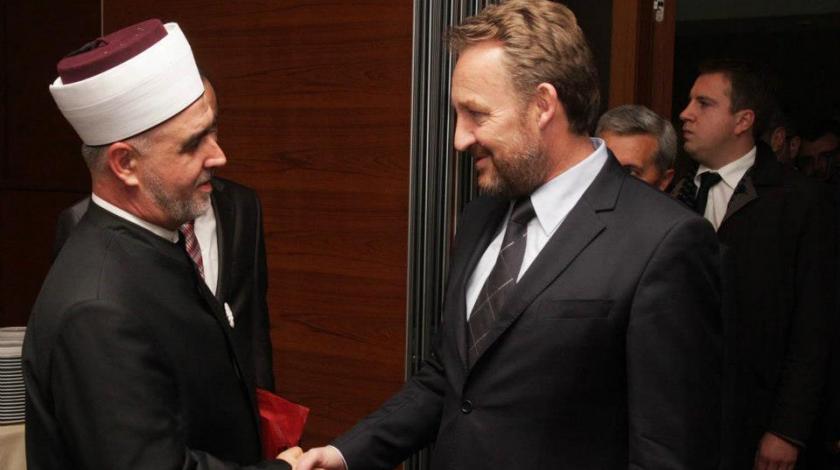
In the end, the question is not whether Bakir Izetbegović sees the speck in another man’s eye. The question is whether he sees the beam in his own.
It is not disputed that Franjo Tuđman, Šušak, Herzeg-Bosnia, war crimes and the mistakes of Croatian politics can, must and should be discussed. In a democratic society, that is precisely what is necessary.
However, the same principle must also apply to Alija Izetbegović, to the ideological legacy of “El-Hidaje”, to Husein Đozo, Mustafa Busuladžić, Sakib Mahmuljin, and to all those aspects of Bosniak political and religious history that are today being ignored, relativized, or presented exclusively through the prism of self-victimization.
A society that demands that others come to terms with the past, while at the same time refusing to examine its own myths, is not building truth but rather a new form of political dogma.
Such a dogma may produce short-term political unity, but it cannot produce trust among peoples nor the stability of the state.
Therefore, the real question for Bosnia and Herzegovina is not who will speak more loudly about the sins of others. The real question is whether there is a willingness to speak just as openly about one’s own.
As long as the answer to that question remains negative, every story about reconciliation, anti-fascism, European values and a shared future will remain nothing more than political rhetoric.
For truth does not begin where we condemn the mistakes of others. Truth begins when we are prepared to look at our own.
Otherwise, anti-fascism becomes a slogan, reconciliation a political catchphrase, and history a tool for preserving one’s own myths.
Source: Poredak.rs