


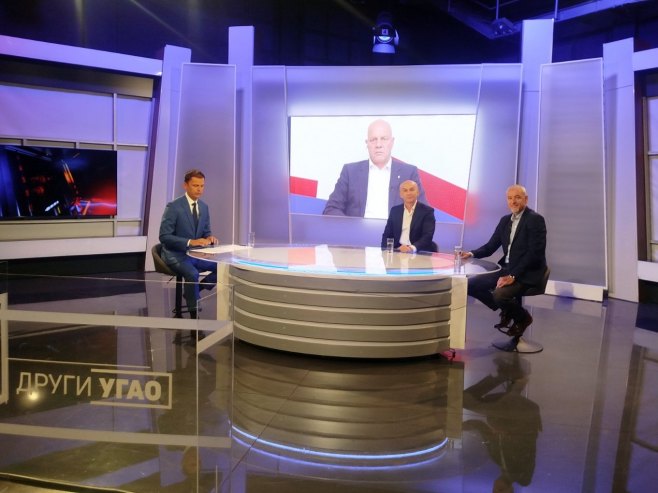
Guests of the RTRS programme “Second Angle” described the departure of Christian Schmidt as the logical outcome of the difficult political situation he had created in Bosnia and Herzegovina.
According to participants in the discussion, Schmidt acted as an extension of the policies of Washington during the Joe Biden administration, as well as London, Brussels and Berlin. They argued that the policy of imposing laws and prosecuting elected officials had been defeated, while the persistence and determination of Republika Srpska to resist had emerged victorious.
“A logical outcome”
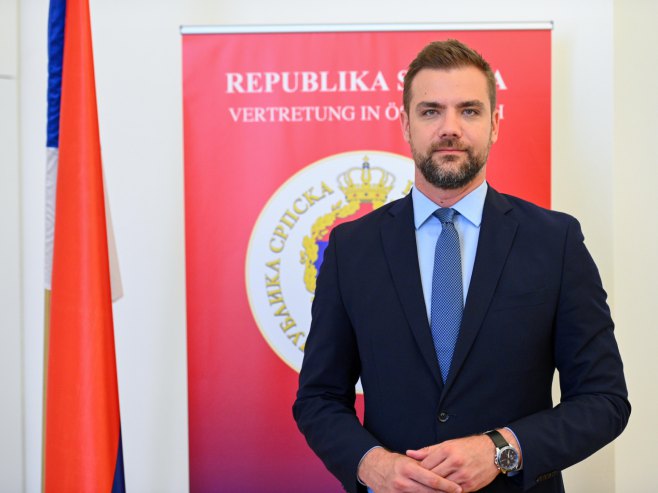
Srđan Perišić said such an outcome had long been expected, although the timing remained uncertain.
“This is the logical outcome of the difficult political situation personified by Christian Schmidt. He was an extension of Washington, London, Brussels and Berlin. Everything connected to him was scandalous — from the way he was imposed as High Representative to the way he carried out his role, and now he is leaving amid controversy as well,” Perišić said.
He added that Schmidt himself was not the central issue, but rather the broader policy he represented.
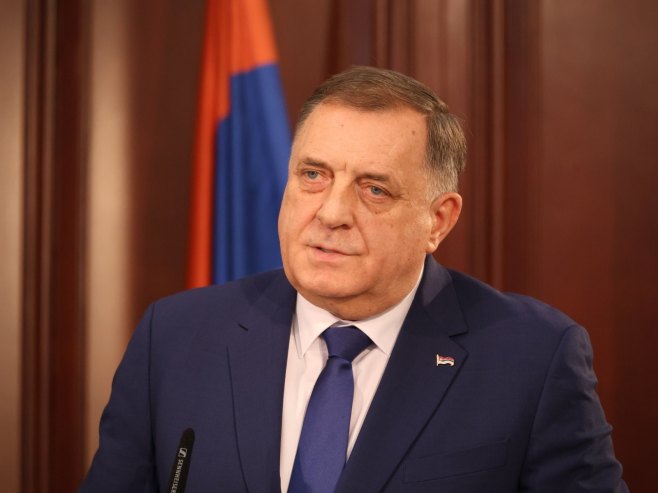
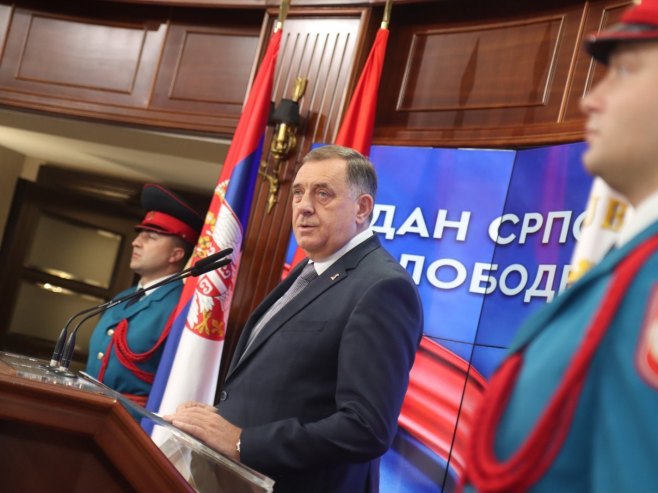
“The true victor is the persistence of Republika Srpska and its leadership, personified by Milorad Dodik. Had Dodik not remained persistent, nothing would have changed. Russia and China were also persistent from the beginning in refusing to recognize Schmidt,” Perišić stated.
Change in Washington
Political analyst Aleksandar Pavić argued that the upcoming session of the United Nations Security Council accelerated developments because it would otherwise have exposed Schmidt’s loss of American support.
“American support was crucial, but a paradigm shift occurred in the United States. Many told us nothing would change, but had someone else won in America, this would never have happened,” Pavić said.
He claimed that the change in Washington, particularly the return of Donald Trump, fundamentally altered the political climate.
“Dodik was identified as a potential ally of the new American administration, which adopted a course outlined in the new national security strategy issued by the White House last December. It stated that America would actively support forces in Europe opposing the current EU course,” Pavić added.
Claims of political targeting
Pavić also claimed Schmidt had worked toward the “political liquidation” of Dodik.
“He was working to remove Dodik from political life. The goal was to place him outside the law. There was a plan involving the European wing of NATO to arrest, and if necessary eliminate, the then president of Republika Srpska and his security detail. Schmidt created the preconditions for that,” Pavić claimed.
“Republika Srpska emerged stronger”
Lucijano Kaluža argued that attempts to politically weaken Dodik instead strengthened Republika Srpska’s institutions.
“Thanks to Schmidt, Republika Srpska became stronger. Its institutions became more compact and unified. By trying to strengthen pressure on Dodik, they strengthened Republika Srpska as well,” Kaluža said.
He emphasized that Schmidt’s appointment had been controversial from the start.
“Russia and China never accepted him and consistently opposed his appointment. That principled position remained unchanged throughout his mandate,” Kaluža stated.
According to him, Republika Srpska should continue pursuing two main goals: proving that Schmidt’s decisions were illegal and illegitimate, and coordinating with major powers such as Russia, China and the United States regarding any future selection of a High Representative.
“It is also legitimate to ask whether Bosnia and Herzegovina even needs a High Representative anymore,” Kaluža concluded.
Source: RTRS