

The United States has designated the Lebanese, Jordanian, and Egyptian branches of the Muslim Brotherhood as terrorist organizations. According to Executive Order 14,362, the Lebanese Brotherhood was designated a foreign terrorist organization, while the group’s leader, Mohammad Fawzi Takoushi, was named a global terrorist.
At the same time, the U.S. Department of the Treasury applied the same designation to the Egyptian and Jordanian branches for providing material support to Hamas. The global status of the Muslim Brotherhood further underscores the seriousness of these measures. In a number of Middle Eastern countries—such as Egypt, Saudi Arabia, the UAE, Bahrain, and several Central Asian states—the Brotherhood has been officially designated a terrorist organization.
In Europe, Austria has gone the furthest by banning its organized activities and symbols. Activities of structures linked to the Brotherhood are under heightened scrutiny in France, Germany, Sweden, and other European countries. Unfortunately, it also exists in Bosnia and Herzegovina.
A springboard
Security expert Dževad Galijašević expressed hope that authorities in Washington would also scrutinize the branch of the Muslim Brotherhood in Bosnia and Herzegovina, which he says is under the protection of Qatar, Saudi Arabia, and Turkey. He added that he hopes Washington will not stop here and will analyze how members of this Brotherhood from Bosnia and Herzegovina attacked the United States on September 11.
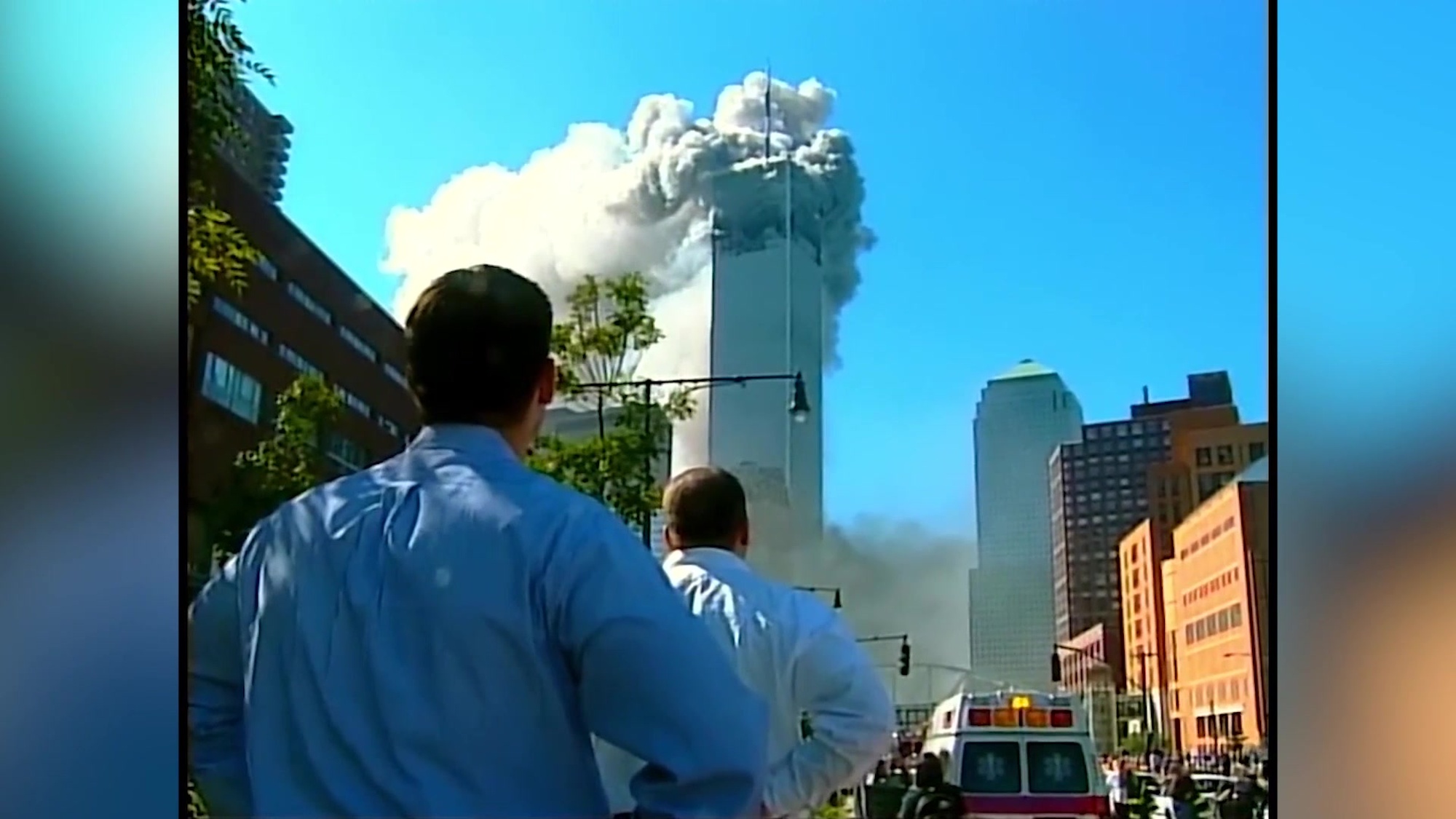
“Let them also examine how a Bosnia and Herzegovina national, Khalid Sheikh Mohammed, organized that attack. This is not a trivial matter. The Muslim Brotherhood in Bosnia and Herzegovina is not there only because of Serbs and Croats. I would also remind that this Brotherhood had a youth wing called Active Islamic Youth, which the United States banned immediately after September 11. Because of that, Alija Izetbegović was barred from running for office and forced to leave politics. The AID intelligence service was dissolved, and more than 1,600 citizenships granted to members of this Brotherhood were revoked. I believe they know what is happening today in Bosnia and Herzegovina and will take certain steps. There are enough signals and insights for Bosnia and Herzegovina to come into focus as a global threat, for Sarajevo to be subjected to critical analysis, and for the work of the Muslim Brotherhood to be banned regardless of the support it receives from Doha, Istanbul, or London,” Galijašević said.
Nothing new
Director of the Center for Socio-Political Research Dušan Pavlović has also warned about this. According to him, it is a well-organized and networked structure that no longer operates through wartime formations, but through political parties, religious institutions, the non-governmental sector, and academia.
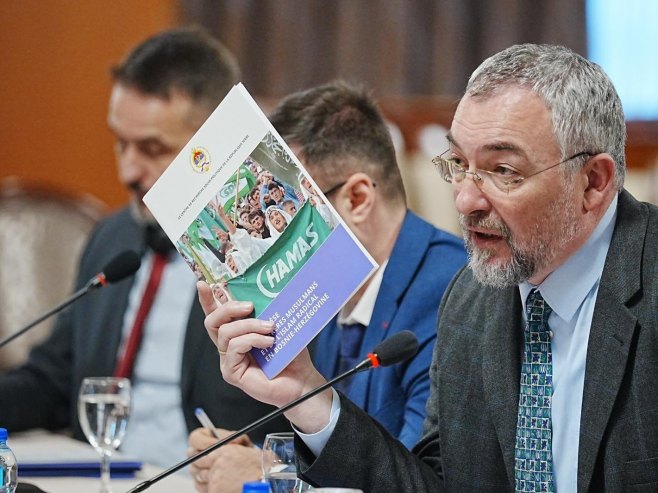
“The fact that they operate through legitimate institutions does not mean their activities are harmless. On the contrary, such institutionalization enables long-term influence on legislation, cultural trends, and education. The ultimate goal is to create an environment in which political Islam is considered an acceptable model for governing the state,” Pavlović said.
He explained that this network did not appear overnight, but developed over decades, often below the public radar. He noted that numerous security reports point to a network linked to related organizations in Western Europe, as well as centers in Turkey and Qatar.
The history of the Muslim Brotherhood in Bosnia and Herzegovina dates back to the 1970s, when the organization “Young Muslims” emerged, led by Alija Izetbegović, author of the Islamic Declaration. That document promoted political Islam, the concept of an Islamic government, and the introduction of Sharia law as the basic legal framework. Particularly significant is the passage in which Izetbegović states: “We must therefore first be preachers and then soldiers. Our weapons are personal example, the book, the word. When does force join this? Choosing that moment is always tangible and depends on a number of factors. However, there is a general rule: the Islamic movement should and can begin to take power as soon as it is morally and numerically strong enough not only to overthrow the existing non-Islamic government, but also to build a new Islamic one.”
Alija’s testament
According to Pavlović, this quote precisely describes the ideological and strategic approach that over decades has been integrated into the political activities of Bosniak elites. He notes three key risks revealed by their continuity: first, the growth of institutionalized ideological influence, as cadres linked to Brotherhood structures gradually enter positions of power in education, culture, and religion; second, transnational connectivity, as cooperation with networks in Turkey, Qatar, and Europe ensures financial and organizational continuity; and third, a security risk stemming from surviving wartime networks and ideological infrastructure that have previously demonstrated the ability to recruit for international conflicts, such as Syria.
Although their presence in Bosnia and Herzegovina has for years been portrayed as ideologically benign or purely religious, Pavlović stresses that practice has shown otherwise, and that this Brotherhood is far from harmless. Its activity and influence in the Federation of Bosnia and Herzegovina are also evidenced by the fact that during his visit to Sarajevo, Turkish President and AKP leader Recep Tayyip Erdoğan highlighted the greeting of the Muslim Brotherhood—raising a clenched fist with the thumb touching the palm, a symbol of the organization. This can be seen in numerous photographs with Bakir Izetbegović, who on several occasions met with representatives of the Muslim Brotherhood in Sarajevo, himself displaying the “four fingers” gesture.

These ties were not concealed by Bisera Turković either. On one occasion in Doha, she met with Yusuf al-Qaradawi, one of the ideologues of the Muslim Brotherhood. Qaradawi was once even on Egypt’s red notice list, with Saudi Arabia, the UAE, and Bahrain joining the search for him.
Military organization
Beyond all this, some experts warn that in parts of the Federation of Bosnia and Herzegovina dominated by Bosniak political structures, a broad and well-organized network of informal organizations has developed, modeled on wartime formations such as the “Patriotic League” and the “Green Berets.” According to them, this is a system of interconnected groups, clubs, and agencies that espouse the ideology of the Muslim Brotherhood and the Wahhabi movement, with tacit or open support from parts of the SDA and the Islamic Community.
These structures are formally registered as airsoft clubs, martial arts associations, hunting societies, or security agencies, but in practice serve as paramilitary centers for moral-religious indoctrination and semi-military training. Allegedly, according to intelligence data previously reported, there are around 40 such entities.
A recent airsoft event in Bugojno, marked by wartime iconography, is just one in a series of cases indicating the strengthening of radical networks in the Federation of Bosnia and Herzegovina. This phenomenon was also recognized in a recent European Commission report on violent extremism and sport in the Western Balkans, which specifically warned of the misuse of martial arts and airsoft clubs by Islamist extremists.
A large portion of these groups are directly linked to wartime commanders and structures close to the SDA. There is a clear division: one segment of clubs is ideologically tied to the Muslim Brotherhood, while another nurtures ideas of the Wahhabi movement and followers of Nusret Imamović. A common feature of all these networks is the promotion of the concept of a “Muslim Bosnia and Herzegovina,” alongside strong political and religious guidance of members.
Particularly prominent is the group “Askeri” from Sarajevo—an association under the direct control of Naser Orić—which often organizes paramilitary gatherings for children and youth. They are reportedly of interest to several foreign intelligence services, including those within EUFOR.
Who protects them
What is especially interesting, but also alarming, is that “Askeri” and related groups reportedly enjoy informal protection from the Federation’s interior minister Ramo Isak, as well as other official institutions under the control of Bosniak political elites.
Security expert Dragomir Keserović notes that for decades Bosnia and Herzegovina has ignored the existence of para-jamaats, radical organizations, and informal military structures. According to him, the ideology of the Muslim Brotherhood and Wahhabism never left Bosniak political elites, who openly advocate a unitary state and readiness to fight for it again. Keserović particularly warns that youth are being systematically indoctrinated with these ideas by older mentors, which represents a serious problem that must not be ignored.
The danger is also evident from last year’s Europol report, which uncovered more than 2,000 portals featuring jihadist and extreme propaganda aimed at recruiting minors in several European countries, including Bosnia and Herzegovina.
Turkey’s motives
The Muslim Brotherhood was founded in Egypt in 1928 as a response to colonial domination and social crises in the Muslim world. However, during the 1970s and 1980s, parts of the Brotherhood radicalized. Certain branches began using militant methods, including terrorist actions, to achieve political goals. The Brotherhood also has a long history in Turkey, with its activities particularly visible through the Justice and Development Party (AKP) led by Recep Tayyip Erdoğan. According to some analysts, this support enables Erdoğan to justify the consolidation of power through Islamic discourse and retain the support of a conservative electorate, while also serving as an instrument of Turkey’s strategy to expand its influence in the Middle East and the Balkans, in pursuit of a new Ottoman sphere of influence.
Source: Glas Srpske