

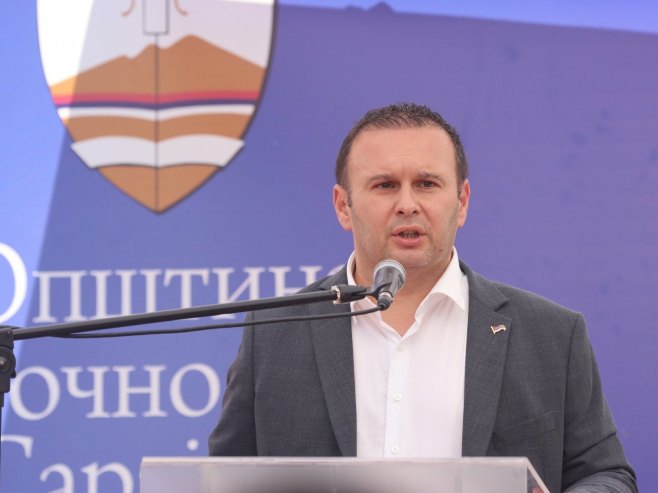
East Sarajevo Mayor Ljubiša Ćosić stated that the wave of hostile reactions and anti-Serb rhetoric coming from the Federation of Bosnia and Herzegovina following the death of General Ratko Mladić demonstrates that the peoples of Bosnia and Herzegovina can no longer live together.
Ćosić said that Serbs will not renounce those whom they regard as symbols of Republika Srpska and its defense, while emphasizing that this does not imply hatred toward any other nation.
According to him, celebrating the death of a person respected by members of another people reflects the depth of ethnic hostility. He added that he has never celebrated the death of any Bosniak, regardless of that individual’s political or wartime role.
“We will never renounce those who are no longer with us but who symbolize Republika Srpska and its defense—not in our hearts, not in our public statements, and not in our everyday conversations. However, this will never lead us to hatred toward anyone else,” Ćosić said.
He argued that there is no willingness in Bosnia and Herzegovina to build mutual respect, despite more than three decades having passed since the end of the war.
“Thirty-one years should have been enough for all peoples to accept that there are three different perspectives on the past that should be acknowledged and respected. Instead, the hysteria we are witnessing is not limited to these days following the general’s death. It appears whenever Republika Srpska or the Serbian people are mentioned, and the reactions are consistently negative and hostile,” he stated.
Ćosić described the current atmosphere in the Federation of Bosnia and Herzegovina as evidence of an increasingly deep divide between the country’s constituent peoples.
He said this reinforces his long-held view that the peoples of Bosnia and Herzegovina can no longer live together in the same political framework but could coexist successfully side by side through mutual respect and cooperation.
Ćosić further argued that individuals responsible for wrongdoing have no place in the collective memory of the Serbian people, while claiming that, in contrast, Bosniaks continue to celebrate and honor individuals whom Serbs associate with crimes committed against them.
Source: RTRS