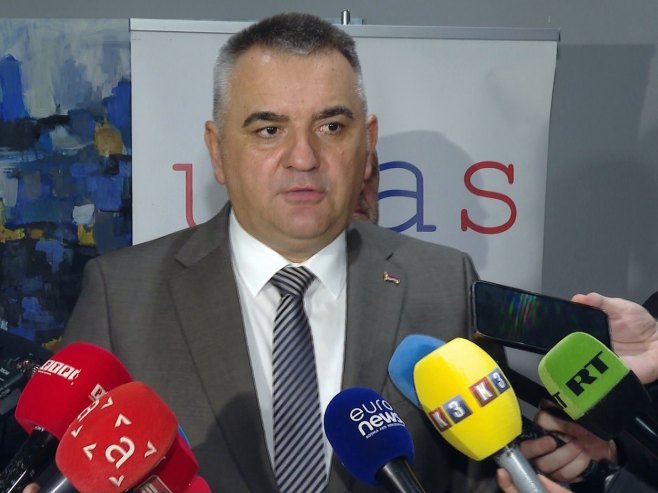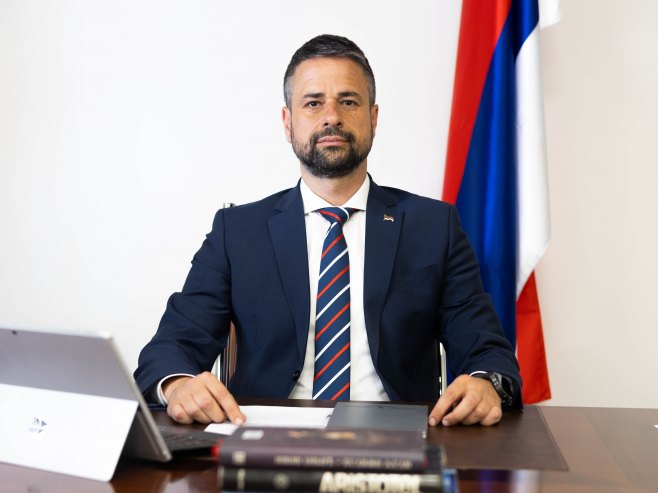



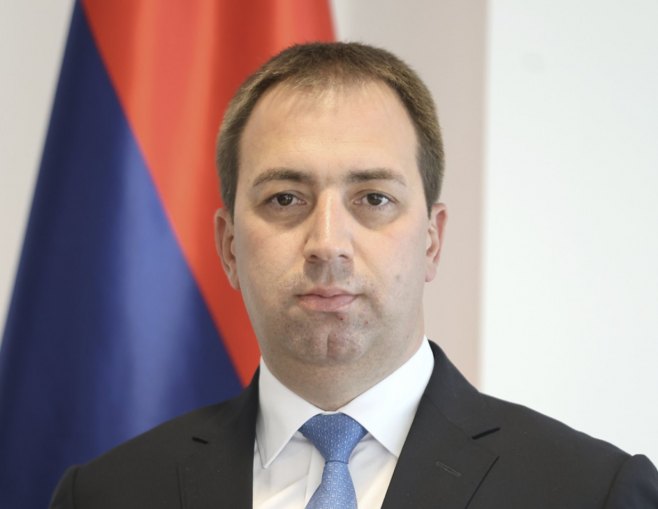
Republika Srpska Minister of Justice Goran Selak said that information received from the Prosecutor’s Office and the Court of Bosnia and Herzegovina regarding the application of Article 145a of the Criminal Code has raised serious concerns about the equal application of the law and public confidence in the country’s judicial system.
Selak stated that the Prosecutor’s Office cooperated with the Ministry of Justice by providing data that allows for a detailed legal analysis, while he criticized the Court of Bosnia and Herzegovina for supplying only limited information and omitting what he described as key data requested by the Ministry, including the ethnic breakdown of confirmed and rejected indictments.
“Invoking the confidentiality of investigations cannot justify withholding information on matters of clear public interest. The truth cannot be concealed,” Selak said.
According to Selak, the information provided indicates that all indictments brought against Serbs under Article 145a of the Criminal Code have been confirmed by the Court of Bosnia and Herzegovina, with defendants either already convicted or currently facing proceedings that have resulted, or may result, in multi-year prison sentences.
He further claimed that all indictments brought by the Prosecutor’s Office against Bosniaks under the same criminal provision were rejected by the Court, despite being fewer in number.
“These figures raise serious questions. Either the Prosecutor’s Office is effective when bringing cases against Serbs but not when prosecuting Bosniaks, or, which appears to be the more likely conclusion, the Court of Bosnia and Herzegovina is applying different standards to the same or comparable factual circumstances. If that is the case, it represents a serious blow to the rule of law, the constitutional order, and public confidence in the judiciary,” Selak said.
He also questioned the absence of reactions from international observers and organizations advocating equality before the law, calling on the Court of Bosnia and Herzegovina to publicly explain the criteria it uses when assessing comparable cases involving defendants of different ethnic backgrounds.
Selak further noted that Article 145a carries a minimum prison sentence of three years, arguing that such penalties are disproportionate for what he described as a “verbal offence,” particularly when compared with sentences imposed in a number of war crimes cases involving crimes committed against Serbs.
He called on the leadership and judges of the Court of Bosnia and Herzegovina to convene a session of the Criminal Division, or a general session of judges, to establish a consistent judicial practice in cases prosecuted under Article 145a.
“Citizens have the right to know whether such indictments will be assessed according to the same standards in every case and what sentencing policy will be applied, regardless of the defendant’s ethnic background. Only the equal application of the law can restore confidence in the judiciary and uphold the rule of law,” Selak said.
Source: RTS