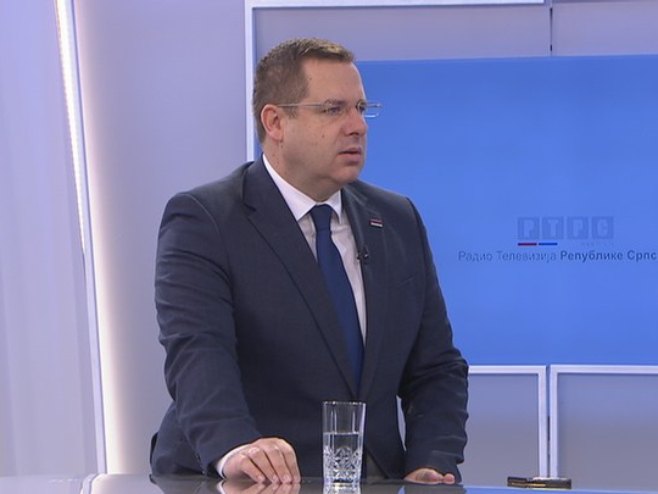




Historian Draga Mastilović has stated that large parts of central Sarajevo once belonged either to the Serbian Orthodox Church or to Serbian families, arguing that today there are persistent efforts to erase the historical presence and heritage of Serbs in the city.
According to Mastilović, the Serbian Orthodox Church has for years sought the restitution of property whose value is difficult to estimate because it includes some of the most valuable land in central Sarajevo. Among the locations he mentioned are the sites of the current Parliamentary Assembly of Bosnia and Herzegovina, the Council of Ministers building, the Holiday Inn hotel and the Zetra Olympic Hall, which he said was built on the site of an Orthodox cemetery.
Unfulfilled restitution commitments
Mastilović recalled that, despite an agreement signed in 2010 between representatives of the Federation of Bosnia and Herzegovina, Sarajevo Canton, the Municipality of Stari Grad, the University of Sarajevo Faculty of Economics and the Serbian Orthodox Church, the former Orthodox Theological Seminary building has still not been returned to the Church.
Under that agreement, the Faculty of Economics was expected to relocate to a newly constructed building, allowing the Seminary property to be restored to its original owner. However, the agreement has never been implemented.
Serbian presence documented throughout history
Mastilović stressed that historical sources confirm the continuous presence of Serbs in the Sarajevo area from the early Middle Ages onward.
He pointed to recently discovered Ottoman documents from the first half of the eighteenth century that explicitly refer to the “Serbian Christian Church in Sarajevo,” describing them as further evidence of the longstanding historical presence of the Serbian community.
Large parts of Sarajevo built on Serbian-owned land
According to Mastilović, many areas of Sarajevo were developed on land that had belonged to Serbian owners, while Serbian merchants and craftsmen made significant contributions to the city’s economic and urban development.
He added that numerous properties formerly owned by the Serbian Orthodox Church remain nationalised or otherwise inaccessible, preventing the Church from using or reclaiming them.
Calls to preserve historical memory
Mastilović argued that the unresolved status of Church property reflects a broader unwillingness to acknowledge the historical role of Serbs in Sarajevo.
He also emphasised the importance of preserving cultural memory, stating that Serbs should continue to document and protect their historical heritage in Sarajevo.
Highlighting the collections of the Old Orthodox Church in Sarajevo, he described its treasury as an invaluable testimony to centuries of Serbian religious, cultural and historical presence in the city.
Mastilović concluded that Sarajevo occupies an important place in Serbian history and cultural heritage, and called for continued efforts to preserve that historical legacy for future generations.
Source: RTRS