

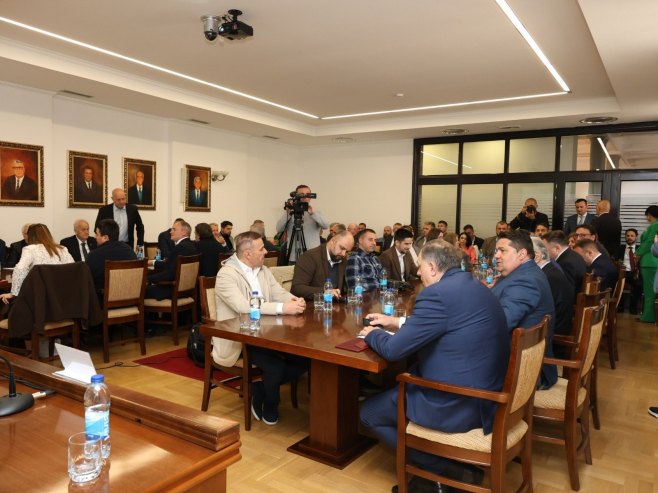
“Republika Srpska and cooperation with Russia, the United States and the European Union” was the topic of a scientific discussion organized by the Academy of Sciences and Arts of Republika Srpska.
According to participants, significant diplomatic activities by its political representatives have led to Republika Srpska becoming an interlocutor with the world’s major powers, both in the East and the West.
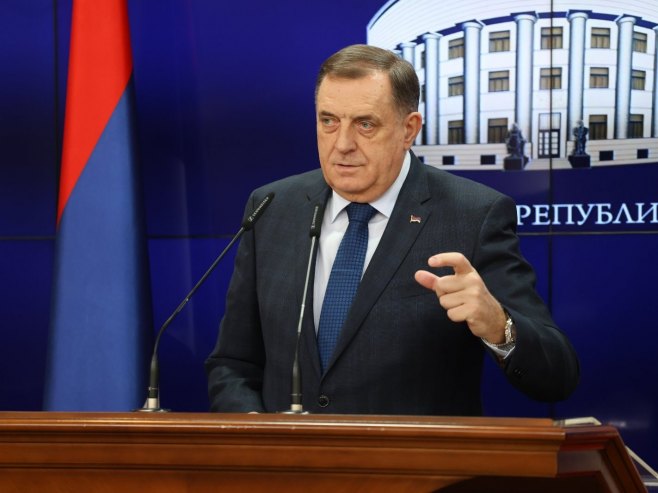
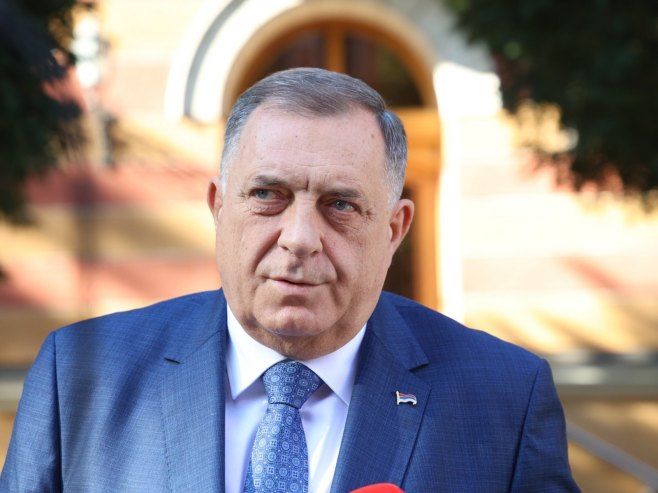
The opening remarks were delivered by Milorad Dodik, who said the world as it existed a few years ago no longer exists and that today’s order is marked by chaos and relations based not on international law, but on force and displays of power.
“In all of this, we must first understand the times we live in and explain to our people the seriousness of the moment. Secondly, we must openly discuss the options for how we will act, with the goal of not losing the subjectivity and degree of autonomy we have, wish to preserve, and further build,” Dodik said.
The scientific discussion was preceded by the inauguration of Nenad Kecmanović as a foreign member of ANURS.
“What has always existed until now is support from the Russian Federation, always and in every respect. As for the two Western factors, there has been a significant change connected with the arrival of Donald Trump as president — a positive change,” Kecmanović said.
Professor Željko Budimir said Western Europe is engaged in a proxy war with Russia.
“After the departure of Viktor Orbán, Europe is already deeply involved in militarization, especially the remilitarization of Germany. Relations with Russia are such that now NATO is less aggressive than the European Union,” Budimir said.
He added that the EU sees itself as a force and a party in war and seeks independence from the transatlantic link, at least while Trump remains in office.
Academic Darko Tanasković said the EU is a negative foreign policy factor for Republika Srpska. He argued that even in a multipolar world, some poles still seek dominance, and that the long-term outcome would be the existence of two superpowers — China and the United States.
“As long as the German-Brussels factor is the most important and interprets the alleged positions of the whole EU, nothing good can be expected, but I believe those leading policy in Republika Srpska are aware of that,” Tanasković said.
Political scientist Aleksandar Pavić said Republika Srpska is one of the rare political actors able to boast good cooperation with both the US and Russia, as well as with China.
He added that China, a country gradually assuming global primacy in all major areas, seriously counts on Republika Srpska and Serbia as partners.
Professor Aleksandar Vranješ said Republika Srpska had achieved all of this despite strong outside pressure and internal obstruction.
“No one ever agreed that the High Representative could step outside the framework of the civilian implementation agreement, impose laws, change constitutions, transfer competences, punish, or pass judgments,” Vranješ said.
The event concluded with renewed attention on the inauguration of Kecmanović as a foreign member of ANURS.
Source: RTRS