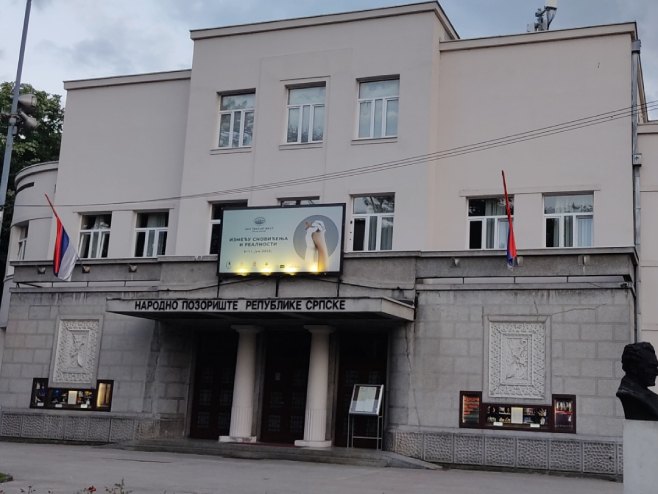
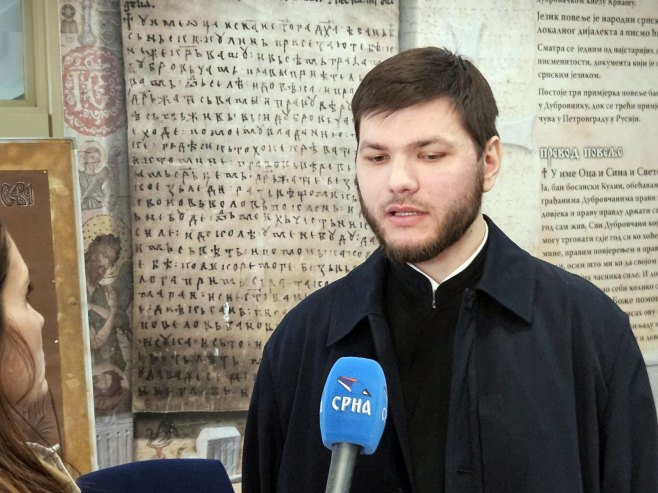

Artistic director of the Symphony Orchestra of the National Theatre of Republika Srpska, Dušan Urošević, expressed satisfaction that the ensemble has recently been strengthened with new members and announced a concert season that will bring classical music closer to audiences in a modern and innovative way.
Urošević said that the orchestra continues to develop, as confirmed by the recent addition of new musicians to the string section, gradually bringing the ensemble closer to full seasonal capacity.
“However, the formation of the complete ensemble is only halfway finished, because performing major works such as the operas Carmen and The Badger on Trial requires the establishment of a wind section as well,” Urošević said.
He noted that the orchestra held around 20 concerts last year and expects that number to increase this year.
“We believe that this season will also bring new jobs, which will help meet the production demands we face,” Urošević added.
He also announced that by the end of March the orchestra will begin a new concert cycle titled Maestre, within which three female conductors from the region will perform as guests.
“This project aims to highlight the strength of women in leadership positions, considering that according to global statistics only about 10 percent of chief conductors or artistic directors are women,” Urošević said.
The orchestra is also preparing a multimedia concert that will present classical music through words and visuals.
“At the beginning of April we plan to perform the concert The Four Seasons. Through his compositions, Antonio Vivaldi succeeded in portraying environments, sounds, and moods described in the sonnets. This ability to ‘paint’ with music makes inspiration from these texts especially important for a full understanding of the compositions,” he explained.
In addition to performances at its home venue in Banja Luka, the orchestra is strategically focused on decentralizing culture by performing in towns near Banja Luka in cooperation with local authorities.
“We invite local communities to contact us so we can establish full cooperation, because cultural decentralization cannot be achieved on an individual level. It is possible, but not efficient. We must join forces and move in that direction,” Urošević said.
He also noted that international positioning of the orchestra is one of its priorities, with plans for two international guest appearances each year, depending on financial possibilities.
“After last year’s performances in Tivat and Budapest, we are planning new contacts with Serbia and Hungary, as well as a potential guest appearance by a conductor from Portugal. This process of international promotion includes not only touring abroad but also bringing foreign musicians, conductors, and soloists from the region and across Europe to Banja Luka,” Urošević said.
He emphasized that the core mission of the orchestra and the main focus of its international promotion is artistic music by domestic composers.
“The goal is for the orchestra, through these cultural exchanges, to establish itself as a relevant institution capable of standing shoulder to shoulder with similar international institutions,” Urošević concluded.
Source: RTRS