

On the outer wall of the Iranian Embassy in Sarajevo, a plaque reads: “In memory of Iranian men who sacrificed their lives for peace in Bosnia and Herzegovina.” These words may surprise Americans, many of whom are likely unaware of the long history of Islamist influence in the Balkans, writes Anat Hartman, deputy commentary editor for The Washington Times.
We are publishing the Washington Times commentary in full:
For Serbs in Republika Srpska — which, together with the Federation of Bosnia and Herzegovina, has made up Bosnia and Herzegovina since the 1995 Dayton Peace Agreement — the region’s ties to extremism are well known.
Today, those radical tentacles are tightening.
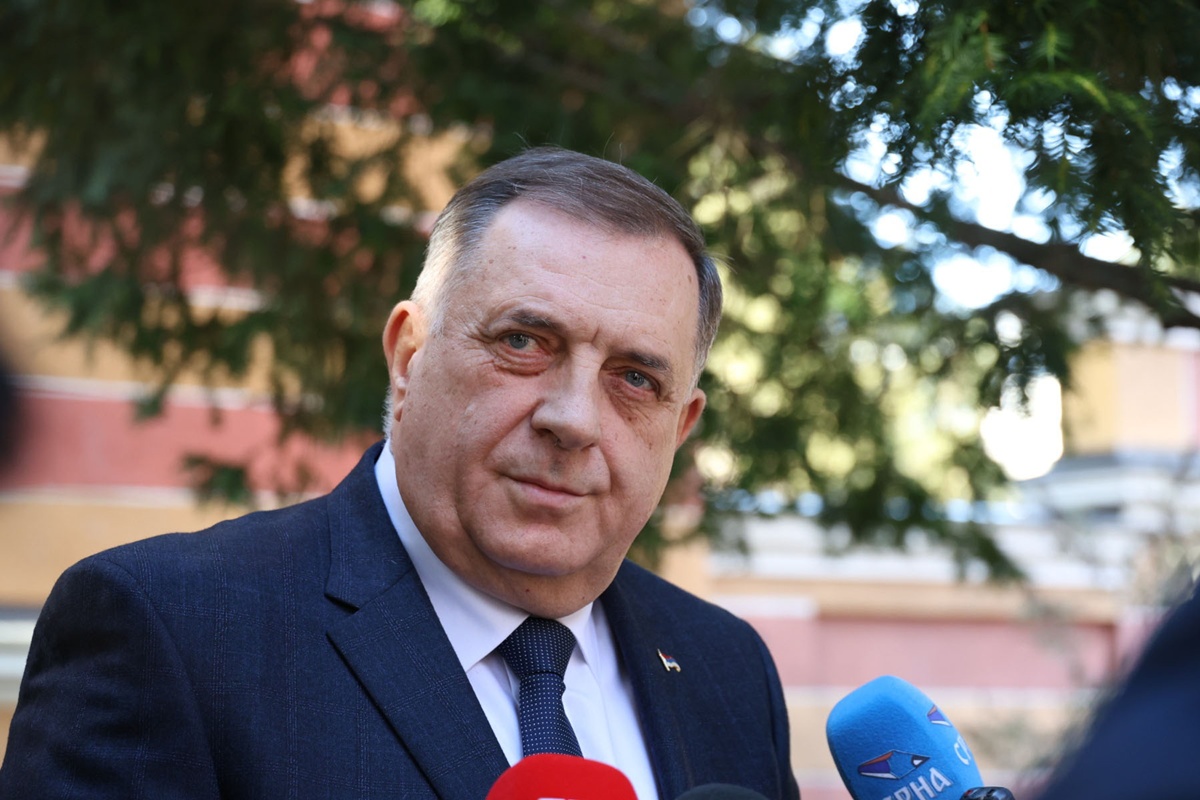
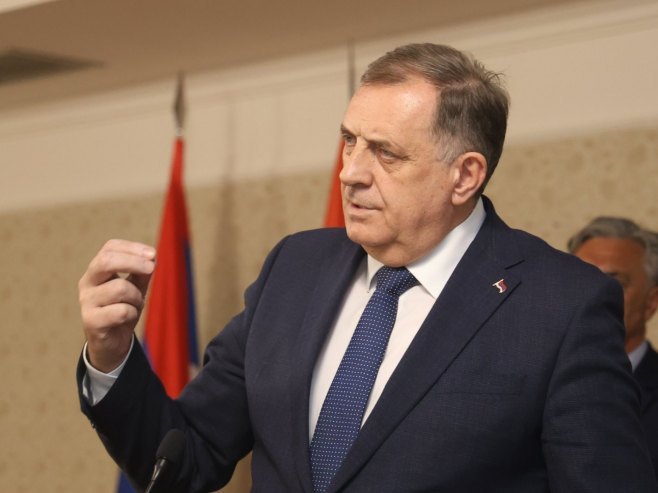
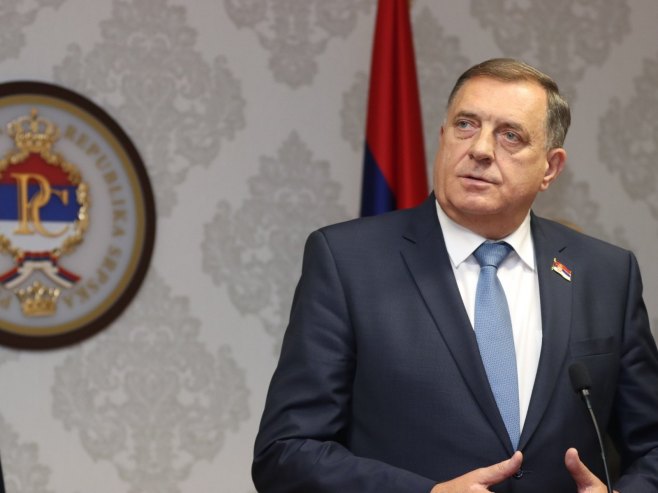
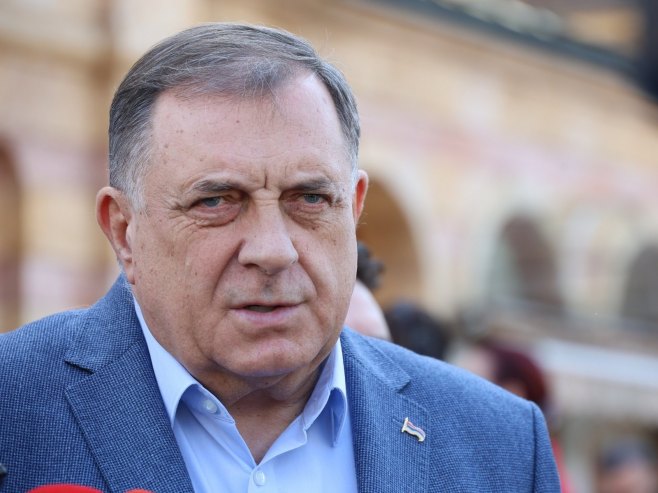
“Muslims are taking over churches,” SNSD leader Milorad Dodik told The Washington Times in a recent exclusive interview.
“Radicalized groups are being encouraged,” Dodik said.
Dodik was sentenced to one year in prison (later commuted to a fine), and the Court of Bosnia and Herzegovina barred him from holding office in the republic for six years.
In addition, none of the seven current judges of the Constitutional Court of Bosnia and Herzegovina are from Republika Srpska.
Dodik’s offense? Refusing to implement decisions issued by Christian Schmidt.
Schmidt is a German national appointed in 2021 by the Peace Implementation Council to lead Bosnia and Herzegovina. (Yes, you read that correctly. A Western European bureaucrat appointed by other bureaucrats has the authority to tell a government what to do. Think about that for a moment.)
Radical Muslims in the region, Dodik said, are funded by the same actors who finance the Islamic State: Iran, Saudi Arabia and others.
Here is something else most Americans may not know: in the early 2010s, hundreds of Bosnian Muslims joined the Islamic State, recruited by a well-oiled propaganda machine. Many later returned to the Balkans.
“The return of foreign fighters from Syria and Iraq, battle-hardened, skilled in handling weapons and explosives, and ideologically radicalized, represents a direct threat not only to the security of Bosnia and Herzegovina but also to the region and beyond,” stated a 2015 report by the Atlantic Initiative.
Dodik told us: “Some of them were even trained in Sarajevo before going to the Middle East.”
According to the inscription on the embassy wall in Sarajevo, Iran sent fighters and weapons to assist Bosnian Muslims against Serbs during the war in Bosnia and Herzegovina following the breakup of Yugoslavia in 1991.
As UPI reported in 1993, “several thousand members of Iran’s Revolutionary Guard are fighting alongside Bosnian Muslims in Tehran’s attempt to establish a fundamentalist foothold in Europe.”
Now Republika Srpska must reap what “true believers” never stopped sowing.
In January, the Federation of Bosnia and Herzegovina declared two Serbian Orthodox Church cemeteries, a chapel and church associated with those cemeteries, and another church as “state property.” Serbs in the area, including the Serbian Orthodox parish, learned of the move through media reports.
“This move aligns with growing extremism and the equally growing respect for that extremism in the region. In predominantly Muslim areas, local police cannot even enter,” Dodik said.
“They are not allowed to detain these extremists,” he added.
That is the main reason, Mr. Dodik said, why independence for Republika Srpska must come soon.
“Things are getting worse. That is why we came here now,” he said.
His recent trip to Washington was preceded by a visit to Israel and a meeting with Prime Minister Benjamin Netanyahu.
“We have lost too much to rely on any kind of dialogue. That is why we will soon make an important assessment with our friends (regarding independence). Without a state, there is no freedom,” Dodik said.
Dodik and his allies are seeking recognition of three states within Bosnia and Herzegovina: one for Serbs, one for Croats and one for Bosniaks.
“Bosnia and Herzegovina is a broken society. It has always been divided; it has been a failed state since its creation,” Dodik said.
Nothing good awaits Western values under the current arrangement, he added.
Young people are leaving. The birth rate is declining. Under Presidents Obama and Biden, Republika Srpska lost many of the rights granted to it by the Dayton Peace Agreement, Dodik said.
“Our army was taken away, our border police was taken away, our property is being taken away,” he said.
It is time for the republic to assert its right to self-determination, he told us.
“In international relations, there comes a moment when talks no longer work. With independence, everyone would be at peace. No one could impose anything on anyone else. We have never tried to live side by side. Let us make our own decisions. President Trump’s mandate is our chance for independence,” Dodik concluded.
Source: RTRS